















23 min
A one-day tour from Tbilisi to Mtskheta and the Jvari Monastery is a classic journey that combines rich history with stunning landscapes. Mtskheta – the ancient capital of Georgia and the spiritual heart of the country – is located just ~20 minutes from Tbilisi, at the confluence of the Kura and Aragvi rivers. Thanks to its beautiful surroundings, rich heritage, and proximity to the capital, this cozy “open-air museum city” has become a must-visit on any tourist itinerary. The historic part of Mtskheta is listed as a UNESCO World Heritage site, so it’s no surprise that nearly all visitors to Georgia aim to see it. Our route is particularly appealing because, in one day, you will visit several iconic sites: the majestic Svetitskhoveli Cathedral, the atmospheric Jvari Monastery perched atop a hill, and the charming streets of old Mtskheta. This trip comfortably combines an introduction to Georgia’s rich culture with the enjoyment of mountain scenery – an ideal option for those who value substance and convenience on a short excursion.
Best Time to Visit
Like many excursions in Georgia, the trip to Mtskheta and the Jvari Monastery is most enjoyable during certain seasons. Mtskheta lies between mountain ranges, giving it a unique climate. In winter, the area is relatively warm and dry, with snow being rare. Even during the cold season, the trip is possible and has its charm: fewer tourists, less crowded churches, and sometimes snow-dusted mountains. However, in summer, be prepared for heat: daytime temperatures can rise quite high, and the city can be crowded during peak season. At midday, the scorching sun can make sightseeing tiring, so in summer it’s better to plan for rest in the shade or visit the churches in the morning and evening hours.
The optimal time for this one-day trip is spring and autumn. In April–May, the entire Mtskheta-Mtianeti region is in bloom, and the weather is pleasantly warm. The surrounding mountains are covered with fresh greenery, and the air is scented with blooming pomegranate and peach trees – perfect conditions for walks and photography. September–October is another ideal window: the heat subsides, main tourist crowds disperse, and accommodation and service prices usually drop. Autumn weather is still mild, the days are sunny, and the vineyards around the area are finishing the harvest – Georgia enters its young wine season. Incidentally, on October 14th, Mtskheta hosts the large religious festival Mtskhetoba-Svetitskhovloba, dedicated to Svetitskhoveli Cathedral – on this day, the city comes alive with special celebrations, though it becomes quite crowded.
If your visit falls in summer, that’s also no reason to skip the trip. Summer months are a time of various festivals and city celebrations in Mtskheta. Streets may host fairs, concerts, wine and cheese tastings outdoors. For example, in July, the city traditionally celebrates its day: expect national music, dancing, generous feasts, and the famous Georgian toasts. Just plan to leave early in the morning to visit Jvari before the midday heat, and don’t forget a hat and sunscreen. In the evening, as the air cools slightly, you can enjoy the gastronomic part of the program at one of Mtskheta’s cafes. Each season brings its own colors: spring – blooming freshness, summer – festive atmosphere, autumn – golden landscapes and wine season, winter – tranquility and a special sense of connection to antiquity with fewer people in the churches. Choose the season according to your preference – Mtskheta is beautiful year-round, just prepare for the weather accordingly.
Preparing for the Trip
Thoughtful preparation is key to a smooth and enjoyable one-day trip. First, address transportation: our tour includes a car with a driver-guide, but if traveling independently in a rental car, ensure it is mechanically sound and the GPS is updated. The route is straightforward, but navigation is helpful, especially when leaving Tbilisi. We recommend departing in the morning, around 9–10 a.m., to have the entire day ahead. This allows you to visit all points at a relaxed pace and return by late evening. Leaving early helps you avoid Tbilisi’s main traffic jams and arrive at Jvari possibly as one of the first tourists – enjoying the view in relative solitude.
Consider your wardrobe. As the plan includes visiting active Orthodox churches, it’s important to respect local rules. In Georgia, men should not enter churches in shorts or sleeveless shirts, and women should not have uncovered heads or wear revealing clothing. Ideally, choose comfortable clothing with covered shoulders; for women – a skirt below the knee or lightweight pants (if wearing pants, monasteries often provide a long wrap to wear over them). Bring a scarf or shawl – women are recommended to cover their heads in churches. Many tourists receive scarves and wraps from local attendants at the entrance, but having your own is more convenient and hygienic. Choose comfortable shoes: although no major hikes are planned, Jvari has dirt and stones, and Mtskheta’s streets are cobbled. Sneakers or sturdy sandals work well.
Don’t forget about weather considerations. Even if Tbilisi is warm in the morning, the Jvari Monastery on the hilltop is almost always windy – bring a windbreaker or light jacket. Many travelers are surprised by the wind on the Jvari viewing platform, so better to be safe, especially in spring and autumn. In summer, sunglasses, a hat, and a water bottle are useful. Additionally, having a small snack (fruits, nuts) and water in your car or backpack is recommended – lunch is scheduled a bit later in Mtskheta. Charge your cameras and phones the night before: plenty of beautiful views lie ahead, and you will definitely take many photos.
Finally, bring cash. Georgian lari are widely accepted in Mtskheta, some establishments take cards, but for souvenir stalls and small shops, cash is preferable. Keep small bills handy – useful for church donations, parking, or minor purchases. Near Svetitskhoveli, elderly beggars sometimes sit – prepare a few coins if you wish to give alms, otherwise you might hear rude words (unfortunately, it happens). Don’t let small matters spoil your mood: overall, Georgians are very hospitable, and our team ensures your trip is comfortable and safe.
Route from Tbilisi
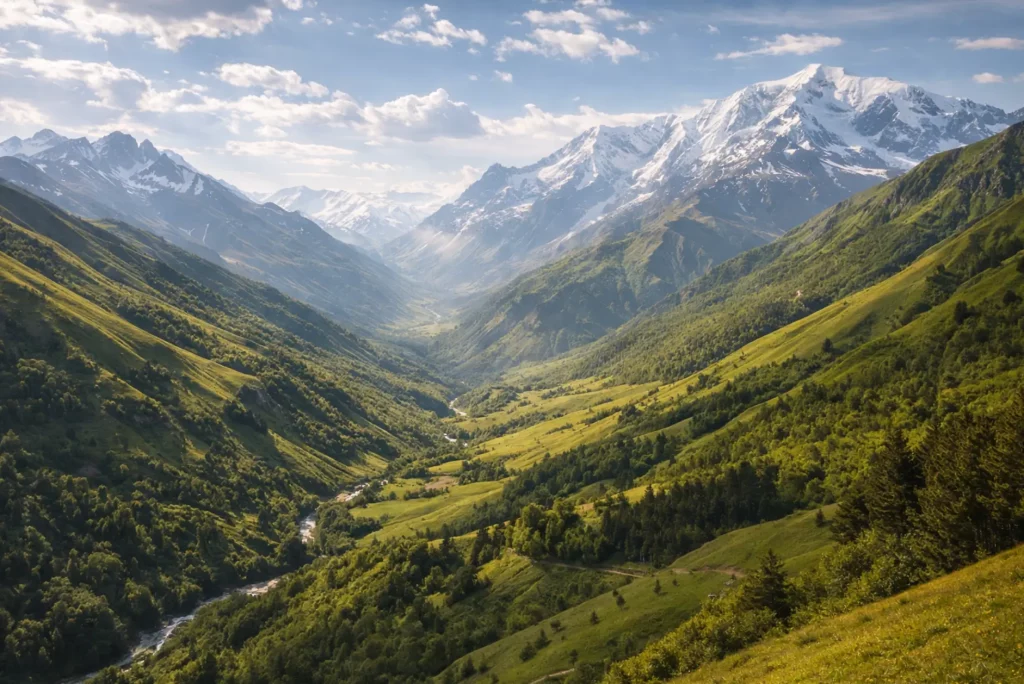
The journey begins with departure from Tbilisi heading north. Mtskheta is on the main highway leading to the Caucasus Mountains (towards the legendary Georgian Military Road, via Passanavi to Kazbegi). That’s why the road is good: this section is a modern highway with markings and signs. The distance from Tbilisi to Mtskheta is about 25 km, and we allocate roughly 30–40 minutes depending on traffic. As you leave Tbilisi’s city blocks, the landscape opens up: hills and the mountains of Mtianeti appear ahead, with small villages along the route from time to time.
There are no mandatory stops along the way – the distance is short – but you may pause if desired. For example, about 15 km from Tbilisi, there is a turn to the “Chronicles of Georgia” memorial on the Tbilisi Sea (for those interested in contemporary monumental art and with extra time). However, our tour usually proceeds without detours to dedicate maximum time to Mtskheta and Jvari.
Approaching Mtskheta, we first head to the Jvari Monastery, located on the hill above the city. Don’t miss the turn: before reaching Mtskheta’s center, turn from the main highway according to the “Jvari Monastery” sign and begin the uphill drive.
Don’t worry, there are several signs – it’s hard to miss. The road to the monastery is paved, though narrower and winding compared to the highway. Our car steadily climbs, and soon through the trees, the goal comes into view – the silhouette of the ancient church atop the hill. Passengers often can’t contain exclamations of delight as the car rounds the last turn: an incredible panorama opens before you, the reason photographers love Mtskheta and Jvari so much. We park at the monastery lot – usually there is enough space. Parking is officially free, but note that local “attendants” may ask tourists for a few lari. This is not mandatory (more of a voluntary donation), and our guide will advise on the best approach. Upon leaving the car, take a deep breath – the hilltop air is fresh and slightly cooler. Now we are ready to explore the legendary Jvari.
(Note: driving in Georgia is generally not difficult. Despite the presence of daring “drivers” who enjoy overtaking and rushing, they are not numerous – just stay attentive and follow the rules, and the trip will go smoothly. In our experience, the Tbilisi–Mtskheta road has always been safe. In winter, rare snowfall is promptly cleared, and in summer, the main thing is not to exceed speed limits. So, whether you trust an experienced driver or your own careful driving style, you will reach Mtskheta comfortably.)
Jvari — History, Overview, and Viewpoints
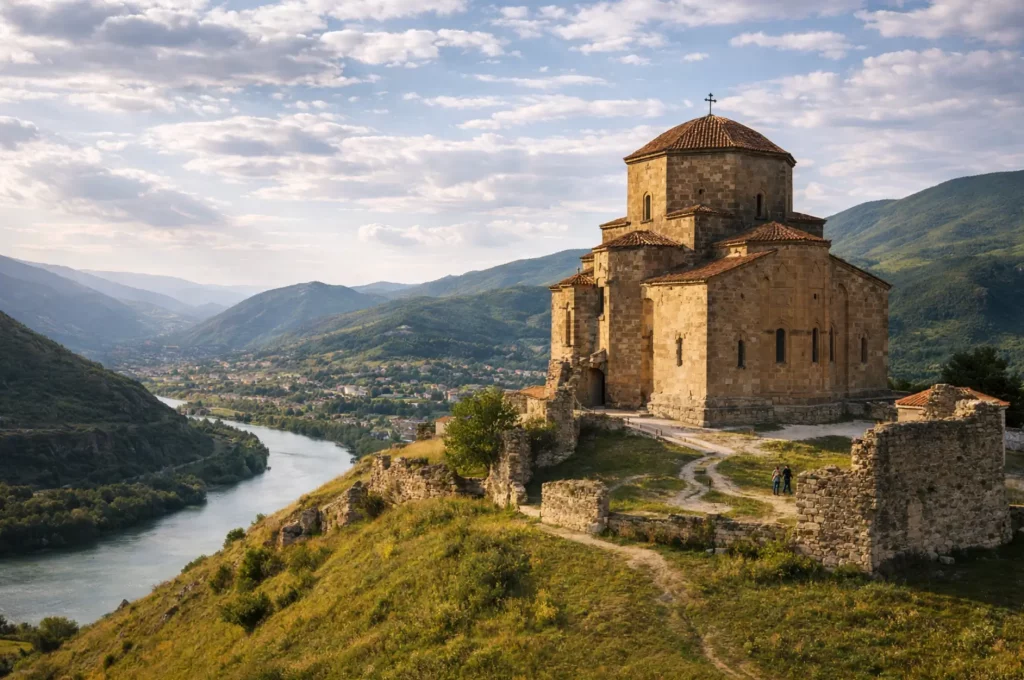
View of the Jvari Monastery (6th–7th centuries) and the confluence of the Aragvi and Kura rivers from a bird’s-eye perspective.
The Jvari Monastery is the first stop on our route and, without exaggeration, the landmark of the Tbilisi surroundings. Its name translates from Georgian as “Cross,” linked to an ancient legend. In the early 4th century, Georgia’s enlightener, Saint Nino, climbed this hill and erected a tall wooden cross – symbolizing Christianity’s triumph over paganism. The place became sacred, and by the 6th century, the first church was built on the Cross Hill, and by the 7th century, the stone monastery church that survives to this day was erected. Imagine – these austere walls have witnessed over 13 centuries of history! Inside, Jvari impresses with ascetic simplicity – early medieval Georgian churches were not adorned with elaborate frescoes. You will hardly see any frescoes; the interior is very strict. But just realizing the monastery’s age is breathtaking: you touch masonry that is fifteen hundred years old. Jvari was also the first site in Georgia included on the UNESCO list, highlighting its unique value.
However, the main reason people climb here is the panorama. From the monastery’s viewpoint, a stunning view opens onto the valley where the two rivers meet and the ancient city at their confluence. The blue Aragvi River and the brown-green Kura (Mtkvari) embrace at the hill’s base, their waters clearly distinguished by color. On sunny days, the contrast is especially noticeable: one river carries lighter, transparent water, the other darker, and after merging, they flow for some distance in a two-toned stream. This place has been celebrated in literature: Mikhail Lermontov in his poem Mtsyri described the monastery, “where, merging, the streams of Aragvi and Kura murmur, embracing like two sisters…”. Reading these lines against the real landscape gives them new meaning. It’s no wonder Georgians consider the Jvari viewpoint one of the most romantic spots – locals often bring loved ones here to watch the sunset over the rivers’ confluence.
We usually allocate about 30–40 minutes to explore Jvari. This is enough to walk around the church, peek inside, and take photos from all angles. Tip: the monastery has two viewpoints. Most people crowd at the first, near the parking lot, but if you walk around the back of the church, you will find a small terrace balcony with an equally good view and far fewer people. Our guide will show this hidden spot – perfect for a group photo with Mtskheta in the background. Note that it can be quite windy at the top (as previously mentioned), so hold your hats and cameras securely. From the edge, you can see the entire route below: reddish rooftops of Mtskheta, the majestic dome of Svetitskhoveli Cathedral, and the highway ribbon winding along the valley.
After enjoying the views and learning Jvari’s history, we return to the car at a relaxed pace. Tourists often ask if souvenirs or coffee can be bought here. There are no commercial stalls near Jvari – arguably a plus, as the atmosphere remains quiet. At most, a couple of local elderly women may sell church candles or crosses. We get back in the car and start descending toward the heart of Mtskheta, where ancient churches, Georgian hospitality, and a hearty lunch await.
Mtskheta — Attractions and Sightseeing Tips
Descending from Jvari Hill, in 10–15 minutes we reach central Mtskheta. This small town is neat, well-kept, and extremely cozy. Upon arrival, you immediately feel a special atmosphere: cobbled streets, low houses with tiled roofs, souvenir shops on every corner. Mtskheta was the capital of the Iberian Kingdom until the 6th century, and though it lost political status long ago, it retains its designation as the “Holy City” of Georgia. The main attractions are ancient Christian churches, effectively the cradle of the Georgian Church. Our tour covers the main ones, usually starting with the most significant – Svetitskhoveli Cathedral.
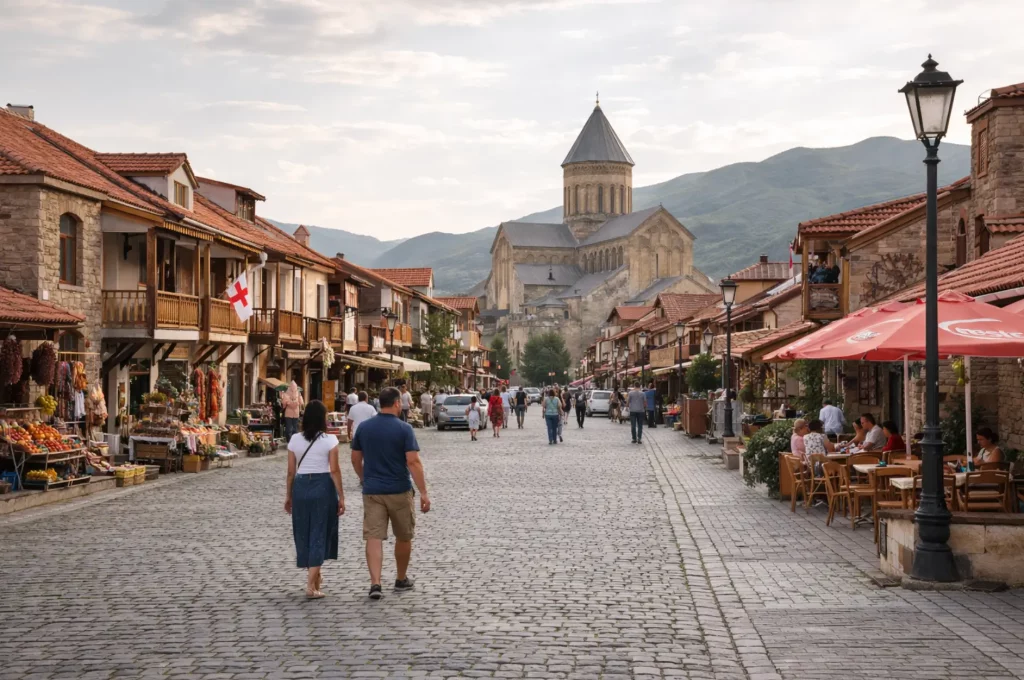
Svetitskhoveli (meaning “Living Pillar”) – Georgia’s main cathedral, built in the 11th century. Approaching its walls, even those far from architecture are impressed. The cathedral has massive golden-stone walls adorned with carved ornamentation, and a magnificent rose window above the entrance. Inside awaits dim light and coolness, the fragrance of incense, and majestic columns. We always tell the legend associated with its construction: according to tradition, here lies a sacred relic – the robe of Jesus Christ, brought to Iberia in the 1st century. A cedar grew on the burial site, from which the “living pillar” of the first church was later made. This pillar, it is said, wept holy oil. Today it is not visible – enclosed within a solid base – but pilgrims know its location and venerate it. You too can feel a special energy witnessing prayers near the invisible pillar (the place is marked by gathering worshippers). Inside the cathedral, ancient frescoes are well preserved, including a unique one depicting zodiac signs. Beneath the floor rest members of the Bagrationi royal family – you will see tombstones directly in the nave. The Svetitskhoveli tour takes about half an hour: the guide points out the main altar housing a copy of the Lord’s Robe and highlights curious details, such as a small model of Jerusalem above the arch inside the church.
After leaving the cathedral, visitors usually feel a sense of touching something very significant. Svetitskhoveli was the site of Georgian kings’ coronations and burials for over a millennium. Today it is under UNESCO protection (like Jvari and another monastery in Mtskheta – all three are part of a single World Heritage site). Around the cathedral is a cozy pedestrian zone: neat cobblestones, benches, flowerbeds. Nearby are souvenir stalls selling icons, carved crosses, magnets, and textiles with Georgian symbols. We recommend not spending too much time shopping now – better to finish sightseeing first and return for souvenirs later. After walking around Svetitskhoveli’s fortified perimeter, we continue on foot (the center is easily walkable) to the next site – Samtavro Monastery.
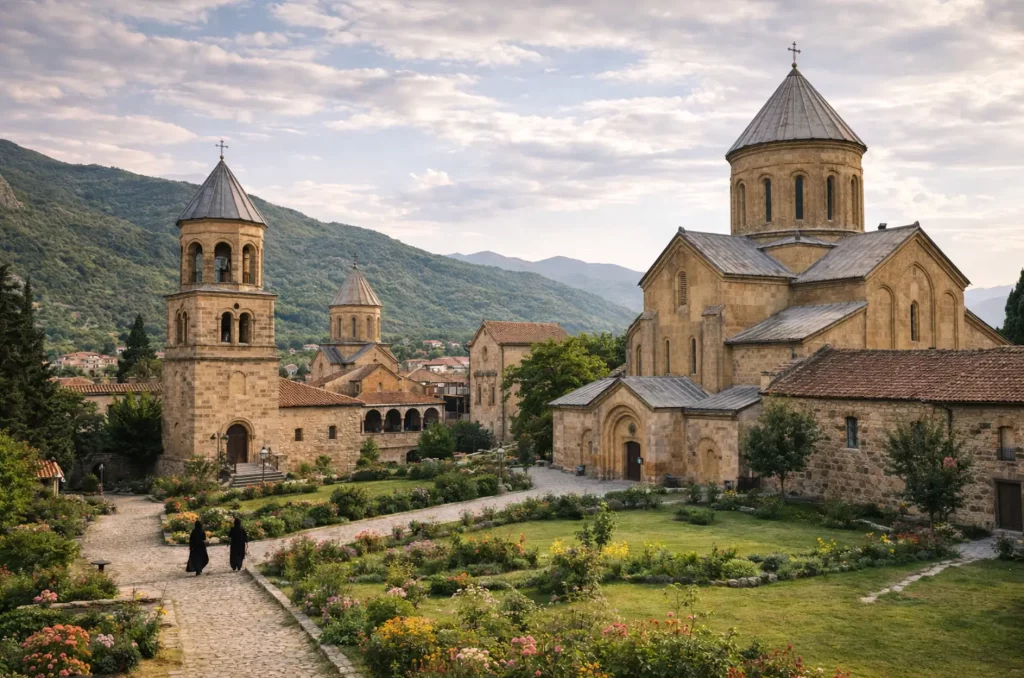
The female Samtavro Monastery is just a 5–7 minute walk from the cathedral, via a small square and past market stalls. Samtavro is less monumental outside but highly revered by locals. Here, within the small church inside the monastery walls, lie King Mirian and Queen Nana – the rulers who first adopted Christianity in Georgia in 324. Essentially, these are the graves of the royal couple converted by Saint Nino. Majestic tombstones now mark their resting place. The main church dates to the 11th century, though a church existed here earlier. The monastery is active: you may see nuns tending the grounds – there’s a garden and craft workshops. The atmosphere is quieter than Svetitskhoveli, with fewer tourists. We examine relics (Samtavro houses the miraculous icon of the Iverian Mother of God and the remains of Saint Gabriel Urgebadze, a highly revered Georgian elder). If lucky, you can try monastery-baked bread. Visiting Samtavro takes ~20 minutes, after which we return to the city center for other attractions.
Depending on group interests and remaining time, there are several options. Curious travelers may visit the archaeological museum (small, with artifacts from ancient Mtskheta). If interested in views and a light climb, one can visit the ruins of Bebris Tsikhe Fortress on the city’s northern edge – offering scenic panoramas of Mtskheta and surrounding mountains. However, many consider the view from Jvari superior. Another site is the historic Pompey’s Bridge from the 1st century BC over the Kura River, now flooded (fragments visible when the hydro plant releases water). Usually, after visiting two monasteries, guests prefer to simply stroll through the city and absorb its atmosphere. We recommend walking the restored streets of old Mtskheta, where the national character is preserved. Stop by souvenir shops: the center is full of them, selling a wide range of items – from small trinkets and magnets to handmade jewelry. Pay attention to enamelwork (minankari), traditional Georgian daggers, and ceramics. You can also buy churchkhela – considered especially tasty and fresh in Mtskheta. Street vendors offer colorful churchkhela sticks, dried fruit bundles, homemade wine in bottles, honey, and sauces. For those with a sweet tooth, try local kozinaqi (nut-honey brittle) – a perfect energy boost after sightseeing.
Exploring Mtskheta’s main attractions usually takes 2–3 hours, excluding lunch. This is enough to visit two churches at a relaxed pace, stroll the center, and buy souvenirs. For example, experience shows that leaving Tbilisi at 10:00 brings you to the time to look for local eateries around 13:00. Our schedule’s next stop is a well-deserved lunch break.
Where to Eat in Mtskheta
After a full day of sightseeing, appetite really kicks in, and Mtskheta offers visitors excellent options to try authentic Georgian cuisine. Despite the town’s modest size, there are plenty of cafés and restaurants – from simple, home-style spots to well-known establishments with views of the river. As local experts, we usually reserve trusted places in advance so the group doesn’t have to wait. If you’re traveling independently, here are a few recommendations.
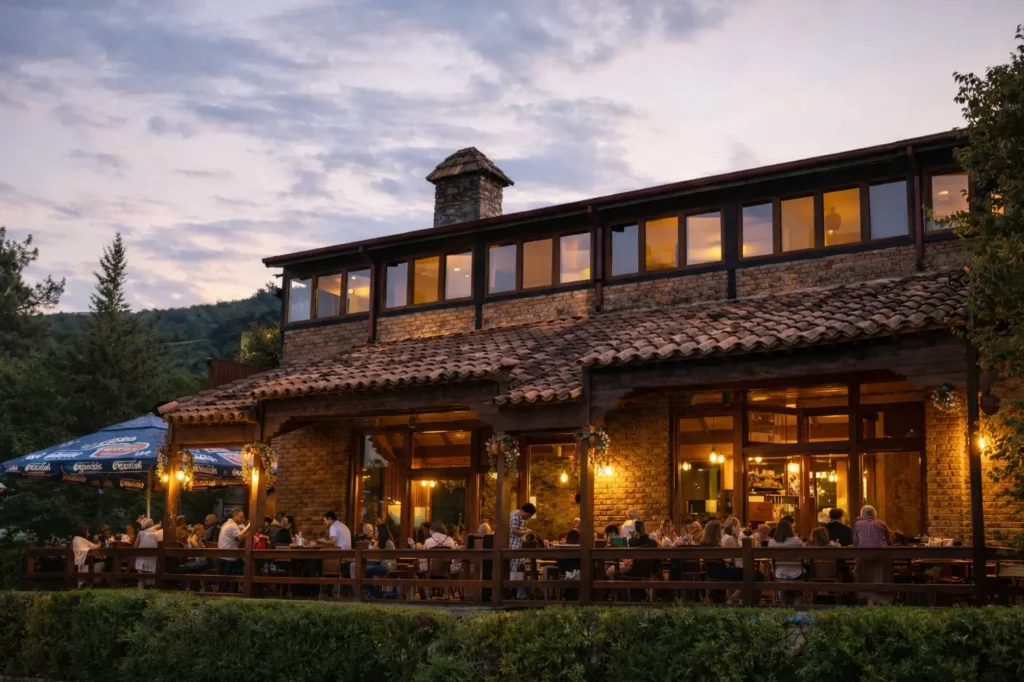
For lovers of authentic flavors, be sure to visit the legendary Salobie restaurant (sometimes written as Salobie). This place is famous far beyond Mtskheta – one of the oldest and most popular stops on the road from Tbilisi. The name translates as “House of Lobio,” and the signature dish is lobio, a thick bean stew slow-cooked in a clay pot with Georgian spices. Salobie is considered to serve one of the best lobio dishes in the country, made according to a traditional recipe. Beyond beans, the menu features other Georgian hits: aromatic khinkali with meat broth, several types of khachapuri, shashlik, pkhali (vegetable pastes), and the freshest tomato salads with fragrant herbs. The restaurant is located slightly off the city center, on the riverbank, and is known for its homely atmosphere and warm service. Our tourists always enjoy lunch at Salobie – delicious, hearty, and soulfully Georgian.
If you prefer to dine directly in the old town, surrounded by historic sights, we recommend Adacafe (5 Demetre Tavdadebuli St.) or Tsiskvili restaurant in Mtskheta. Adacafe is a cozy spot with a terrace, serving both Georgian dishes and European snacks. You can sit on the balcony overlooking the street, order a cup of coffee Georgian-style or homemade Lagidze lemonade, and watch the leisurely pace of life in Mtskheta. Tsiskvili is known for its character: a branch of a popular Tbilisi restaurant, designed like an old mill (the name literally means “mill”). Live Georgian music often plays, and in the evenings there are dance shows. The windows offer scenic views of the Aragvi River. The food is traditional: shashlik, dolma in grape leaves, satsivi, and khachapuri from the oven. It’s a great choice if you want to combine a meal with cultural experience.
For a snack or a sweet break, check out the small cafés and bakeries scattered along the central streets. For instance, Tatin Café is famous for pastries and homemade grape ice cream, and at Ornament Express you can try a delicious prune pie. Of course, no meal in Mtskheta is complete without a glass of good Georgian wine! We recommend a dry white “Tsinandali” with vegetable dishes or a semi-dry red “Mukuzani” with meat – these wines are often on local restaurant menus. But remember to enjoy in moderation, especially if you are driving. Fortunately, our driver stays sober, allowing guests to relax. Lunch lasts about 1–1.5 hours – no rush: enjoy khachapuri, share impressions with fellow travelers, ask the guide questions – we are always happy to discuss Georgian traditions, cuisine, and culture over a meal.
What to Bring Home from Your Trip
Even a one-day trip leaves souvenirs of memories as if from a week! To keep your travel memories warm for a long time, we recommend picking up a few authentic items. Mtskheta, as noted, is famous for sweets and fruit delicacies. Be sure to take a few sticks of churchkhela – nuts threaded on a string and cooked in thickened grape juice. In the town center, you can find many varieties: walnut, almond, hazelnut, with grape or pomegranate juice. Vendors will gladly let you taste before buying – choose according to your taste. Mtskheta is also known for fresh kozinaki (especially popular in January), tklapi – thin sheets of dried fruit puree (a type of fruit leather from sour plum or apples), and various mountain honeys. You can find all this at the market near the cathedral or in specialty shops.
Among non-edible souvenirs, pay attention to religious items – after all, the city is spiritual. In the shop at Svetitskhoveli, you can buy silver crosses, icons, and candles. Church shops may be expensive, but there are plenty of alternatives on the streets: souvenir magnets featuring Mtskheta views or handmade ceramic plates. Tourists also enjoy miniature wine horns decorated with ornaments, and bottles of chacha (Georgian grape brandy) in gift cases. Wine souvenirs are especially popular: a bottle from Kakheti or homemade wine in a unique jug is always a delight. Central wine shops often provide tastings and advice. Also popular are packs of spices and seasonings: adjika (dry or paste), Svan salt with spices, utskho-suneli (blue fenugreek), chaber – all can be packed and brought home to recreate Georgian dishes.
A memorable souvenir could also be something handmade by Georgian artisans. Mtskheta is famous for jewelry in the minankari technique (cloisonné enamel) – earrings, pendants with national patterns in vibrant colors. Prices vary – from inexpensive pins to unique artisanal pieces. Textiles are another souvenir category: embroidered tablecloths, wool socks, famous felt slippers. You’ll see all of this at local stalls. Tip: bargain confidently, especially if buying multiple items from one vendor. Georgians enjoy haggling and often lower the price as a gift. In the old town center, you can find souvenirs ranging from small trinkets to expensive jewelry – you’re sure to find something that will remind you of this trip, whether a simple magnet of Jvari or a delicate pendant with a Georgian cross.
Return to Tbilisi
After a day full of experiences, it’s time to return to the capital. We usually plan departure from Mtskheta in the late afternoon, around 5–6 PM (exact time is adjusted according to your condition and preferences). The route back is the same as in the morning, but be prepared: evening traffic can increase. Many locals return from work or dachas, so minor traffic jams at the city entrance are possible, especially on weekdays around 6–7 PM. Even if traffic slows, the journey doesn’t take long – about 30–40 minutes. In the car, you can relax after the excursion, review photos, or take a short nap. Our drivers are always careful and prioritize safety, so fasten your seatbelts and trust the professional.
One more note: in winter, it gets dark early (by 6 PM), so your return will be in the dark. The road is partially lit, but an experienced driver knows every turn. Nighttime Tbilisi, however, welcomes you with lights – approaching the city, you’ll see illuminated high-rises and the Mtatsminda TV tower twinkling above the capital. In summer, the return drive occurs in the glow of the setting sun. Tourists often ask for a short roadside stop near Tbilisi to photograph the sunset over Mtskheta – why not, if time allows. We always plan some buffer time for the return, accounting for possible delays.
Once in the city, we drop guests at hotels or original starting points. This usually happens by 7 PM, but if you wish, we can take you elsewhere, for example, to enjoy dinner. Sometimes, after the excursion, tourists feel a “second wind” and ask to be taken straight to Old Tbilisi – for a walk or visit to the sulfur baths. We are flexible: the main goal is your satisfaction. Note that in the evening, central Tbilisi streets can be busy, but thanks to dedicated lanes, we usually avoid long delays. Tip from our company: if planning dinner in Tbilisi after the tour, reserve a table in advance (especially Friday or weekend) – it’s been a busy day, and you don’t want to waste time waiting. We ensure a safe ride so you end the day with a smile.
Our Experience: Stories, Recommendations, and Handy Tips
Over years of guiding, our team has collected many amusing incidents and valuable observations. We want to share some of them – they might help you better plan your time during the trip.
First, about pace and schedule. Many tourists worry: will we see everything in one day? Trust us, the route is optimally planned. One full day is indeed enough to see the highlights, without feeling rushed. From experience, 3–4 hours of active sightseeing in Mtskheta is sufficient to visit key sites and catch details. Some clients got so absorbed in wine tasting at lunch that the schedule shifted – in such cases, we flexibly shortened less important stops (for example, skipping a distant fortress), ensuring no one felt tired or uncomfortable. Our philosophy: better to see less but in depth than to rush through. Generally, the Tbilisi–Jvari–Mtskheta route runs smoothly: all sites are close together and logistically convenient.
Second, about weather and comfort. You’ve noticed the main natural “surprise” on the route – wind at Jvari. Funny story: one April, we brought a group of Spanish tourists to the monastery. At the top, the wind was so strong that one gentleman’s hat flew about 50 meters down the slope! Fortunately, it landed in bushes and was ceremoniously returned by our quick-witted guide. Since then, we always warn: hold your hats and avoid standing near the edge ????. Another tip: don’t forget to drink water. People sometimes get so absorbed during excursions that they forget to stay hydrated, especially in summer. In Mtskheta, vending machines and kiosks are everywhere, so replenishing water is easy.
Third, about interacting with locals. Our guides are locals who love their land and happily share culture with visitors. Sometimes tourists ask: “Can we participate in a service or talk to monks?” Services often happen at Svetitskhoveli and Samtavro, and you will see them. Behave respectfully, quietly, and you may light a candle for blessings – the guide will show where to buy one (symbolically 1 lari). Photography inside churches is allowed without flash and not during the service, to avoid disturbing worshippers. Monks and nuns are usually busy, but if you greet them with “Gamardjoba” (hello) – they will respond warmly. Sometimes, guests chat with grandmothers selling goods at the market, and they even offer samples – Georgians appreciate attention. Don’t hesitate to show interest; they value respect for their culture.
Fourth, a few precautions. We do not recommend buying wine from random roadside sellers – quality may be unpredictable. Better to get a bottle from a specialty shop in the center. Also, when ascending to Jvari, avoid walking on the road: the climb on the serpentine takes over an hour and is dusty – it’s better by car or taxi (some independent tourists try walking; we always offer a lift). Another note: in peak season (July–August), Mtskheta has many organized groups, and there may be lines at restrooms near Svetitskhoveli. Patience is key: toilets are free but crowded. We plan restroom breaks in advance (gas stations along the route) or at the restaurant to avoid queues.
In conclusion, our guests have been traveling this route for many years and truly love it. Every detail – from checking the car’s AC to spare umbrellas – is for your comfort. Just avoid bad mood! Don’t hesitate to ask questions, stop for photos, or clarify details along the way. Our team is confident that a one-day trip to Mtskheta and Jvari will leave a vivid impression of Georgia. You will see places of power and beauty, taste the country’s cuisine, and experience its soul through the guide’s stories. As they say in Georgia, “Gamardjoba genatsvale!” – welcome, dear friends, and enjoy your trip! We provide car rentals in Georgia to make your day special.