












8 min
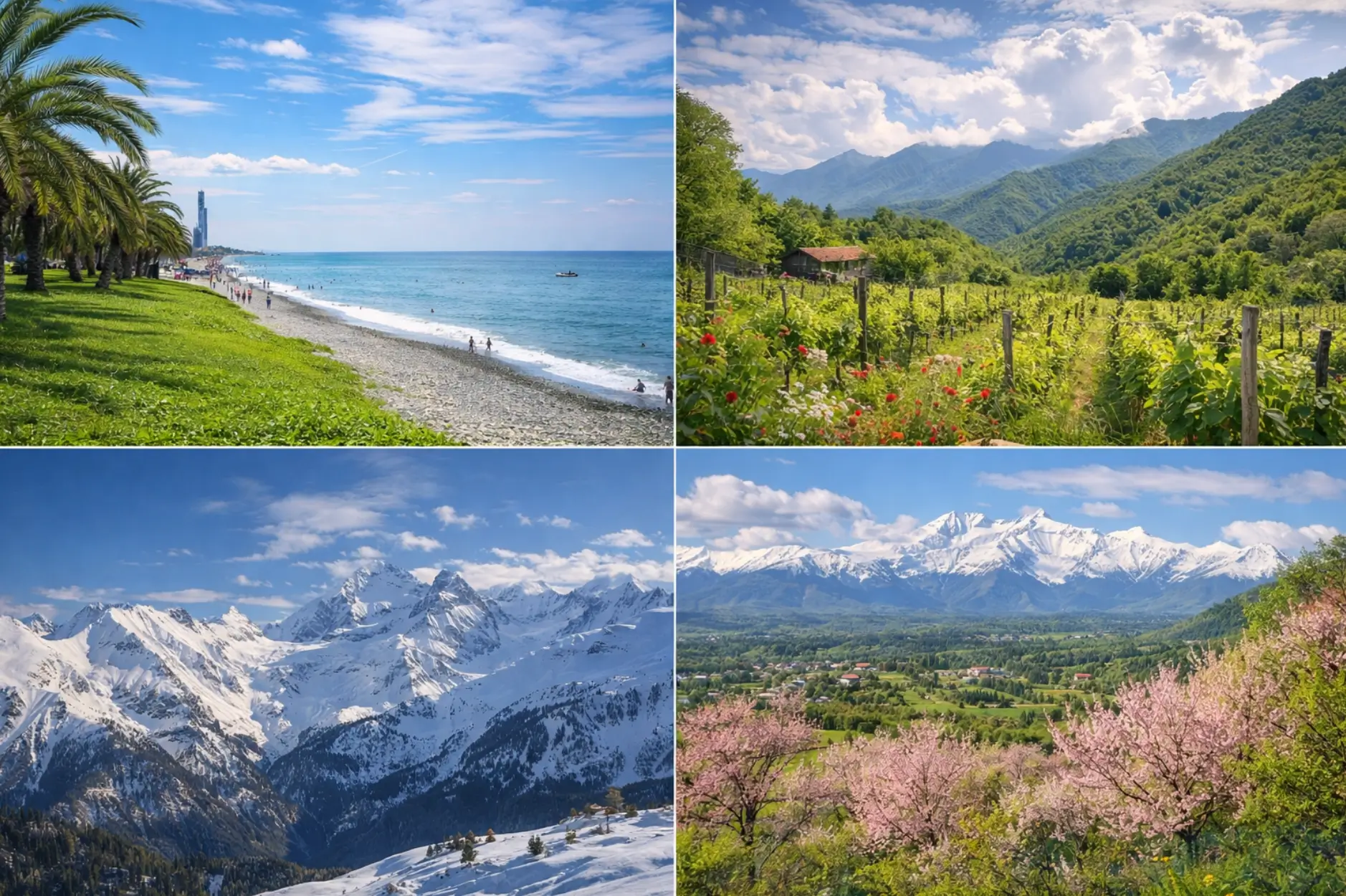
Georgia is a small but extremely diverse country in terms of climate. The main Caucasus Ridge reliably protects it from cold northern winds, while the Black Sea moderates the weather in the west. As a result, in Georgia you will encounter a humid subtropical climate in the west and a moderately continental climate in the east. Throughout the year, western regions receive significantly more precipitation (up to 1500–2000 mm/year) than the eastern plains.
- West (Batumi region, Kutaisi): humid subtropical. Winters are mild and snow-free (average +5–+7°C), summers hot and humid (+22…+25°C). The Black Sea coast is the warmest corner of the country (annual average +15°C) with constant humidity of 70–80% and annual rainfall up to 2500+ mm (Batumi receives record precipitation). In autumn and winter, storms and downpours occur in Adjara (Batumi area). Kutaisi, surrounded by forests, has a similar climate: summers hot and relatively dry, winters cool and wet.
- East (Tbilisi, Kakheti): more continental climate. Summers hot and relatively dry (+20…+30°C), winters moderately cool (around +2…+6°C in the capital), less precipitation (especially in summer). In Kakheti (east), summer temperatures often reach +35°C, cloudy days are rare, winters are milder than in the north (snow falls infrequently). Thus, the east is drier, the west more humid (the small Gori Ridge – Likhi – moderates the contrast, but generally, more rain in the west, more sun in the east).
- Mountain regions: from subalpine (~1200–2100 m) and higher. Climate is sharply alpine: average temperatures lower than lowlands. Kazbegi (Stepantsminda, ~1700 m) warms to ~+15…+18°C in summer; winters below 0 (day −3…+3°C) and 1–2 m of snow. Gudauri (~2200 m) and Tsakhkadzor (Armenia) similar – winter −3…−7°C, 1.5–2 m snow. Upper Svaneti (Mestia, ~1500 m): annual +2°C, August +15°C, January ≈−10°C. Higher altitudes increase cold sharply, fluctuations intensify, storms and avalanches more likely.
Regional and Route Recommendations
- Tbilisi and East: Capital and Kartli/Kakheti valleys comfortably warm. Spring and autumn pleasant (+20…+25°C, fewer tourists), May may bring rain. Summers hot and humid, especially July–August (nights cooler, daytime +35…+40°C). Winters: frosts possible (sometimes < −10°C at night), occasional thaws. Light sweater recommended year-round. Driving rental cars fine, watch traffic in tourist season.
- Batumi and Western Coast: Humid maritime climate softens winter (+5…+8°C) and moderates summer heat via sea breeze. High humidity may feel muggy; autumn–winter often brings downpours. Summer warm (~+28°C in August) but humid. Consider precipitation: winter storms possible; mountain roads (to waterfalls, reserves) slippery.
- Kutaisi: “Western Tbilisi”: warm summers, cool wet winters. Summer ~+23°C (July), rarely >+30°C; winter ~+5°C (Jan). Precipitation fairly even, slightly higher in autumn/winter. City green and pleasant in summer; thunderstorms possible. Recommended: keep rain gear in car (raincoat, mats, etc.).
- Kazbegi (Stepantsminda) and Gudauri: Winter snow resorts (up to 2 m snow, −3…−7°C). Peak season Jan–Mar; roads wide, little wind, sunny. Summers cool (~+20°C), ideal for valley swimming + alpine activities (Gergeti Church, trekking). Georgian Military Road often closed in winter; access to Trinity Church only by foot/snowmobile. Shoulder season: large day-night swings → layered clothing.
- Svaneti (Mestia, Ushguli): Mountain region, harsh climate. Summer cool (+10…+18°C, humid), winter very cold (−10…−15°C). High precipitation even in dry months (~80–130 mm/month). Best time: June–September (day +10…+15°C, more clear days). Winter roads often snowed in. 4×4 recommended; plan overnight stops.
Seasonal Recommendations
For planning a trip to Georgia, we highlight seasonal “comfort windows” based on client experience and weather stats:
- Spring (March–May): Picturesque but unpredictable. March still cool/rainy; May daytime +20…+25°C. Kakheti early May +25°C. Nature blooms; wine tours excellent (Rtveli grape harvest in Sept). Moderate precipitation: spring showers frequent west, east drier. Mountain passes usually open (except early weeks). Bring warm jacket (mountain nights still cold). Recommendations:
- Dress in layers (morning +5°C, day +25°C).
- Carry raincoat/umbrella (spring showers, Batumi/Tbilisi).
- Routes: lowlands comfortable; above 2000 m snow may remain, paths slippery.
- Summer (June–Aug): Peak season; heat and humidity require caution. Valleys/plains +28…+35°C, sometimes +40°C. Black Sea coast slightly cooler (~+26…+30°C), humidity ~80%. Mountains refuge: Gudauri/Kazbegi +20…+22°C, cool nights. Recommendations:
- Early start: morning walks/excursions; 12:00–16:00 peak heat.
- Hydration/sun: drink water, wear hat/cap, sunglasses.
- Car care: check antifreeze, A/C, avoid overheating.
- Alternatives: sea/mountains milder; mountain evenings cold.
- Autumn (Sept–Nov):Most comfortable. Days warm (+24…+27°C, Kakheti +18…+20°C), nights cool. “Velvet season” coast, wine festivals Kakheti. Mid-Oct: golden autumn mountains. Rainfall decreases west, overall stable. Recommendations:
- Beach: Sept–Oct ideal; water warm, air mild.
- Hiking: trails accessible; Allan trails, Chkheri-Lobzhari valley scenic.
- Wine tourism: early autumn grape harvest (Rtveli late Sept). Sunscreen advised.
- Winter (Dec–Feb): Eastern cities +2…+6°C daytime, short cold spells, thaws (±10°C swings). Black Sea coast mild (+7–+8°C), damp, frequent rain. Mountains: Kazbegi/Gudauri 2 m snow, −3…−7°C, ski season. Rural roads may snow in; distant monasteries/alpine lodges only on foot/snowmobile. Recommendations:
- Dress warmly: mountains, evening excursions (jacket, pants, hat). Hotels may lack central heating.
- Check forecast: coastal storms, mountain blizzards; extreme precipitation may close roads.
- Ski resorts: use official slopes (Gudauri, Bakuriani), snow clearing available. Wheel chains/spikes mandatory in mountains.
Seasonal Forecast 2026
By end 2025, climatologists note trends toward abnormal heat/extreme weather. WMO forecasts early 2026 relatively warm: higher probability of above-normal temperatures Northern Hemisphere. Met Office: 2026 may be among warmest years (avg +1.4 °C above pre-industrial). Summer 2026: expect frequent heat waves (record +40°C in valleys possible).
- Spring 2026: likely warmer; river water warms earlier, flowering earlier. Early spring may still be cool in mountains. Monitor forecasts – possible Black Sea “storms” and late frosts.
- Summer 2026: expected heat and relative drought (eastern valleys). Moderate La Niña + global warming → above-average very hot days. Fire/overheating risk elevated. Coast: severe thunderstorms/downpours possible (esp. Aug). Advice: plan long trips June/Sept – milder heat (see autumn wine festivals).
- Autumn 2026: likely warm/dry (Sept–Oct possibly warmer than avg). Snow may fall earlier mountains; trekking extended to mid-Oct. Nov: more rain (west), mountains heavy snow (ski season begins).
- Winter 2025/26: models predict milder climate due to global warming (weak La Niña slows Arctic invasions). Winter days relatively warm (esp. East), prepare for cold spells. Skiers: monitor precipitation, winter tires, insulation.
Summary: For tourists and drivers, key seasons “all except extremes”: early June and Sept – lowland excursions, May – lush greenery, Oct – fair mountain weather. Even in “warm” seasons, remember unpredictable mountain climate and regional anomalies (floods, frosts, hail). Constantly monitor local forecasts (esp. mountains) and follow local safety recommendations.