








13 min
Welcome to our practical and lively guide to fuel stations in Georgia! We share plenty of useful tips to ensure your journey by car through Georgia goes smoothly and without surprises at the pump. Below, we’ll explain how to distinguish diesel from petrol, avoid mistakes when choosing fuel, where to find stations (especially in the mountains), how to pay, and what to consider during winter at high altitudes. Let’s go!
Petrol or Diesel? How Not to Mix Up Fuel
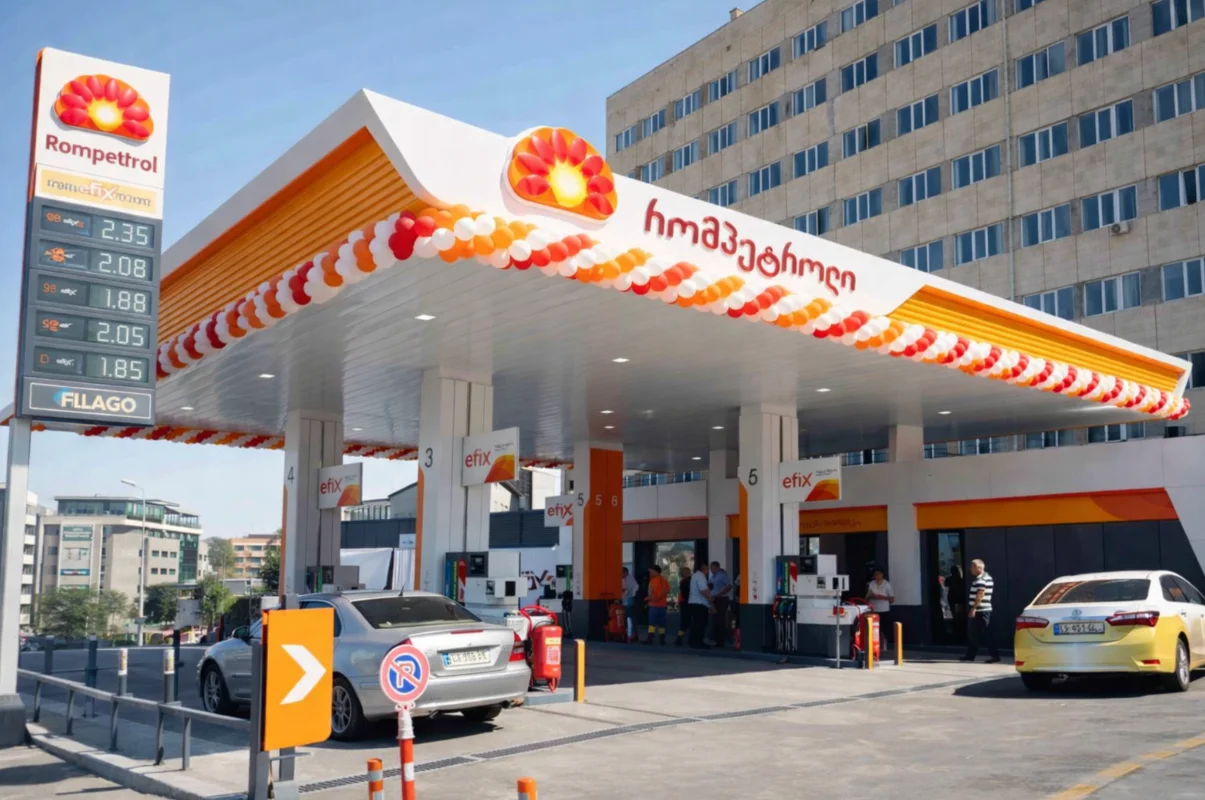
Fuel labeling in Georgia is different from what you’re used to. If you are accustomed to the numbers “92” or “95,” be prepared to see different names on the pumps. Petrol is divided into classes here: Regular (92 octane), Premium (95), and Super (98). Diesel is simply called Diesel. At major chain stations, names are usually duplicated in English, but at some stations (for example, Socar), all signs may be only in Georgian. Georgian letters can be confusing, so don’t rely solely on intuition from the labels – it’s better to ask.
Visual cues can also help. Pay attention to the color and shape of the nozzle: often, diesel nozzles differ in color (for example, black or green), while petrol nozzles have another color (often green or blue, depending on the chain). However, there’s no universal standard, so the main thing is to read the label on the pump. Usually, the fuel type is indicated in small print: look for words like “Diesel” for diesel or “Premium/Regular/Super” for petrol. By the way, „ბენზინი“ in Georgian means petrol, and „დიზელი“ means diesel. If you see these letters, keep in mind they indicate different fuel types.
Staff at Georgian fuel stations usually approach and fill the car themselves. In big cities and chain stations, attendants often know basic words in Russian or English. They may ask themselves: “Premium? Diesel?”. Don’t hesitate to clarify and point to the correct pump if in doubt. Sometimes an attendant tries to guess the fuel based on the car model – for example, seeing an SUV and automatically reaching for the diesel nozzle. It’s better to specify the fuel type yourself – say, for example: “95 Premium, full tank” or “Diesel, 20 liters”. This helps both the staff and keeps you safe.
How Not to Make a Fuel Mistake: Tips and Real Cases
Mixing up fuel is every traveler’s nightmare, but it happens, and we want to help you avoid it. Here are our tips based on client experiences:
- Double-check the label on the pump. Especially if you’re at a new station. One of our tourists once stopped at a remote station where all signs were in Georgian. He looked for the numbers 92 or 95 on the display in vain. Fortunately, he remembered our advice and asked the attendant directly: “ბენზინი? Diesel?”*. The staff pointed to the correct pump, preventing a mistake. Don’t be afraid to ask – better to check twice than later have to tow the car because of wrong fuel.
- Follow the rental company’s or our guide’s recommendations. If you rented a car, the fuel type is usually indicated on the fuel cap or in the documents. Our team always notes the fuel type in the client guide, but double-check: diesel or petrol, and which octane. There was a case where a client assumed that a large car must be diesel – and requested diesel. Luckily, the attentive attendant asked again, because it was actually a petrol engine! Since then, we always repeat: if unsure – check the manual or ask us.
- Don’t rely on the car’s color or guesswork. On our trips, we’ve encountered funny myths: that “all Georgian cars run on gas” or “in the mountains, everyone uses diesel”. This is not true. Only your car’s technical data determines the fuel. So read the labels, don’t guess.
- Avoid dubious stations with unclear names. Besides major chains, Georgia has small private stations. They may have their own signs or none at all. Travelers have sometimes filled up at an unnamed pump in a village and received fuel of unknown origin. We recommend using well-known chains – Wissol, Lukoil, Socar, Gulf, Rompetrol, etc. Fuel quality is more reliable, staff is trained, and the chance of mixing up fuel is lower.
If you accidentally fill the wrong fuel – don’t start the engine. This is golden rule. Call for help from the station staff; at major stations, they can often drain the tank or advise a service. Once we had to evacuate a client’s car where 10 liters of “wrong” fuel were added. Nothing serious happened – all fixed – but a lost day of vacation is nobody’s idea of fun. So it’s better to avoid the situation by paying attention from the start.
Where to Find Fuel Stations: Cities, Highways, and Mountains
Cities and highways: In major Georgian cities – Tbilisi, Batumi, Kutaisi, etc. – stations are abundant, often at every step. On main streets and exits, you’ll encounter well-known chains. On main highways between cities, stations also appear regularly, roughly every 20–30 km, sometimes more often. For example, on the road from Tbilisi to Batumi, you won’t run out of fuel: before the pass, after the pass – stations everywhere. Most stations operate 24/7, so you can find one even at night (especially chain stations). In small towns, some stations may close late, keep that in mind.
Note: Fuel prices in Georgia are slightly higher than in Russia, so many travelers try to enter with a full tank. However, importing petrol in cans across the border is prohibited. If you travel from Russia via Upper Lars, better fill up in Vladikavkaz, leaving cans empty – Georgian customs will make you pour the excess. After crossing the border, the first station is in Stepantsminda (Kazbegi), about 10 km away. So you won’t run out, but don’t cross the border with an empty tank.
In the mountains: Mountain areas are a different story. In popular mountain towns, there are stations, but few. For example, in Mestia (Svaneti) only a couple of pumps operate; in Stepantsminda, as mentioned, you can fill up. But if you turn into remote villages, don’t count on a station. In Tusheti, Ushguli, Racha and other remote regions, go with a full tank. Moreover, when heading into mountains, fuel up in advance as much as possible, preferably in the last major town before the climb. We recall a case when tourists went toward Omalo (Tusheti) with half a tank, thinking “there will surely be something there.” They almost ran out on the way back – local residents sold them a couple of liters from a can at a high price. Lesson learned: mountains – only with a full tank and refill at the first opportunity.
Fuel reserve: In some very remote locations, locals may sell petrol or diesel from barrels or cans – for example, at the edge of a national park or a pass marked “SOS Petrol.” But this is a last resort! Quality is questionable and prices are high. Better plan your route so you have enough fuel to reach civilization. If in doubt – take a can and fill it at a legal station in advance (within the country, not across the border). A full can in the trunk for emergencies in the mountains – peace of mind, especially in winter.
Density and availability: On tourist routes, stations are usually every 50 km or more often, but on secondary roads there may be nothing for tens of kilometers. Always check station availability on a map before venturing into unknown roads. Our tip: apps like Google Maps, Maps.me, or GPS devices show stations; plus we usually provide our clients with a list of reliable points along the route. Use navigation – no unpleasant surprises.
Fuel Payment: Cash, Cards, and Details
In Georgia, fuel is paid exclusively in lari (GEL) – the national currency. No dollars or rubles are accepted, so make sure you have lari in advance. Exchange money in the city; stations offer poor rates and may not have exchange facilities.
Most stations accept bank cards. At chain stations in Tbilisi or Kutaisi, you can confidently use Visa or Mastercard – terminals are almost everywhere. You can either hand your card to the attendant (they often carry a mobile terminal) or go with them to the cashier. Apple Pay/Google Pay often works in major cities if your card is linked. But always have a backup plan – cash. In remote areas, small villages, or very old stations, cash may be the only option. For example, in a mountain village, you may be told: “Cash only”. Also, sometimes the terminal loses connection or temporarily fails – we’ve encountered this a few times, especially after snow in the mountains. Keep some cash in your glove box or wallet specifically for fuel.
How payment works: There are variations. Sometimes in Georgia, payment is upfront – you specify the amount, pay, and they dispense that much fuel. For example: “20 GEL, Regular” – you hand over the cash, and the attendant fills that amount. But usually, you fill first, then pay according to the meter. Especially if requesting “full tank,” the amount is unknown in advance. In that case, the attendant fills to the click, tells the total (or shows it on the display – e.g., “65 GEL”), and you pay – cash or card. Always wait for the meter to reset before refueling if paying afterward. Standard procedure, but better to check: previous reading may not be cleared. We haven’t encountered fraud at Georgian stations, but attentiveness helps.
Tips for the attendant – optional. Tipping is not mandatory in Georgia, but if you received good service, advice, or window cleaning, leave a couple of lari. Attendants, especially in the provinces, work for modest salaries and appreciate gratitude. We sometimes reward them when we see genuine effort.
Remote areas: In high-altitude villages, even official stations may lack a terminal – internet is weak. Carry cash. Also, in very remote places, fuel may be sold from a shop or a resident’s yard – “poured from a can – pay cash”. Naturally, no cards there. Rule of thumb: the farther from civilization, the more cash for fuel!
Winter and High-Altitude Refueling: What to Watch
Georgian winter in the mountains is serious. Extreme cold, snow, thin mountain air – all affect the car and refueling process. Here are our tips for winter (and high-altitude) road trips:
- Winter diesel and anti-gel. If traveling in a diesel car during winter, note: special “winter” diesel may not be available everywhere. In cold areas (Gudauri, Kazbegi, etc.), branded stations usually sell fuel with additives, but in extreme cold (-15°C and below) we strongly recommend adding anti-gel. It prevents diesel from gelling. Buy anti-gel in advance in Tbilisi or other cities (inexpensive and prevents morning startup problems). We once met a tourist who couldn’t start their diesel in Gudauri – fuel had gelled overnight. Adding anti-gel is simple: pour the bottle into the tank before refueling, then fill up – mixture mixes better.
- Don’t keep the tank empty in frost. In high mountains and cold, avoid starting with a nearly empty tank. Condensation can form in the empty space, freezing and blocking fuel flow. Keep at least half a tank, preferably more. Useful in case of traffic/snow delay – full tank lets you stay warm in the car.
- Queues and refueling time. Popular winter resorts (like Gudauri) may have queues at the only station before weekends. Many arrive to ski and refuel at the bottom. We advise refuel early or during off-peak hours. Weekdays, early morning or late evening, chances are higher to avoid lines. If there’s a queue – stay calm: walk around, have coffee (but stay near the car!). In extreme cold, don’t stand outside long – wait in the car with heater, or dress warmly.
- Pump operation in cold. In extreme cold, equipment can be slow. Fuel flow may be weaker, attendant takes longer, terminal may glitch. Understand – the staff is cold too, pumps handle thick fuel slowly. We once saw a nozzle freeze in its holder – attendant thawed it with a hairdryer for five minutes. Funny, but -15°C isn’t laughing matter! Patience and warm gloves are key.
- Trust but verify. In bad weather, you may rely fully on the staff – you’re cold and want to get back inside. Generally, attendants are conscientious, but check: ensure they fill the correct fuel, nozzle in your car (not neighbor’s – this has happened). Keep an eye even from inside the car.
- How not to freeze while refueling. Joke – you won’t freeze in seconds ????. But tips to stay warm: wear a jacket or at least a hat. Many dash out lightly – thinking “just a second.” In mountains, that “second” can stretch if payment delays. If station has a shop – go inside, have hot coffee/tea – warms you and supports locals. On stations without a shop – do warm-up exercises: walk a bit, jump, get blood flowing. Don’t stand still. And turn on the heater once back in the car!
- Power loss at altitude is normal. Bonus tip – not fuel, but mountains: above 2000–2500 meters, thin air reduces engine power. Not fuel quality, just physics. Don’t worry, use lower gear, drive slower but safely. Good fuel helps – as long as it’s in your tank ????
Conclusion and Final Tips
We aimed to make this guide as useful as possible, based on real adventures (and a few quirks) from our experience. Georgia is an amazing country for road trips, and fuel stations are part of the local color and everyday experience, which can be enjoyable if you’re prepared. Finally, here’s a quick summary:
- Always check the fuel you are getting. Labels Regular, Premium, Super guide petrol; Diesel for diesel. Better to ask staff than deal with consequences later.
- Refuel at major chain stations whenever possible. Higher chance of quality fuel and clear labeling. Use small stations only if necessary, and be extra careful there.
- Keep the tank full before entering mountains and remote areas. Plan so you don’t end up with an empty tank mid-pass. Full tank into mountains, refill whenever possible.
- Carry cash lari for fuel. Cards work almost everywhere, but “almost” is key. In remote areas or during connectivity issues, cash saves you. A few dozen lari as backup – must-have for drivers.
- Prepare especially for winter. Diesel – anti-gel; driver – warm clothes. Don’t let the car freeze (full tank and additives), and don’t freeze yourself (dress warmly, drink hot drinks, take breaks indoors). Driving should bring joy, not frostbite ????.
We hope our guide from the CabrioGE team has made you confident about refueling in Georgia. Now no diesel or petrol will scare you, even if the signs are in Martian! Refuel correctly, drive safely, and enjoy the beautiful Georgian roads. See you on the route – we guarantee a full tank of impressions!