







Гнедько Марина, Автор в Cabrio - Page 2 of 4 | CabrioGE

Deposit When Renting a Car

Traveling through picturesque Georgia in a rental car offers freedom and unforgettable experiences. But before setting off on your adventure, it’s important to understand what a car rental deposit is and why it is required. As a rental company with extensive experience, we will explain all the details: why a security deposit is necessary, how we handle it, and how we ensure the refund process is clear and fully transparent.

Why Is a Deposit Required When Renting a Car?

The deposit (or security deposit) is an amount we ask you to provide as a guarantee before your trip. It serves as protection for both parties — for you and for us. It allows the company to quickly cover minor unforeseen expenses if something unexpected happens during the rental. For example, insurance policies usually include a deductible — the portion of repair costs that the customer is responsible for in case of damage. The deposit covers these minor expenses. It also encourages careful driving and compliance with traffic regulations, as it is in everyone’s interest to complete the journey without issues.

We always strive to be максимально open with you: transparency and honesty are the foundation of good relationships. The deposit you provide when renting is a guarantee of peace of mind. For you, it means we take care of our vehicles and are ready to clarify any details (we hand over the car in excellent condition and calculate all expenses fairly). For us, it ensures that any small unexpected costs can be promptly covered if they arise.

How the Deposit Works in Our Company

In our practice, everything is simple and clear. When booking a vehicle, we temporarily block $200 on your card (or accept this amount in cash at the office) — this serves as the future deposit. Upon receiving the vehicle, these $200 are officially оформляются as the security deposit. Step by step:

  • Booking and vehicle pick-up. When booking, we ask you to provide $200 as a reservation guarantee. This amount is not charged immediately but simply blocked on your card (or accepted in cash upon pick-up). When you arrive, we verify your documents and hand over the vehicle: the blocked amount becomes the official deposit.
  • Full tank at departure. The vehicle is provided with a full tank of fuel. We note this during the inspection together with you — you can clearly see that the tank is full. This ensures accurate calculation of fuel consumption during your trip.
  • Vehicle return and expense calculation. At the end of the rental period, we carefully inspect the car together with you. We check the fuel level and look for any new damage. If the vehicle is not returned with a full tank, we calculate the cost of refueling and deduct it from the deposit. Similarly, if minor damage or fines are identified, we discuss them on the spot and include these expenses in the final calculation.
  • Refund of the remaining deposit. Once all expenses have been accounted for, we return the remaining balance of the deposit. If the amount was blocked on your card, we release the hold — the funds usually return to your account within one to two banking days (often almost immediately). If the deposit was paid in cash, we return the balance right after the calculation.

This way, the entire procedure is transparent and straightforward — you always see what you are paying for and receive a precise calculation on the spot.

Examples of Typical Situations

The deposit may be used in various everyday situations during your trip:

  • Returning the car without a full tank: If the vehicle is returned without a full tank, we simply refuel it and deduct the fuel cost from the deposit (usually a small amount, such as $10–$30).
  • Minor traffic fines: A speeding or parking fine may be issued during or even after your rental period. We monitor such fines, provide you with the official notice, and settle the payment using the deposit.
  • Minor damage: For example, a scratched bumper, a scraped door, or a broken mirror. Small defects are covered by the deposit — we arrange the repair or replacement (typically amounts up to several dozen dollars).
  • Other unforeseen expenses: In rare cases, this may include towing services or fines issued in mountainous regions. We inform you immediately about any such expenses and cover them from the deposit.

These situations are uncommon, but this is exactly why the deposit exists — to resolve minor issues quickly and complete the rental smoothly.

Transparent Calculations — Always in Your Presence

All calculations are performed immediately upon vehicle return, in your presence. This ensures complete transparency:

  • We inspect the vehicle together and compare it with the handover report, discussing any identified damage (if present).
  • We check the fuel level and, if necessary, calculate the amount required to refill the tank, showing you the current fuel prices.
  • If fines are identified, we show you the official notices or receipts and immediately include them in the final calculation.
  • All expenses are fully visible to you: we provide receipts and documentation, so you know exactly what you are paying for.

With this approach, you will not face any unpleasant surprises after your trip. All expenses are discussed and settled on the spot in a calm and transparent manner.

Why $200 Is a Reasonable Minimum

Based on our many years of experience in car rental, a $200 deposit is a fair and justified amount. It is well balanced for several reasons:

  • Coverage of typical expenses. Almost all standard minor costs (fuel shortage, one or two fines, small scratches) fit within $200. If the deposit were significantly lower, even one such issue could exceed it.
  • Alignment with insurance deductibles. All our vehicles are insured, but every policy includes a deductible. A $200 deposit generally covers this deductible, meaning minor damage can be handled efficiently.
  • Convenience and responsibility. For most travelers, $200 is a reasonable amount that is not burdensome, yet it encourages responsible driving.
  • Avoiding additional charges. With a lower deposit (for example, $50–$100), customers would often need to pay extra after the rental. With $200, such situations are extremely rare, and the return process remains smooth.

Of course, for returning customers or long-term rentals, we are flexible and open to discussing individual terms. However, in standard situations, $200 is the optimal deposit — you are not overpaying, and we can confidently cover ordinary risks.

How the Deposit Is Refunded If Everything Is in Order

If you return the vehicle in the same condition in which it was received (full tank, no new damage, no fines), the deposit is refunded immediately:

  • Card release: If the deposit was blocked on your bank card, we immediately release the hold. The funds are automatically returned to your account (usually within one to two days, often sooner).
  • Cash refund: If you paid the deposit in cash, we return the full amount during the vehicle inspection — without delays or additional fees.
  • Documentation: You receive confirmation (paper or electronic receipt) of the deposit refund for your records.
  • Final inspection: We confirm together that there are no new defects. After signing the final report, the rental is officially completed.

In the ideal scenario (full tank, no issues), you receive your $200 back immediately. We do everything to ensure the process is simple, fast, and convenient, so you leave us with only positive impressions.

Car rental in Georgia is an excellent way to experience the country in all its diversity. We aim to minimize bureaucracy and maximize your enjoyment. The deposit is simply a formality that helps us care for our vehicles and ensures your peace of mind. We will be happy to welcome you to our office in Tbilisi. Have a safe journey and a wonderful vacation!
How to Check and Pay Traffic Fines in Georgia – A Detailed Guide for Tourists

Learn how to quickly check traffic fines in Georgia and pay them on time. This guide is prepared by our car rental company based on real situations experienced by our clients. We will share all the methods for checking fines, payment options, and useful tips to ensure your trip goes smoothly without unnecessary worries.

Ways to Check Traffic Fines in Georgia

Checking for traffic fines in Georgia can be done in several ways. Below are all available options, including the official online portal, SMS notifications, banks and payment terminals, as well as a dedicated resource for fines related to fare evasion in public transport:

  • Through the official Ministry of Internal Affairs portal (videos.police.ge) – The main website of the Georgian Ministry of Internal Affairs for checking fines. Note: it is accessible only from within Georgia, so outside the country a VPN with a Georgian IP is required. On the portal, you can enter vehicle details to find out about issued fines.
  • SMS notifications – In Georgia, it is common to notify vehicle owners about new fines via SMS. If the vehicle owner (or renter) has a registered Georgian phone number, the system automatically sends an SMS when a violation is detected by a camera. Tourists with foreign numbers only receive SMS if the contact number was registered (for example, in the border service database or with the car rental company).
  • Through banks and payment terminals – Major Georgian banks (e.g., Bank of Georgia, TBC Bank) and payment terminal networks (TBC Pay, Pay Box, etc.) allow you to check fines by vehicle number. At the terminal screen or with a bank employee, select the fines payment section and enter the car’s registration number (sometimes the vehicle registration certificate number is also required). The system will show any unpaid fines and their amounts.
  • Through the Tbilisi Transport Company website (ttc.com.ge) – This resource is intended for checking fines for fare evasion on public transport in Tbilisi. If a controller issued you a fine on a bus, metro, or funicular for unpaid travel, you can check and pay it online. The TTC website has a section called “Payment of penalties”, where you can check by fine number (protocol) or by the owner’s personal ID. For tourists, it is more convenient to use the fine receipt number issued on the spot.

How to Use the Official Ministry of Internal Affairs Portal

To find out about fines through videos.police.ge, follow these steps:

  1. Connect to a Georgian VPN. The MIA website may not open outside Georgia – use a VPN with a Georgian IP address to bypass this restriction.
  2. Go to the Georgian MIA portal (videos.police.ge). The interface is usually in Georgian (browser translation is possible).
  3. Choose the checking method. The portal offers several tabs: search by protocol (fine number), search by the offender’s personal data, or search by vehicle information. For tourists, the easiest is to search by vehicle data.
  4. Enter the vehicle details. You will need to enter the vehicle registration number (Latin letters and numbers) and the vehicle registration certificate number (series/number) or VIN. Example: ABA1234 and the registration certificate number from the documents.
  5. Click the search button. The system will display a list of all fines associated with this vehicle. You will see the violation date, description (in Georgian, but main words are understandable: e.g., speeding, parking, etc.), and fine amount.

Our experience: Many tourists have contacted us unable to access the official website on their own. We help clients check fines through our internal system – especially useful when the traveler has already left Georgia and does not have a Georgian VPN. Thanks to our staff in Tbilisi, one tourist found out about a speeding fine in time and managed to pay it before penalties were added.

SMS Notifications of Fines

If a local phone number was provided when registering the vehicle in Georgia (or when renting), the system automatically sends an SMS notification when a fine is issued. The message usually includes: date and type of violation, fine number, and amount due.

  • For local vehicle owners: make sure your current phone number is linked to the vehicle documents. Then you will immediately receive a message for any violation (e.g., detected by camera).
  • For tourists with their own vehicles: foreign plates are also detected by cameras (since 2023, “smart” cameras recognize foreign numbers). However, SMS will only arrive if Georgian authorities know your contact. At the border, you may have left your phone number in the entry form – in that case, there is a chance to receive a notification.
  • When renting a car: usually the SMS about a fine goes to the car owner (rental company). Many rental companies immediately inform clients about received fines, forwarding the SMS or email. Our advice – stay in contact with the rental company after your trip: if a fine arrives, discuss who and how will pay it.

Practical example: One of our clients rented a car in Tbilisi and left the country unaware of a violation. A couple of weeks later, the rental company received an SMS about a parking fine and contacted us. We helped the tourist pay the fine remotely, avoiding problems with re-entering Georgia.

Checking Fines via Banks and Terminals

Bank branches: In almost any Georgian bank branch, staff can check your fines. Just provide the cashier with the vehicle registration number (and the registration certificate if required). The bank employee will access the MIA database and inform you if there are any outstanding fines. This method is convenient if you are already in Georgia and face difficulties with online checks.

Payment terminals: Terminals are installed nationwide (e.g., TBC Pay, Pay Box, etc.), where you can independently enter data to check for fines. How to do it:

  1. Select the payment category on the terminal screen (usually “MIA Fines” or the road police icon).
  2. Enter the vehicle number. Some terminals may request additional information – the vehicle registration certificate number for verification.
  3. After entering the data, the system will display your fines (if any) with amounts. You can immediately pay with cash or card.
  4. Be sure to keep the receipt issued by the terminal. It serves as proof if questions arise with the police or at the border.

Tip: Payment terminals often have Russian or English interfaces, making it easier for tourists. In case of difficulties, locals or our guide can assist you. Many clients noted that TBC Pay terminals are convenient – the menu is intuitive and payment can be completed in a few minutes.

Fines for Fare Evasion: TTC Website

If you received a fine in public transport (e.g., ticket inspectors fined you for unpaid travel on a Tbilisi bus or metro), these fines must be checked separately. Tbilisi Transport Company (TTC) manages these violations.

To check a fare evasion fine:

  • Go to the TTC website and find the section “Payment of penalties via internet” (available in English and Georgian).
  • Choose the checking method: by protocol number or by personal ID (if you have a Georgian ID). For tourists, it is easier to use the protocol number indicated on the receipt issued by the inspector.
  • Enter the required information to get fine details and amount. You can also pay the fine online using a bank card directly from this site.

Fines for fare evasion are usually small (around 5–10 GEL), but must be paid. Otherwise, questions may arise on your next visit or when applying for a transport card. We recommend keeping the receipt issued by the inspector until the fine is fully paid.

Ways to Pay Traffic Fines

Paying Georgian fines is as versatile as checking them. Choose the method that is most convenient for you:

  • Online payment: If you successfully found the fine on the official MIA portal, payment options are usually listed there. Most often, you need to go through an electronic payment system (e.g., via Bank of Georgia or another bank) and enter your card details. Some fines (e.g., from Tbilisi Transport Company) can be paid directly on the service website. Note: foreign Visa/MasterCard cards are usually accepted, and the currency is automatically converted to GEL.
  • Through payment terminals: As described above, terminals allow both checking and paying fines. After the amount appears on the screen, simply pay (cash or card, depending on the terminal). The terminal will register the payment. This method is convenient for those already in Georgia – terminals are located in shopping centers, gas stations, bank lobbies, and other busy places.
  • At bank branches: You can pay the fine directly at the cashier of any major Georgian bank. Inform the cashier you want to pay a traffic fine, provide the vehicle number and ownership or rental document (if necessary). The bank employee will locate the fine in the system and accept payment in cash or by card. A receipt will be issued. This traditional method is reliable, though it may take more time (queue, processing).

Tip from our company: If you have already left Georgia and discovered a fine but online payment is not available, contact us. We can assist with remote payment through our representatives in Georgia so you settle the fine on time.

Important Details and Payment Deadlines

Do not neglect paying fines in Georgia. Keep in mind several important rules and consequences:

  • Fines do not expire. In Georgia, a traffic fine does not disappear over time. Even after several years, an unpaid fine remains associated with you or your vehicle. In other words, fines do not “vanish” until paid.
  • 20% discount for prompt payment. Georgian law encourages drivers to pay fines promptly. If the violation is detected by an automated camera, paying within 10 days gives you a 20% discount on the fine amount. This is a great reason to settle fines immediately and save money. The discount is applied automatically: simply pay, and the system deducts 20%.
  • 30 days without penalty. The standard payment period is 30 calendar days from the date of the fine. Payment must be made within this period; otherwise, a penalty interest (late fee) starts accruing. This increases the total amount, so delays are unwise. The interest is small (daily percentage of the fine), but over months it can add up.
  • Problems on exit and re-entry. Unpaid fines may cause issues at the border. Georgian border and customs authorities receive fine debt information. If the fine is overdue, you may be asked to pay immediately upon exit (some border points have cashiers or terminals). Moreover, with large unpaid fines, entry into Georgia may be denied until debts are settled. We know cases of tourists turned back at the border due to unpaid fines. Therefore, we strongly recommend settling all fines before the end of your trip.

Features and Recommendations for Tourists

Below are specific tips based on common situations travelers face. These recommendations are based on our experience with tourists in Georgia:

  • If checking fines from outside Georgia: The main difficulty is accessing official services. Solution: use a VPN with a Georgian IP to access videos.police.ge or similar sites. There are also special online services and bots that help check fines remotely. For example, the Russian-language Telegram bot @FinesGe_bot can find fines and even send notifications for new ones using the vehicle number and registration certificate. Use such tools if the official portal is inaccessible. Don’t forget to save screenshots or fine numbers to pay later without issues.
  • If a fine arrives after returning a rented car: This happens if cameras recorded a violation but the information was processed days later. Usually, the rental company receives the notification (SMS or email) and may either pay the fine from your deposit or ask you to pay it yourself. Our advice: check the rental agreement for the fine policy. Reputable companies (like ours) inform clients and provide a receipt for payment. If you have already left, contact the rental company – they can pay the fine on your behalf (with reimbursement from you) or suggest a convenient remote payment method. Do not ignore such fines: even after leaving, the debt remains with the vehicle, and questions will arise on your next visit to Georgia.
  • Convenient mobile apps and websites: While traveling, a computer is not always available – much can be done from a smartphone. Fortunately, bank platforms (e.g., Bank of Georgia or TBC mobile apps) allow clients to pay fines online. With a Georgian bank card, you can see and pay fines in a few clicks. For visitors without local banking, online bots and websites help – the Telegram bot mentioned above, or web services with mobile support. The TTC website is also mobile-optimized for public transport fine checks. We recommend installing a VPN on your phone in advance to quickly access the official MIA portal if necessary.

We hope our guide helps you understand the nuances of checking and paying fines in Georgia. Our company strives to make your trip comfortable and safe – sharing advice based on personal experience and that of hundreds of tourists. Follow traffic rules, and if a fine is issued, now you know how to promptly check and settle it. We wish you pleasant and carefree travels in hospitable Georgia!

Where You Should Not Drive a Rental Car in Georgia

Georgia is an amazing country for road trips. The roads connect the seaside with high mountains, ancient monasteries with bustling cities. As a car rental company, we aim to help you see all the beauty of Georgia safely. From our own experience, we know there are destinations where it’s better not to go by rental car. These restrictions are not arbitrary; they are based on real incidents: some routes too often end with a ruined holiday, towing, and expensive repairs. Our goal is to protect you from such problems and make your trip pleasant and safe.

Why These Restrictions Exist

To help you understand the reasons behind these prohibitions, here are the main factors why we do not recommend certain roads and regions:

  1. Dangerous road conditions. In some areas there is no asphalt—only broken dirt roads with potholes, rocks, and steep drops. Crossing mountain passes on such roads is very risky in a standard car. What is manageable for a prepared 4×4 can be disastrous for a city-type rental vehicle.
  2. Lack of insurance coverage. Insurance does not apply on the restricted routes and in remote regions. If something happens to the car there, the renter is fully responsible for all costs. Neither comprehensive insurance nor extended coverage will cover damage on forbidden roads.
  3. Vehicle wear and damage. Driving on rough off-road terrain seriously damages the suspension, tires, and mechanical components. The rental agreement explicitly states that the car must not be used outside of its intended purpose—such as driving where there is no proper road surface. If you deliberately violate these terms, the company may charge fines and require compensation. Simply put, repairing a “destroyed” suspension can be extremely expensive.
  4. Unavailability of assistance. Most “forbidden” routes are far from towns and rescue services. In the mountains, there is often no mobile signal—you won’t even be able to call us or 112. Even if signal appears, sending a tow truck to such places is difficult and slow, and sometimes physically impossible until weather conditions improve. You risk being stranded without help, fuel, or food for a long time.

Remember that we track the location of our vehicles for your safety. If the car enters a restricted region, we can see it via GPS. In critical situations, we may contact you to clarify the situation, and in cases of serious violation, we can even remotely block the vehicle. These measures are in place to prevent accidents before they happen. In simple terms, we do not want your long-awaited holiday to turn into a dangerous rescue operation. Believe us, such cases have happened—and now we aim to prevent them.

So what are these routes, and why are they so risky? Below we provide a detailed overview of specific roads and regions in Georgia where you should not go with a rental car. We also explain why they are dangerous, what incidents have occurred in practice, and how you can visit these places safely without violating rental terms.

Dangerous Mountain Routes (Forbidden Roads)

Some roads in Georgia may appear on a map as a convenient shortcut or an enticing adventure route. But if you are not in a prepared 4×4 with serious off-road experience, avoid them. GPS navigation (especially Google Maps) sometimes guides travelers along these paths without warning about road conditions. As a result, tourists end up on broken mountain switchbacks where 10 km/h is already an achievement and regret not knowing the risks beforehand. Below are the three most well-known dangerous routes forbidden for rental cars.

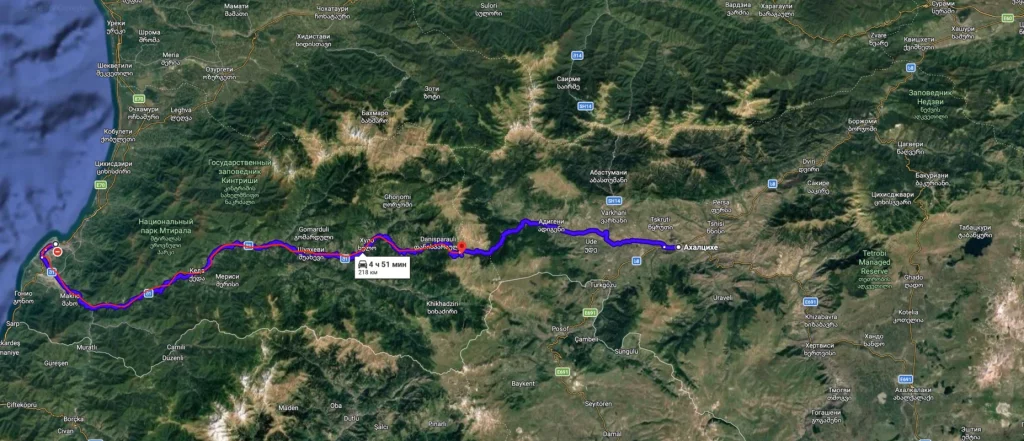
Akhaltsikhe – Batumi via Goderdzi Pass

The road through Goderdzi Pass after Khulo – asphalt ends and a challenging dirt road begins.

If you plan a route from Tbilisi or Kutaisi to Batumi, many maps by default route through Akhaltsikhe and then Goderdzi Pass. On paper, it looks attractive—a direct path through the mountains, shorter than the detour via Kutaisi. But under no circumstances agree to drive Goderdzi Pass in a standard car! This is one of the main forbidden routes. The reasons are simple: for about 30–40 km between the village of Khulo (Adjara) and the Goderdzi resort there is no asphalt at all. The road is a mountain switchback made of gravel, dirt, and rocks. On ascents and descents, the car shakes, with many sharp turns without guardrails. In dry weather there is dust and potholes; in rain, mud knee-deep. Navigation may show ~5 hours from Akhaltsikhe to Batumi, but in reality, an unprepared driver will spend 8–9 hours—the most stressful of your life.

We have had clients who ignored warnings and went through Goderdzi, then called us in distress. One crew tore two tires on rocks—only one spare, no help nearby. Others got stuck in mud after rain on the pass and needed the whole village to help pull the car out. Even local road service tractors hesitate to attempt the difficult sections of this road. Insurance does not cover the pass—so all damage and expenses fall on the travelers. Therefore, we strictly forbid the Akhaltsikhe–Batumi route via Goderdzi Pass. From the capital and central Georgia to Batumi, take the detour via Kutaisi. Yes, it’s a few extra kilometers, but the entire route is on proper roads: for example, Akhaltsikhe – Borjomi – Kutaisi – Batumi is completely safe for any car. Trust us, it’s better to spend an extra hour than to pull your car out of a mountain ditch.

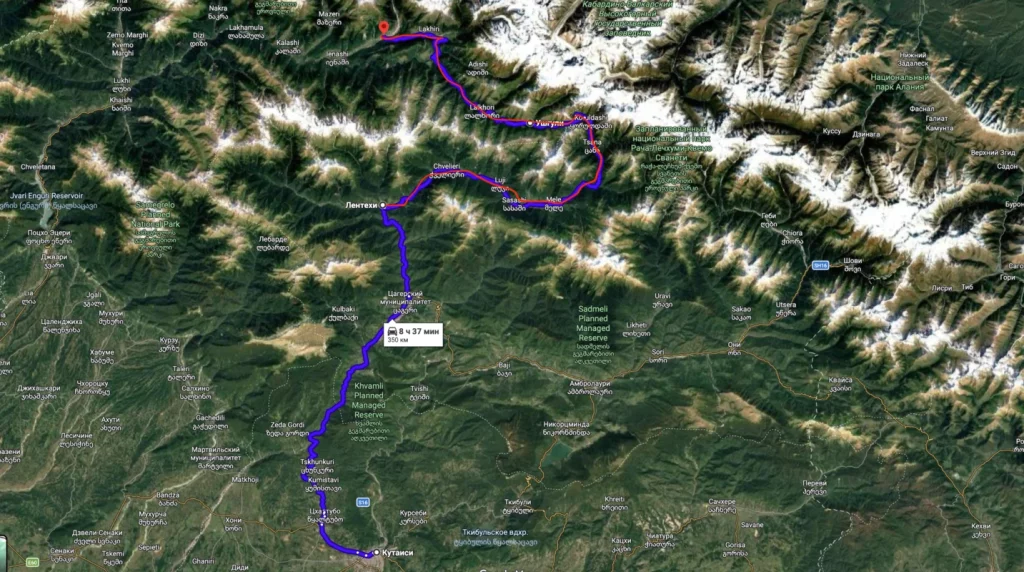
Lentekhi – Ushguli – Mestia (Zagari Pass)

Another “trap” set by navigators is the route to Upper Svaneti via Lentekhi and Zagari Pass to Ushguli. If traveling from Kutaisi to Mestia, this path may also lure you. Warning: do not drive directly from Lentekhi to Ushguli in a rental car! This high-mountain route is open only in summer (May to September) and even then only for prepared 4x4s with very experienced drivers. The Lentekhi–Ushguli road is a narrow mountain trail, partly carved into slopes. There is no asphalt; the surface is dirt, large rocks, river crossings, and muddy ruts. Zagari Pass is about 2,600 m high, and weather can change instantly—you may encounter snow or heavy rain even in midsummer. In colder seasons, the road is completely snowed in and closed until the snow melts.

We’ve heard from extreme travelers about the beauty of the area but also received distress calls: “Help, we slid off the Lentekhi–Ushguli route…” One of our cars returned with a cracked oil pan and destroyed shock absorbers—insurance did not cover it. Therefore, absolutely forbidden: the Lentekhi – Ushguli – Mestia route is off-limits for standard rental cars. Even if you have a capable 4×4, you may go only with explicit permission from the rental company (rarely granted for an additional fee, fully equipped). Overall, we strongly advise against taking this risk. To see Ushguli safely, plan an alternative route: drive the main road through Zugdidi to Mestia (the paved Military–Sukhumi highway via Jvari Pass is allowed). From Mestia, you can visit Ushguli on a guided jeep tour with a local driver. This way you safely reach Europe’s highest village without incidents. Many local guides in Mestia offer tours to Ushguli—take advantage of them instead of risking a rental car off-road.

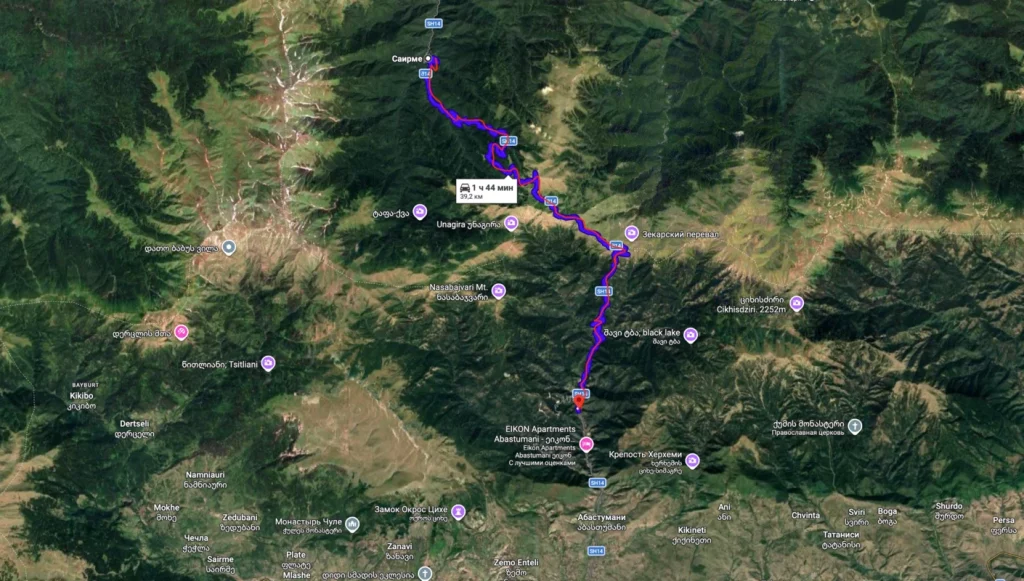
Sairme – Abastumani Mountain Road (Zekari Pass)

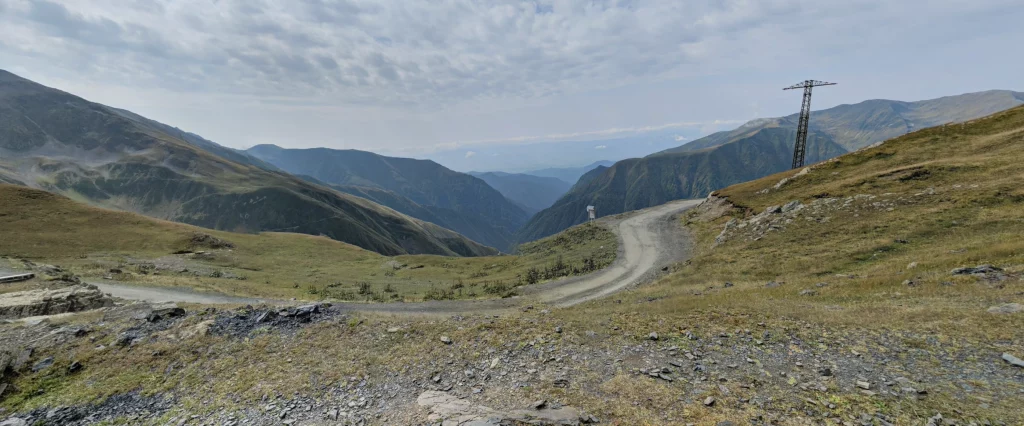
The route connecting the Sairme resort (Imereti) with the village of Abastumani (Samtskhe–Javakheti) is famous for its beauty. Tourists enjoying Sairme’s hot springs sometimes want to cut through to Abastumani via the Zekari Pass. But we do not rent cars for this adventure. Reason: the Sairme–Abastumani road is a narrow mountain dirt road with very sharp turns and continuous elevation gain. There is no pavement, only gravel and dirt, with frequent rockfalls. Driving here is unpredictable and dangerous, especially without experience on slippery or uneven surfaces. One wrong move could put you at the edge of a cliff or puncture a tire on a protruding rock. Insurance does not cover Zekari Pass, and calling for help is nearly impossible. Driving at night is even worse—no lighting, no signal. Therefore, the Sairme–Abastumani road is listed among forbidden routes. To get from Sairme to Abastumani, you must return to the main road (via Bagdati – Kutaisi – Khashuri or other regional detours). Yes, it adds distance, but your car remains intact. Trust us, an extra 100 km on proper roads is far better than an hour of shaking on a cliff edge with no guarantee of arrival.

Hard-to-Reach Regions (No Rental Cars Allowed)

Besides specific roads, there are entire regions in Georgia where we do not allow rental cars. These are either high-mountain areas with extreme off-road terrain or territories not controlled by the Georgian authorities (conflict zones). The rental agreement explicitly lists these regions: Truso, Juta, Vashlovani, Tusheti (Omalo), Shatili, as well as Abkhazia and South Ossetia. Do not underestimate the associated risks—poor road conditions, lack of communication and insurance, the possibility of getting lost, or even running into legal trouble. Below we explain what these destinations are and why you cannot go there with a rental car.

Truso Gorge

Truso Gorge is an amazingly beautiful and secluded area on the border with South Ossetia. You can see mountain landscapes, abandoned villages, and mineral springs with bright-orange streams. Travelers are highly recommended to visit Truso… but not in their own car. The road into the gorge goes from the village of Kobi (on the Georgian Military Road) deep into the mountains along the river. The first few kilometers are reasonably passable; you can reach Almasani village with a standard car. Beyond that—stop: the section from Almasani to the main sights of Truso Gorge is considered forbidden. The dirt road is narrow, broken, and in some places runs directly above the river cliff. Attempting it without a 4×4 and off-road skills is risky. We have had incidents where adventurous tourists in rental crossovers tried to go further, tearing tires or scraping the underbody, and later paid for repairs. Insurance does not cover these locations—all responsibility falls on the renter. Our recommended option: drive your car to Almasani, leave it in a secure place, and continue the journey with a local guide. Residents of nearby villages offer tourists jeep transfers directly to the hot springs and the old fortress in the gorge. This is relatively inexpensive and safe, and most importantly—you can see all the beauty of Truso without damaging your car or stressing yourself.

The Road to Juta (Sno Gorge)

Juta is a high-mountain village in the Khevi region, not far from Stepantsminda (Kazbegi). It is famous for breathtaking views of the Chaukhi mountains and excellent trekking opportunities. The route there sounds harmless: only about 20 km from the turn off the Georgian Military Highway, through the village of Sno and further into the mountains. Many tourists think: “Why not drive to Juta in our rental car?” Let us explain: the last 7–8 kilometers of the road after the village of Sno are poorly maintained dirt road, in places running along a slope above the gorge. The asphalt ends quite quickly, and then begins a bumpy ride over rocks, river fords, and sharp turns. A regular car will suffer there: there is a high risk of damaging the undercarriage, slipping a wheel into a hole, or overheating the brakes on the descent. It’s no coincidence that driving rental cars from Sno to Juta is prohibited by all companies. We don’t want you to repeat the fate of one of our clients who returned with a torn-off bumper and a cracked radiator after such a trip. The better approach: drive calmly to the village of Sno (the road there is asphalted and in good condition). In Sno, hire transport from locals – drivers in UAZs or other 4×4 vehicles often wait there, offering to take tourists to Juta. Alternatively, arrange a Juta tour from Kazbegi in advance – such services are also popular. Trust us, the beautiful mountains of Juta are worth seeing, but not at the cost of a damaged car.

Vashlovani National Park

Vashlovani is a unique reserve in the far southeast of Georgia, in the Kakheti region (near the border with Azerbaijan). Its landscapes are strikingly different from the usual green Georgia: semi-desert, savannah, dry forests, canyons, and mud volcanoes. A true wilderness! It’s no wonder that eco-tourism enthusiasts are eager to get there. But we must warn you: you cannot drive into the heart of the park in a rental car. There is no asphalt road inside Vashlovani – only a network of dirt tracks created by jeeps. You can drive on asphalt to the nearby town of Dedoplistskaro and further to the village of Kasristskali on the park’s edge. Up to Kasristskali you may drive your own car, but no further. Entry into the national park itself with a regular car is prohibited because it’s all off-road. After rain, these steppe dirt roads turn into impassable mud, with vehicles sinking up to the axles. Even in dry weather, it is easy to puncture a tire on a sharp stone or hit the undercarriage on an exposed rock while descending into a canyon. Communication in the reserve is almost nonexistent; imagine being stuck somewhere near the Takhti-Tepe area without phone signal or water – not a great prospect. Evacuating a car from deep inside the park is extremely difficult; sometimes tractors or even a helicopter are required (yes, there have been cases of tourists rescued from Vashlovani by air!). Insurance companies will not cover such incidents – the costs are yours. Therefore, we strongly advise: if you want to see the beauty of Vashlovani, use the park’s services. The park administration can organize a 4×4 tour with a ranger or guide – they will take you to all interesting spots and ensure your safety. Alternatively, you should go in your own prepared 4×4, knowing the area well and with a companion in a second vehicle (even experienced expeditions do not venture there alone). But in a rental car – absolutely not, it’s too dangerous for you and the vehicle.

Tusheti and the Village of Omalo

The road to Tusheti (Abano Pass) – a narrow dirt road winding along the steep slopes of the Caucasus mountains.

Tusheti… A magical word for adventure seekers. It is one of the most remote regions of Georgia, home to authentic mountain villages (Omalo, Dartlo, Bochorma, etc.), medieval towers, and untouched nature. Tusheti is called “the land where time stood still.” But it is also infamous for the road leading to this region. The only car road to Tusheti goes via Abano Pass (altitude ~2,900 m) and is officially recognized as one of the most dangerous in the world. Locals jokingly call it the “Road of Death.” It is a narrow serpentine carved into the rocks of the Greater Caucasus: on one side a sheer wall, on the other – a cliff hundreds of meters deep. There is neither asphalt nor guardrails. The surface consists of clay, stones, and gravel, which are washed away and collapse during rains. In some places, waterfalls flow directly across the road, eroding the ground under the wheels. Every year, people die there; along the road, makeshift memorials mark the spots where cars have fallen. Driving to Tusheti in a rental car is strictly prohibited. We even ask about your plans to continue past Kvemo Alvani (the last village before the ascent) – that’s how serious it is. The road is open only 4–5 months a year (roughly June to October); the rest of the time, Tusheti can be reached only by helicopter. Even when the pass is formally open, only highly experienced drivers in prepared 4×4 vehicles go there. Many tourists hire local Tushetian drivers – and rightly so. They know every turn, can pass on narrow stretches, and feel the car at the edge of slipping. A stranger without such skills venturing there is almost committing suicide. We’ve had clients beg for a jeep to go to Tusheti “at their own risk.” We always refuse – life and health are more valuable. Moreover, insurance companies explicitly exclude this road from coverage. If you venture there and damage the car, the policy will not pay a single tetri, and evacuation from Tusheti costs astronomical sums (if even possible). Think about it: it’s not worth it. If you dream of seeing sky-high Tusheti – please! But not behind the wheel of a rental car. First reach the villages of Pshaveli or Kvemo Alvani (the road there is asphalted), and then switch to transport operated by experienced local drivers. In season, UAZ “minibuses” regularly run from Alvani to Omalo; or order a jeep tour of Tusheti with a guide. Yes, it costs extra, but you will return safe, and the impressions will be joyful, without horror.

The Road to Shatili (Khevsureti Region)

The village of Shatili in Khevsureti is famous for its unique architectural ensemble – ancient defensive towers merged into a single stone fortress. It is a historical monument and a very picturesque place in a high-mountain valley on the border with Chechnya. You can reach it via the only road from the Mtskheta-Mtianeti region, through the Bear’s Cross Pass (Datvisjvari, ~2,676 m). Route: Tbilisi – Zhinvali – Barisakho – Shatili, about 150 km, half of which is dirt serpentine. Asphalt ends after the village of Gudani. From there to Shatili, the road is challenging: it first climbs steeply into the mountains, then winds along the ridge and descends into the Arguni river valley. The surface on this pass is very poor – large sharp stones, grader tracks, and deep ruts in places. The edges of Bear’s Cross Pass partially collapse into a ravine, making it difficult for two cars to pass. Any mistake can result in serious damage or a fall off the road. We forbid our cars from going beyond Gudani towards Shatili. A regular car cannot make it anyway, and attempts in crossovers have ended badly. For example, once tourists insisted they had an SUV and would “carefully drive through.” Result – a spring broke on the next pothole, and the car stopped at the top of the pass. No way forward or back. Locals managed to evacuate them, but the car required major repairs. Of course, no insurance covers such adventures. So again: do not drive to Shatili in a rental car. If you really want to go – fine, drive on asphalt to Gudani or even to the villages of Barisakho/Shatili (while the surface is still good). There are tourist centers there, and you can switch to prepared transport. Or take a tour from Tbilisi – there are now many one-day excursions to Shatili and the nearby village of Mutso in 4×4 vehicles. This way, you see the beauty of the ancient towers and sleep peacefully, without trembling at every turn of the Bear’s Trail.

Abkhazia and South Ossetia

Finally, let us separately mention the regions of Abkhazia and South Ossetia. Formally, they are within the internationally recognized territory of Georgia, but de facto are uncontrolled republics. Driving there in our car is strictly prohibited for political and legal reasons. First, no insurance applies in these territories, as they are frozen conflict zones. Any accident, theft, or car damage in Abkhazia or South Ossetia is your personal problem; the insurance company will not even consider the case. Second, entering there from the Georgian side is practically impossible legally. All official borders are closed: Georgian checkpoints will not let you pass. Some foreigners might theoretically enter Abkhazia from the Russian side, but that requires crossing the international border at the other end of the country, which violates the rental agreement (taking the car outside Georgia without permission). And even if you somehow manage to bring a rental car into Sukhumi or Tskhinvali, know that from the Georgian legal perspective, it’s illegal, and we immediately see the car missing via GPS and report it to the police. There have been cases where cars crossing into the conflict zone were confiscated by local “authorities,” and retrieving them later is nearly impossible. So, you risk both the car and your legal standing. We warn you in advance – do not attempt to drive to Abkhazia or South Ossetia in a rental car. If you want to see the Abkhazian coast, enter from the Russian side using your own transport or an organized tour, but definitely not with a car rented in Tbilisi or Batumi. As for South Ossetia – there is absolutely nothing for tourists there now; it is a closed military zone. Georgia has so many beautiful places that can be visited legally and safely that there is no reason to risk it for dubious adventures.

Conclusion: Plan Your Route Wisely

We have listed the main destinations where you should not drive a rental car. Some names may be new to you, others may be places you have been eager to visit. Trust us, we fully understand your curiosity: Georgia is full of hard-to-reach treasures that attract adventurers. However, our duty is to warn you about dangers and protect you from unnecessary risk. We have seen too many cases where ignoring these recommendations led to a ruined vacation, stress, and large expenses. So listen: if the rental company says “no” – it really means no. This is not out of greed or strictness, but out of concern for your safety and the protection of our property.

What if you really want to see mountain villages and wild parks? The answer is simple: choose alternative ways. Local 4×4 tours are well developed in Georgia – in almost every mountain village, you can find drivers ready to take you to hard-to-reach places in their vehicles for a reasonable fee. Many tour companies offer jeep tours to Tusheti, Khevsureti, Svaneti, Vashlovani Plateau, etc. This is an excellent option: you get to your destination without risking yourself or someone else’s car. Another option is to cover part of the way on foot (for example, walking through the Truso Gorge independently after the accessible part of the road). This “drive as far as possible, then walk or hire a local” combination often gives even more impressions than simply driving the whole way in your car.

In any case, plan your route in advance. When picking up the car, be sure to tell our managers where you intend to go. We will advise which roads are currently in good condition and where it is better to take a detour. And we will definitely warn you if your route is on the “blacklist.” Our goal is not to restrict your freedom but to help you plan your trip so it goes smoothly. Georgia is a hospitable and amazing country, and on good roads in your rental car, you can see dozens of wonderful places: from the wine valleys of Kakheti to the ski resorts of Gudauri, from the caves of Vardzia to the beaches of Adjara. Just consider the local infrastructure and follow our advice. Then your road trip in Georgia will be not only exciting but also safe. We wish you a pleasant journey and vivid impressions! GarmoniZ! (Which in Georgian means “Safe journey!”)

Fuel Guide for Road Travelers in Georgia

Welcome to our practical and lively guide to fuel stations in Georgia! We share plenty of useful tips to ensure your journey by car through Georgia goes smoothly and without surprises at the pump. Below, we’ll explain how to distinguish diesel from petrol, avoid mistakes when choosing fuel, where to find stations (especially in the mountains), how to pay, and what to consider during winter at high altitudes. Let’s go!

Petrol or Diesel? How Not to Mix Up Fuel

Fuel labeling in Georgia is different from what you’re used to. If you are accustomed to the numbers “92” or “95,” be prepared to see different names on the pumps. Petrol is divided into classes here: Regular (92 octane), Premium (95), and Super (98). Diesel is simply called Diesel. At major chain stations, names are usually duplicated in English, but at some stations (for example, Socar), all signs may be only in Georgian. Georgian letters can be confusing, so don’t rely solely on intuition from the labels – it’s better to ask.

Visual cues can also help. Pay attention to the color and shape of the nozzle: often, diesel nozzles differ in color (for example, black or green), while petrol nozzles have another color (often green or blue, depending on the chain). However, there’s no universal standard, so the main thing is to read the label on the pump. Usually, the fuel type is indicated in small print: look for words like “Diesel” for diesel or “Premium/Regular/Super” for petrol. By the way, „ბენზინი“ in Georgian means petrol, and „დიზელი“ means diesel. If you see these letters, keep in mind they indicate different fuel types.

Staff at Georgian fuel stations usually approach and fill the car themselves. In big cities and chain stations, attendants often know basic words in Russian or English. They may ask themselves: “Premium? Diesel?”. Don’t hesitate to clarify and point to the correct pump if in doubt. Sometimes an attendant tries to guess the fuel based on the car model – for example, seeing an SUV and automatically reaching for the diesel nozzle. It’s better to specify the fuel type yourself – say, for example: “95 Premium, full tank” or “Diesel, 20 liters”. This helps both the staff and keeps you safe.

How Not to Make a Fuel Mistake: Tips and Real Cases

Mixing up fuel is every traveler’s nightmare, but it happens, and we want to help you avoid it. Here are our tips based on client experiences:

  • Double-check the label on the pump. Especially if you’re at a new station. One of our tourists once stopped at a remote station where all signs were in Georgian. He looked for the numbers 92 or 95 on the display in vain. Fortunately, he remembered our advice and asked the attendant directly: “ბენზინი? Diesel?”*. The staff pointed to the correct pump, preventing a mistake. Don’t be afraid to ask – better to check twice than later have to tow the car because of wrong fuel.
  • Follow the rental company’s or our guide’s recommendations. If you rented a car, the fuel type is usually indicated on the fuel cap or in the documents. Our team always notes the fuel type in the client guide, but double-check: diesel or petrol, and which octane. There was a case where a client assumed that a large car must be diesel – and requested diesel. Luckily, the attentive attendant asked again, because it was actually a petrol engine! Since then, we always repeat: if unsure – check the manual or ask us.
  • Don’t rely on the car’s color or guesswork. On our trips, we’ve encountered funny myths: that “all Georgian cars run on gas” or “in the mountains, everyone uses diesel”. This is not true. Only your car’s technical data determines the fuel. So read the labels, don’t guess.
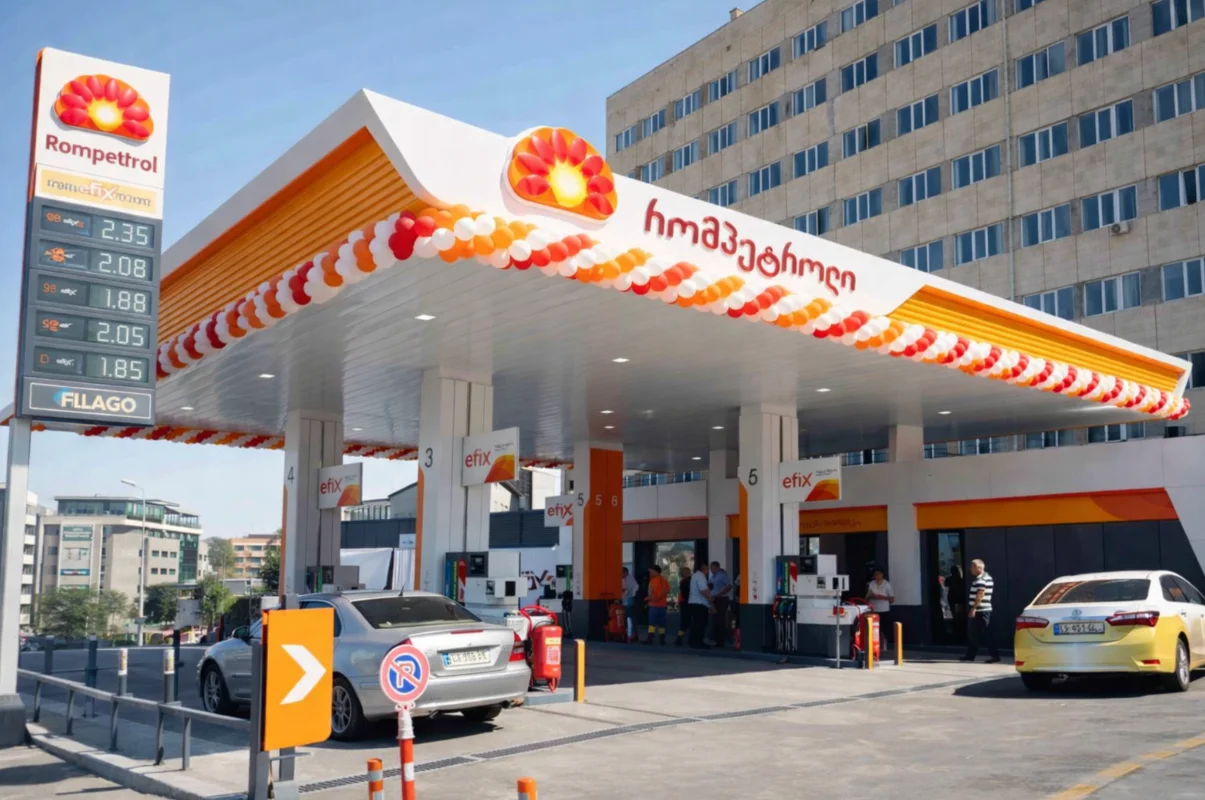
  • Avoid dubious stations with unclear names. Besides major chains, Georgia has small private stations. They may have their own signs or none at all. Travelers have sometimes filled up at an unnamed pump in a village and received fuel of unknown origin. We recommend using well-known chainsWissol, Lukoil, Socar, Gulf, Rompetrol, etc. Fuel quality is more reliable, staff is trained, and the chance of mixing up fuel is lower.

If you accidentally fill the wrong fuel – don’t start the engine. This is golden rule. Call for help from the station staff; at major stations, they can often drain the tank or advise a service. Once we had to evacuate a client’s car where 10 liters of “wrong” fuel were added. Nothing serious happened – all fixed – but a lost day of vacation is nobody’s idea of fun. So it’s better to avoid the situation by paying attention from the start.

Where to Find Fuel Stations: Cities, Highways, and Mountains

Cities and highways: In major Georgian cities – Tbilisi, Batumi, Kutaisi, etc. – stations are abundant, often at every step. On main streets and exits, you’ll encounter well-known chains. On main highways between cities, stations also appear regularly, roughly every 20–30 km, sometimes more often. For example, on the road from Tbilisi to Batumi, you won’t run out of fuel: before the pass, after the pass – stations everywhere. Most stations operate 24/7, so you can find one even at night (especially chain stations). In small towns, some stations may close late, keep that in mind.

Note: Fuel prices in Georgia are slightly higher than in Russia, so many travelers try to enter with a full tank. However, importing petrol in cans across the border is prohibited. If you travel from Russia via Upper Lars, better fill up in Vladikavkaz, leaving cans empty – Georgian customs will make you pour the excess. After crossing the border, the first station is in Stepantsminda (Kazbegi), about 10 km away. So you won’t run out, but don’t cross the border with an empty tank.

In the mountains: Mountain areas are a different story. In popular mountain towns, there are stations, but few. For example, in Mestia (Svaneti) only a couple of pumps operate; in Stepantsminda, as mentioned, you can fill up. But if you turn into remote villages, don’t count on a station. In Tusheti, Ushguli, Racha and other remote regions, go with a full tank. Moreover, when heading into mountains, fuel up in advance as much as possible, preferably in the last major town before the climb. We recall a case when tourists went toward Omalo (Tusheti) with half a tank, thinking “there will surely be something there.” They almost ran out on the way back – local residents sold them a couple of liters from a can at a high price. Lesson learned: mountains – only with a full tank and refill at the first opportunity.

Fuel reserve: In some very remote locations, locals may sell petrol or diesel from barrels or cans – for example, at the edge of a national park or a pass marked “SOS Petrol.” But this is a last resort! Quality is questionable and prices are high. Better plan your route so you have enough fuel to reach civilization. If in doubt – take a can and fill it at a legal station in advance (within the country, not across the border). A full can in the trunk for emergencies in the mountains – peace of mind, especially in winter.

Density and availability: On tourist routes, stations are usually every 50 km or more often, but on secondary roads there may be nothing for tens of kilometers. Always check station availability on a map before venturing into unknown roads. Our tip: apps like Google Maps, Maps.me, or GPS devices show stations; plus we usually provide our clients with a list of reliable points along the route. Use navigation – no unpleasant surprises.

Fuel Payment: Cash, Cards, and Details

In Georgia, fuel is paid exclusively in lari (GEL) – the national currency. No dollars or rubles are accepted, so make sure you have lari in advance. Exchange money in the city; stations offer poor rates and may not have exchange facilities.

Most stations accept bank cards. At chain stations in Tbilisi or Kutaisi, you can confidently use Visa or Mastercard – terminals are almost everywhere. You can either hand your card to the attendant (they often carry a mobile terminal) or go with them to the cashier. Apple Pay/Google Pay often works in major cities if your card is linked. But always have a backup plan – cash. In remote areas, small villages, or very old stations, cash may be the only option. For example, in a mountain village, you may be told: “Cash only”. Also, sometimes the terminal loses connection or temporarily fails – we’ve encountered this a few times, especially after snow in the mountains. Keep some cash in your glove box or wallet specifically for fuel.

How payment works: There are variations. Sometimes in Georgia, payment is upfront – you specify the amount, pay, and they dispense that much fuel. For example: “20 GEL, Regular” – you hand over the cash, and the attendant fills that amount. But usually, you fill first, then pay according to the meter. Especially if requesting “full tank,” the amount is unknown in advance. In that case, the attendant fills to the click, tells the total (or shows it on the display – e.g., “65 GEL”), and you pay – cash or card. Always wait for the meter to reset before refueling if paying afterward. Standard procedure, but better to check: previous reading may not be cleared. We haven’t encountered fraud at Georgian stations, but attentiveness helps.

Tips for the attendant – optional. Tipping is not mandatory in Georgia, but if you received good service, advice, or window cleaning, leave a couple of lari. Attendants, especially in the provinces, work for modest salaries and appreciate gratitude. We sometimes reward them when we see genuine effort.

Remote areas: In high-altitude villages, even official stations may lack a terminal – internet is weak. Carry cash. Also, in very remote places, fuel may be sold from a shop or a resident’s yard – “poured from a can – pay cash”. Naturally, no cards there. Rule of thumb: the farther from civilization, the more cash for fuel!

Winter and High-Altitude Refueling: What to Watch

Georgian winter in the mountains is serious. Extreme cold, snow, thin mountain air – all affect the car and refueling process. Here are our tips for winter (and high-altitude) road trips:

  • Winter diesel and anti-gel. If traveling in a diesel car during winter, note: special “winter” diesel may not be available everywhere. In cold areas (Gudauri, Kazbegi, etc.), branded stations usually sell fuel with additives, but in extreme cold (-15°C and below) we strongly recommend adding anti-gel. It prevents diesel from gelling. Buy anti-gel in advance in Tbilisi or other cities (inexpensive and prevents morning startup problems). We once met a tourist who couldn’t start their diesel in Gudauri – fuel had gelled overnight. Adding anti-gel is simple: pour the bottle into the tank before refueling, then fill up – mixture mixes better.
  • Don’t keep the tank empty in frost. In high mountains and cold, avoid starting with a nearly empty tank. Condensation can form in the empty space, freezing and blocking fuel flow. Keep at least half a tank, preferably more. Useful in case of traffic/snow delay – full tank lets you stay warm in the car.
  • Queues and refueling time. Popular winter resorts (like Gudauri) may have queues at the only station before weekends. Many arrive to ski and refuel at the bottom. We advise refuel early or during off-peak hours. Weekdays, early morning or late evening, chances are higher to avoid lines. If there’s a queue – stay calm: walk around, have coffee (but stay near the car!). In extreme cold, don’t stand outside long – wait in the car with heater, or dress warmly.
  • Pump operation in cold. In extreme cold, equipment can be slow. Fuel flow may be weaker, attendant takes longer, terminal may glitch. Understand – the staff is cold too, pumps handle thick fuel slowly. We once saw a nozzle freeze in its holder – attendant thawed it with a hairdryer for five minutes. Funny, but -15°C isn’t laughing matter! Patience and warm gloves are key.
  • Trust but verify. In bad weather, you may rely fully on the staff – you’re cold and want to get back inside. Generally, attendants are conscientious, but check: ensure they fill the correct fuel, nozzle in your car (not neighbor’s – this has happened). Keep an eye even from inside the car.
  • How not to freeze while refueling. Joke – you won’t freeze in seconds ????. But tips to stay warm: wear a jacket or at least a hat. Many dash out lightly – thinking “just a second.” In mountains, that “second” can stretch if payment delays. If station has a shop – go inside, have hot coffee/tea – warms you and supports locals. On stations without a shop – do warm-up exercises: walk a bit, jump, get blood flowing. Don’t stand still. And turn on the heater once back in the car!
  • Power loss at altitude is normal. Bonus tip – not fuel, but mountains: above 2000–2500 meters, thin air reduces engine power. Not fuel quality, just physics. Don’t worry, use lower gear, drive slower but safely. Good fuel helps – as long as it’s in your tank ????

Conclusion and Final Tips

We aimed to make this guide as useful as possible, based on real adventures (and a few quirks) from our experience. Georgia is an amazing country for road trips, and fuel stations are part of the local color and everyday experience, which can be enjoyable if you’re prepared. Finally, here’s a quick summary:

  • Always check the fuel you are getting. Labels Regular, Premium, Super guide petrol; Diesel for diesel. Better to ask staff than deal with consequences later.
  • Refuel at major chain stations whenever possible. Higher chance of quality fuel and clear labeling. Use small stations only if necessary, and be extra careful there.
  • Keep the tank full before entering mountains and remote areas. Plan so you don’t end up with an empty tank mid-pass. Full tank into mountains, refill whenever possible.
  • Carry cash lari for fuel. Cards work almost everywhere, but “almost” is key. In remote areas or during connectivity issues, cash saves you. A few dozen lari as backup – must-have for drivers.
  • Prepare especially for winter. Diesel – anti-gel; driver – warm clothes. Don’t let the car freeze (full tank and additives), and don’t freeze yourself (dress warmly, drink hot drinks, take breaks indoors). Driving should bring joy, not frostbite ????.

We hope our guide from the CabrioGE team has made you confident about refueling in Georgia. Now no diesel or petrol will scare you, even if the signs are in Martian! Refuel correctly, drive safely, and enjoy the beautiful Georgian roads. See you on the route – we guarantee a full tank of impressions!

How Foreigners Are Treated in Georgia

General Attitude Toward Foreigners

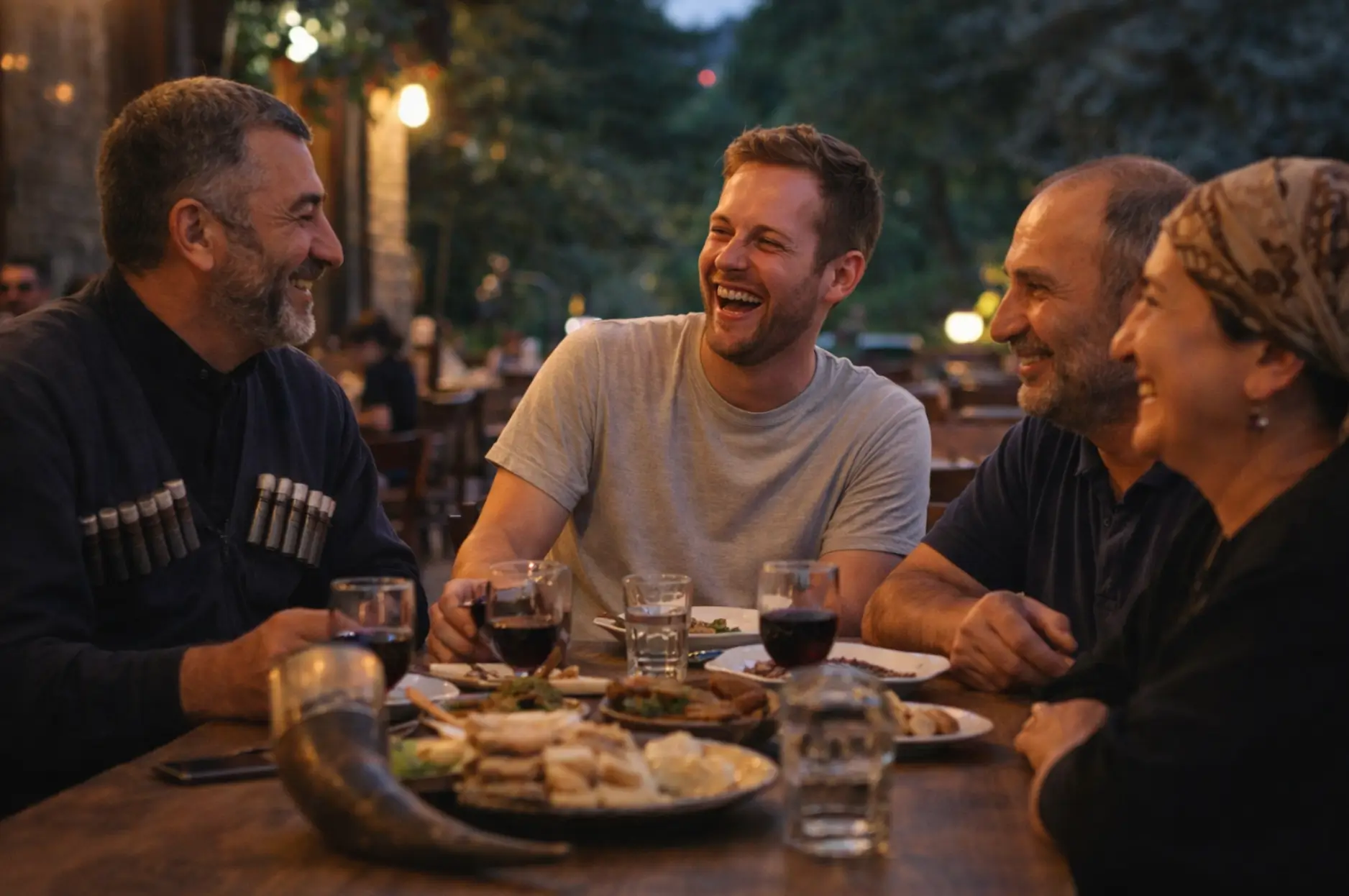
Georgia is known for its legendary hospitality. In our company, we have a favorite proverb: “A guest is God’s messenger.” And these are not just words — many foreigners feel exactly that from their very first days in the country. In most cases, local residents treat visitors warmly and cordially. A stranger here may easily be offered homemade dishes, treated to homemade wine, and asked how they happened to come to these parts. We sometimes joke: in Georgia, the only thing that can truly be intimidating is that you may simply be overwhelmed with affection! In other words, what surprises foreign guests most is how sincerely Georgians strive to surround them with care and attention.

At the same time, the degree of hospitality may depend on the situation. In small towns and villages, any foreigner is welcomed as an honored guest — invited to the table, shown the surroundings, and helped in any way possible. In larger cities like Tbilisi, people are already accustomed to tourists; here the attitude is more neutral-friendly: no one will rush to hug you in the street, but if you ask for help, they will almost always respond. An openly polite smile is not the most typical manner for Georgians (especially among the older generation), yet if you need something, locals will genuinely try to help in practice, rather than with mere formal courtesy. Overall, Georgian culture instills respect for a guest from childhood, so even children in villages will wave at you and shout “hello!” with a foreign accent.

It is important to understand that Georgian hospitality is not a formality, but a way of life. If you are invited into someone’s home, be prepared to be offered the very best: generous food, the best seat at the table, endless toasts to your health. It is not customary to refuse too insistently (this may offend the host); it is better to thank them and try a little of everything. Georgians derive genuine pleasure when their guest eagerly eats khachapuri, listens with interest to stories about local traditions, and simply enjoys being in their country. In such moments, you will feel almost like a member of the family.

Of course, there are always exceptions. You may encounter a gloomy taxi driver or an unsmiling shop assistant — as in any country. However, our experience shows that it is enough to begin a conversation with a smile or a few words in Georgian, and the “ice” melts immediately: your interlocutor transforms and becomes more open. Courtesy and goodwill on the part of a foreigner are almost always returned with double warmth on the part of a Georgian.

Perception of Foreigners Depending on Country of Origin

The Georgian mentality is tolerant, and in general, visitors are welcomed here regardless of their origin. However, there are certain nuances in the perception of guests from different countries:

Tourists from Russia. Attitudes toward Russians are somewhat mixed, yet in everyday life remain friendly. Historically, many Georgians spoke and still speak Russian, so there is usually no language barrier with the older generation. In Tbilisi and other cities, you will encounter signs in Russian, and many locals easily switch to Russian when speaking with foreigners. Nevertheless, in recent years the flow of Russian visitors has increased significantly, which has caused some tension. This is generally related not to personal hostility, but to the political situation and the emotions connected with it. We advise our Russian guests to maintain a respectful tone: avoid political disputes and refrain from speaking dismissively about the Georgian language and culture. If you behave tactfully, ordinary Georgians will treat you like any other tourists — with curiosity and friendliness. Many sincerely distinguish between “people and politics,” and therefore continue to invite Russians to the table, offer wine, and help if needed. It is also worth noting that young people in large cities more often speak English and may prefer not to communicate in Russian — do not take this personally; it is better to switch to English if possible.

Guests from Europe and the USA. Europeans, Americans, and travelers from other distant countries evoke lively interest and even a certain enthusiasm among Georgians. Georgia is open to the world, and many locals are genuinely pleased when foreigners from afar choose their country as a travel destination. Our guides have noticed that young people often approach English-speaking tourists — to practice English or simply to ask how you are enjoying your stay. The older generation, even without knowing the language, may express sympathy through gestures or offer something as a treat. Americans and Europeans are often perceived as representatives of the “West,” about which much is discussed here. Therefore, the attitude is generally very positive: hosts try to show guests the very best their country has to offer. You may hear words of gratitude for support (especially from those who remember the cooperation with Europe and the USA in the 1990s and 2000s). There are virtually no negative stereotypes about Western tourists among ordinary Georgians — on the contrary, you are likely to be welcomed and efforts will be made to leave you with a good impression of Georgia. The only possible barrier is linguistic: not all representatives of the older generation speak English, but they will still attempt to find a way to understand and assist. There have been cases when a grandmother at the market, not understanding the language, simply smiled and filled a tourist’s bag with fruit as a gift — just in case, so that the guest would not leave empty-handed.

Travelers from other countries. Georgia welcomes guests from all over the world, including neighboring countries as well as Asian and Middle Eastern nations. The traditional hospitality generally prevails in their treatment as well. For example, tourists from neighboring Caucasus countries (Armenia, Azerbaijan, Turkey) are seen as neighbors — there is no particular curiosity, but friendliness remains. Locals in Batumi have long been accustomed to working with Turks and Iranians (these tourists often come to the seaside), so the service there is established and the attitude is professionally polite. If you are from Asia, Africa, or Latin America, you may receive slightly more curious glances in remote areas — simply due to the rarity of guests from these regions. There is nothing objectionable about this; on the contrary, the curiosity often turns into heartfelt interaction: locals may ask about your distant country, show you something of their own. Georgians, in general, are not prone to prejudice based on nationality, so skin color or eye shape does not affect how you are received — the main criterion is how you behave as a guest. If you act respectfully and with interest, you will be welcomed regardless of your origin.

Regional Features: Where and How Guests Are Welcomed

Georgia is a diverse country, and the character of welcoming foreigners may vary slightly from region to region. Here are our team’s observations about different corners of the country:

Tbilisi

The capital of Georgia is a cosmopolitan city where tradition and modernity blend. In Tbilisi, foreigners have already become a familiar part of the landscape: many expats, students, and IT specialists live here, and international companies operate. Therefore, on the street you are unlikely to feel excessive attention — locals are busy with their own affairs. However, this does not mean cold treatment. In Tbilisi, it is very easy to ask a passerby for help or advice — most likely, they will respond and, if possible, assist. Young people almost always speak at least a little English, older people may immediately switch to basic English (“Hello, how are you?”) when seeing a European, or to Russian if noticing a Slavic appearance. The attitude in the capital can be described as neutral-friendly: there is no village-like intrusiveness, but rudeness toward guests is not tolerated. If you enter a café or store, you will be politely served; if you ask, they may engage in light conversation, but in general, everyone is busy with their own affairs. However, once you befriend a local, the “turbo mode” of Georgian hospitality kicks in: you will be shown around the city, taken to popular spots, and even invited home for dinner. Tbilisi residents love to show guests how wonderful their country and capital are.

It is worth noting that Tbilisi is a tourist city, with many services tailored for foreigners. Hotel and restaurant staff speak English (often also Russian), tourist police patrol the streets and are ready to assist. Therefore, foreigners feel comfortable and safe here. But, as in any metropolis, there is occasional fatigue from tourists during peak season: for example, a local driver might get irritated by inexperienced foreign drivers in the city center, or a market vendor may grumble if you haggle too long. Do not take this personally: these are rare cases, and overall, Tbilisi’s reputation as a hospitable capital is valued.

Batumi

Batumi is Georgia’s seaside capital, a resort city on the Black Sea coast. In summer, there is an influx of tourists from all over the world, especially from post-Soviet countries, Turkey, Israel, and Arab nations. Locals in Adjara have historically been very hospitable, but in Batumi itself, the attitude is more resort-like: tourists are seen as temporary guests who need comfort. Most Batumi residents work in tourism, so you can expect a professionally friendly attitude: the warmth is often part of their duty, yet still sincere. You will be greeted with a smile at the reception, helped with excursions, and given directions — all in the habits of a resort city.

An interesting point: Adjara is a region with Muslim roots (many Adjarians are Muslims by faith), so they are familiar with the culture of guests from Turkey and Arab countries. If you are from these regions, you will feel completely at ease in Batumi — many locals know a few phrases in Turkish, or even some Arabic, and show respect for Muslim customs (for example, no one will look askance at a hijab; it is normal here). Europeans, Russians, and Ukrainians are also abundant — regardless of which group you belong to, you will be just one of many vacationers. As a result, Batumi residents may be slightly less curious about your personality than people in other cities: after all, hundreds of new tourists arrive the next day. But if you venture beyond the tourist center — for example, to suburban villages in Adjara — you will immediately feel the true familial warmth. In the mountains above Batumi, people live more traditionally and treat every guest as a relative. Thus, Batumi has two faces: one is a modern resort with European-style service, the other is an Adjara village with unique charm and heartfelt hospitality.

Kutaisi

Kutaisi is the country’s second-largest city, but in atmosphere it is more like a large provincial center. Foreigners visit here as well (especially since there is a nearby international airport serving low-cost flights), but there is no mass tourism like in Tbilisi or Batumi. Therefore, the attitude toward visitors is more curious and directly friendly. Kutaisi residents are known in Georgia for their sense of humor and sociability — do not be surprised if someone stops you on the street with a playful question or a comment about the weather. Upon learning you are from another country, people may ask more details: whether you like the city, what you have already seen, or if you need help. All of this comes from genuine hospitality, without any hidden motive.

It is worth keeping in mind that outside tourist sites (such as Gelati Monastery or Prometheus Cave), English is not widely spoken. Russian is understood by the older generation, but not always by the young. Nevertheless, the language barrier does not hinder Kutaisi residents: they easily switch to gestures, may take you by the elbow and personally guide you to the right turn, loudly calling to others: “Our guests need help here!”. In Kutaisi, you feel real familial warmth, especially if you stay longer than just a couple of hours for a tour. Many of our clients recall how they were offered to taste everything at the market for free, simply because they were foreigners, or how a taxi driver arranged an impromptu city tour upon learning the guests were visiting for the first time. In this city, a somewhat patriarchal lifestyle combines with the open character of locals — strangers are both welcomed and slightly looked after to ensure nothing happens.

Svaneti

Svaneti is a high-mountain region in northwestern Georgia, famous for its towers and daring mountaineers. The Svans are often described as a proud and independent people, which reflects in their attitude toward guests. In Svan villages (Mestia, Ushguli, etc.), visitors are treated with respect but without fuss. They will not excessively fawn over you or push services — highlanders value dignity, both their own and the guest’s. If you behave respectfully and show interest in local culture, the Svans open up and become extremely warm hosts. They will gladly tell legends about their towers, show family icons, and may even play the harmonica or perform a traditional song — but only if they feel your interest is sincere.

There is a nuance: the Svan language and culture are different from the rest of Georgia, and Svans speak their own language among themselves. However, almost everyone knows Georgian, and many also speak Russian (especially older men, many of whom served in the Soviet army). English is less common, but in tourist areas of Mestia, the youth are gradually improving their skills. Even if you don’t know the local languages, you will still be understood through smiles, gestures, and, of course, a shared glass of homemade chacha. The attitude here is somewhat more reserved than in the rest of Georgia, but any promise or favor given by a Svan is as solid as a rock. If someone says, “come tomorrow, we’ll help with the car,” you can be sure they will. Svaneti is also famous for historically protecting guests as their own — outsiders found refuge here, and the host was responsible for their safety. So you can feel under a sort of “mountain protection.” At the same time, it is important to follow local customs: for example, show respect to elders, avoid provocative behavior, especially toward women — Svans will not tolerate it, and the reaction can be sharp. But for a normal, courteous tourist, there is nothing to worry about: you will be welcomed in Svaneti and surrounded by traditional mountain hospitality (with plenty of meat, toasts, and strong drinks).

Racha

Racha is a picturesque mountainous region north of Kutaisi, famous for Khvanchkara wine and its unhurried pace of life. It is one of the most good-natured regions of Georgia. Rachians are known even among Georgians as particularly gentle, fond of jokes and gatherings. Foreigners in Racha are still rare (the region is not heavily touristy), so every visitor is valued highly. Locals may be initially a bit shy — it’s not every day you see a guest from afar — but this passes quickly. Within minutes of conversation, you may hear an invitation: “Come in, we’ll treat you to some wine!” Our team has experienced cases where an elderly man in a village near Oni, learning that a tourist from Poland had arrived, sent his grandson to bring grapes and bread from home to welcome the guest right on the street. In Racha, almost everyone speaks Russian (older generation), the youth learn English, but most importantly — everyone speaks the language of hospitality. You will be shown the most beautiful views, reminded of famous local delicacies (Rachian beans with walnuts, smoked pork – shamomi, etc.). In short, in Racha, you will feel like a cherished relative visiting family after many years — that is the prevailing attitude. People rarely rush here, so locals are ready to spend hours conversing with a foreigner. If you enjoy heartfelt talks over a glass of homemade wine, Racha will be an unforgettable experience.

Mtskheta

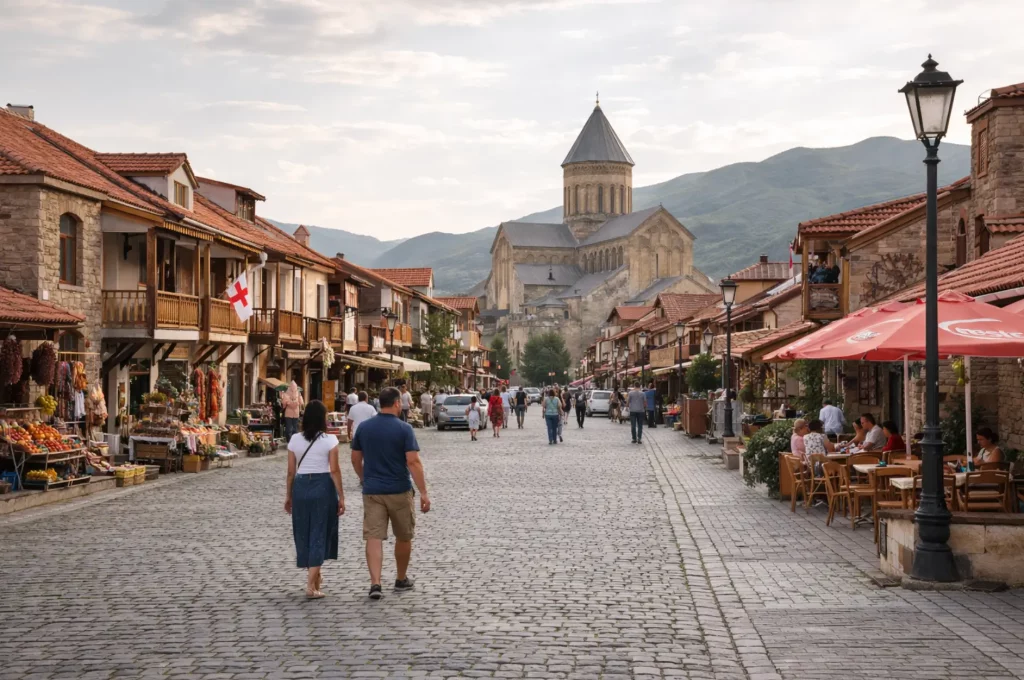
Mtskheta is the ancient capital of Georgia, a small museum town near Tbilisi. Thanks to its proximity to the capital and its status as a holy place (home to the Svetitskhoveli Cathedral), Mtskheta is filled daily with foreign tour groups. Locals are accustomed to seeing crowds of tourists, so the attitude is dual. On one hand — very respectful and reverent on the territory of churches and holy sites: for example, church staff or townspeople may politely remind you if, unknowingly, you violate a local custom (such as entering a church in inappropriate attire). They do this courteously, valuing foreigners who show interest in Georgian culture. On the other hand — in the market stalls and cafés, the attitude toward guests is more as toward customers: you will be politely invited to buy souvenirs, but prices may be slightly higher as for a tourist. Restaurant service is standard for tourists: fast, clear, with a smile — there is competition, and everyone wants to leave a good impression.

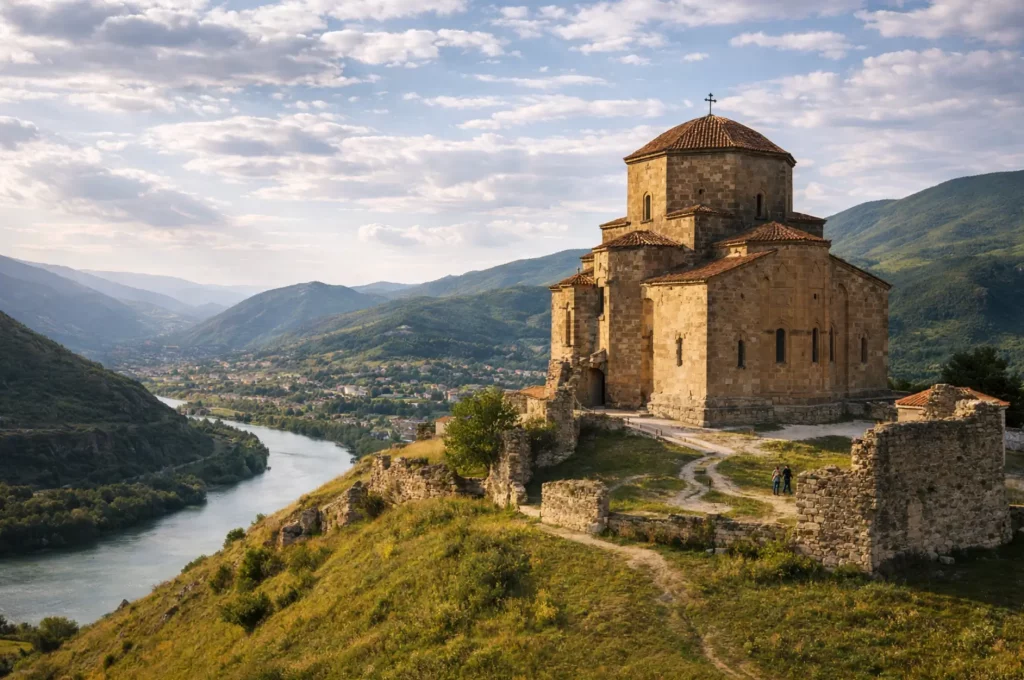
If you stay in Mtskheta for more than an hour — say, a couple of days — you will have a chance to experience the deeper hospitality of this town. Many families have lived on the same street for generations. Once you make a personal connection, you will likely be invited to a family dinner. Mtskhetans take pride in sharing the ancient history of their town and may even walk you to the nearby Jvari Monastery, showing paths their ancestors used. So even within the tourist center of Mtskheta, the living heart of a small town beats, where a stranger is welcomed as one of their own if they show genuine interest.

Rural Georgia

By rural Georgia, we mean small settlements and villages outside the well-known resorts and capitals. This is where traditional hospitality truly shines. Villagers often live modestly, but every guest is an event. Be prepared for curious glances: not out of hostility, but to figure out who you are and where you come from. Often, children will run up saying “Hello! Hello!” to practice their school English. Adults may then join in — greeting you, asking if you are lost. If you stop by the roadside to look at a map, almost certainly a local will come out to see if you need help. From there, events can unfold unpredictably: you may be invited into a yard to rest in the shade, offered cold water, and then perhaps a snack or meal. We have many cases where tourists planning to stay an hour in a village were kept all day — shown the surroundings, offered lunch, even invited to spend the night. All this is completely voluntary, from the heart.

Of course, in very remote villages, almost no one speaks English, and Russian is not always common either. But this is not a problem: the language of hospitality is universal. If you arrive in a jeep, local men will examine the car with interest, start a conversation through gestures, give a thumbs-up — indicating it’s a nice car. Grandmothers may pepper you with questions in Georgian (where are you going, where are you from), not really expecting answers — the main thing is interaction. In the village, a guest is a window to the world, and locals are proud if a foreigner appreciates their hospitality. Often, on departure, you will be handed a bag of fruits, homemade cheese, or a jar of jam — it is customary for the guest to leave with something in hand. Do not refuse; accept with gratitude, and in return, you can give something symbolic from your own supplies (we sometimes carry tea or small souvenirs from Russia/Europe — it helps reciprocate the kindness).

In summary: in any region of Georgia, the basic attitude toward foreigners is friendly. The difference is only in degree: in some places, it may be just a smile and courteous service, while in others, they will hug you and invite you to the table. Now let’s move on to how this manifests in everyday situations.

Everyday Interactions: Communication, Service, Roads, and More

While traveling through Georgia, you will constantly interact with locals — on the street, in transport, in shops, and public offices. Here is what to expect in different spheres of life:

Communication and Language. Do not worry if you don’t know Georgian — people will still try to understand you. Most Georgians are friendly toward foreigners, even if communication has to happen with gestures. In cities, many understand English, especially the youth. Russian is spoken by almost everyone over 40, and the younger generation selectively. Occasionally, other languages are in use: for example, in tourist areas you may see signs in Turkish or German. But the main tip: learn a few words in Georgian. Even a simple “gamardjoba” (hello) or “madloba” (thank you) works wonders — it immediately creates goodwill with your interlocutor. Georgians love it when foreigners try to speak their language, even with mistakes. Compliments on your pronunciation and even a fun mini-lesson in Georgian may follow right on the street. When communicating, try to maintain eye contact and speak warmly — emotional, open conversations are common, even with strangers. You may find locals touching your hand or shoulder during conversation — it’s normal and expresses goodwill. If something is unclear, do not hesitate to ask again or request a translator — there will almost certainly be someone willing to help you communicate.

Service sector. In tourist areas (hotels, restaurants, excursions), service is becoming increasingly professional and closer to international standards every year. You will be greeted, smiled at, and asked where you are from — purely out of politeness and curiosity. However, remember that the Georgian style of communication may differ from European norms. In a small family-run guesthouse, the hostess may seem overly talkative: asking about your family, impressions, giving advice without waiting for questions. This is not imposing services but genuine care — people feel responsible for their guests. At the same time, in some Soviet-style institutions (train station ticket offices, company offices), staff may be more formal and even stern. Do not rush to interpret this as rudeness. For example, a ticket clerk may speak sharply — that’s just their style — but they will still sell you a ticket and likely explain patiently which platform the train departs from using gestures and simple language. Many cities have modern Houses of Justice and tourist info centers — service is excellent, and everything for foreigners is provided (electronic queues, consultants often speaking English). Overall, if you need something, ask freely; Georgians will try to help a client or guest even beyond their duties. For instance, a waiter may call a friend to find an answer to a rare question, or a shopkeeper may run outside to guide you to a place if verbal explanation is difficult. This personal approach is part of the local culture.

On the roads (driving). Traffic in Georgia can shock many foreigners at first. Tbilisi is known for intense traffic: cars speed chaotically, honk at each other, and rules seem nonexistent. However, there is a system: local drivers are very experienced and maneuver skillfully in conditions that seem chaotic to outsiders. Attitude toward foreign drivers and pedestrians is generally tolerant. If you drive a car with foreign plates or are obviously a tourist, locals may even be indulgent: they will overtake, honk, but without aggression. Key advice — stay calm and don’t try to “teach” locals European traffic rules. Be extremely attentive yourself: locals may make sudden maneuvers (overtaking on solid lines, turning without signaling) — keep distance. Good news: outside the city, traffic is calmer, and on rural roads, drivers often greet each other, even strangers. As a pedestrian, be cautious: not all respect crosswalks, and cars may not stop unless you clearly start crossing. Better to follow locals or use traffic lights. Foreign pedestrians are treated kindly: if you hesitate at an intersection, someone may wave you through. If lost in a car, stop and ask — passersby or other drivers will gladly help, sometimes even offer to guide you if going the same way.

Car rental and transport. Many guests rent cars to travel around the country. Local rental agencies are used to foreign clients: contracts can be in English, everything explained, and route advice given. Georgians generally love when a guest explores their country independently, so rental staff often provide a list of their favorite places to visit. From our company’s experience: we always inform clients about local driving peculiarities (see above) and advise being extra careful for the first couple of hours. Otherwise, car rental is trouble-free — gas station attendants will approach and help you refuel, even without a common language (they may simply point to the right pump and fuel type). Parking attendants often guide how to park, sometimes requesting a symbolic fee. Understand this as part of the local color — people earn extra income this way. In more remote areas, if you get a flat tire or get stuck, do not worry — almost certainly, a local driver will stop to help seeing a foreigner in need. In Georgia, strangers are not abandoned on the road, and a guest even less so.

Government services, police. Tourists rarely interact closely with government agencies, but it can happen — lost passport, medical help, dealing with police. In these situations, Georgian officials generally behave very courteously toward foreigners. Police in Georgia have been reformed and often speak English well (at least in cities, there will be an English-speaking officer). If you violate traffic rules (for example, speeding) and are stopped, you will most likely receive just a warning, as have many of our clients. Officers often show understanding toward tourists: they may ask if you are enjoying Georgia while checking documents. Our experience shows that polite behavior and a few words in the local language make even a stern-looking officer lenient — minor offenses usually end with verbal advice. Hospitals and clinics also try to assist foreigners without delays — sometimes even out of turn in urgent cases. Government agencies (for example, immigration services if you extend your stay) provide information in English, and the overall attitude is respectful: Georgians take pride in receiving guests and strive on an official level to maintain the image of a safe and comfortable travel destination.

Crossing the Border. The first contact with Georgia happens at the border – and here many foreigners immediately notice the difference. Georgian border guards often greet visitors with a smile and the words “Welcome to Georgia!” Passport control usually goes quickly (for most countries, including European countries, the USA, and Russia, entry is visa-free for a year, so there are hardly any extra questions). Of course, border guards have their duties, and if something is unusual, they may ask in detail about the purpose of your visit. But the tone usually remains friendly. For example, at Tbilisi airport, it is not uncommon for a border control officer, seeing that a guest is visiting the country for the first time, to chat for a couple of minutes – ask where you are from, and wish you a pleasant stay. At land borders (Lars from the Russian side, Sarpi from the Turkish side), there are sometimes long queues, and Georgian officers may already be tired – but even in these conditions, we have never heard of rudeness. On the contrary, travelers note that after the stern faces of Russian or Turkish border guards, a smile and “Gamarjoba!” from a Georgian officer feels like a balm. Baggage inspection upon entry is minimal if you are not carrying anything prohibited – formalities go quickly. There have even been hospitality gestures, when on holidays foreigners at the control points were given small bottles of wine or churchkhela – a small thing, but pleasant and very Georgian. In general, crossing the border into Georgia is psychologically comfortable: you are truly welcomed.

What Wins Local Favor and What Causes Displeasure

What Georgians particularly appreciate in the behavior of foreign guests:

  • Sincere interest in the country. If you ask about Georgian traditions, music, or history, locals share with enthusiasm. Seeing your interest, they feel pride in their culture and treat you as a true friend.
  • Attempts to speak Georgian or propose toasts. Even a few words or phrases (for example, saying “madloba” – thank you, or making a toast “gaumarjos!” – in celebration) elicit a flood of positive emotions. Georgians love it when a guest reaches out to their language and customs and are immediately ready to help and praise.
  • Respect for elders and traditions. Polite behavior – greeting an elderly neighbor, giving up a seat to a grandmother – is noticed. It is also appreciated when foreigners follow local rules, such as entering a church modestly dressed, women covering their heads in church. Such gestures show that you respect their way of life, and many people will open their hearts to you.
  • Good appetite and participation in feasts. It may sound funny, but in Georgia, they love when a guest eats and drinks with pleasure. If you praise the hostess’s dish or ask for seconds – you immediately become a favored guest! Participating in toasts, trying to sing folk songs together with locals – all this evokes genuine warmth.
  • Modesty and gratitude. Georgians do not expect gifts or compliments from tourists, but a simple “thank you” or a compliment to the country works wonders. When a guest says, “Your country is incredibly beautiful, and your people are so kind” – locals remember this for a long time and may even pass it on to others, saying, “Look what a wonderful guest visited us.” Such gestures strengthen warm feelings not only personally toward you but also toward “your people” in general (for example, they might say: “Germans are good, see what a wonderful guy visited”).

What may displease (or even offend) local residents:

  • Disregard for the culture. If a guest loudly claims that everything is “better back home” or mocks local customs, this will certainly provoke a negative reaction. Georgians are very proud and sensitive to criticism of their country, even if they sometimes complain about certain issues themselves. Especially avoid disrespectful jokes about Georgian national things – language, music, dance, cuisine, or faith. For example, speaking unfavorably about Georgian wine or khinkali can offend a host.
  • Rude or arrogant behavior. Any display of impoliteness – rudeness to service staff, shouting, pointing fingers, demanding tone – is perceived very badly. They do not like “stars” or people who look down on others. Even if a problem arises, it is better to solve it calmly and with a smile – then they will accommodate you. A rude person may be refused service or sharply answered – and others will support the response.
  • Violation of etiquette at the table and in company. Georgian dining etiquette implies respect for the tamada (toastmaster) and other guests. If a foreigner interrupts a toast, gets distracted by a phone during speeches, or, for example, starts drinking without a toast – locals may see this as disrespect. Also, jokes about mothers or any rude humor toward family are strongly disliked. In Georgian culture, a mother is sacred, and what may seem like a harmless joke in some countries (e.g., “jokes about someone else’s mother”) can seriously offend here. It is better to avoid such topics.
  • Excessive haste, refusal of invitations. Georgians do not understand when a guest is constantly in a hurry and refuses to “sit for even a minute.” If you are invited for tea and respond firmly: “No, I don’t have time!” – hosts may think you dislike their company. Refusing outright is not customary – it is better to give a respectful reason or at least accept hospitality for a few minutes (symbolically trying a treat). And the worst behavior is to leave a home without tasting anything: hosts perceive this as a personal failure.
  • Showing disrespect for religion. In very religious communities (many of which exist, especially in the regions), it is unacceptable, for example, to enter a church in shorts, speak loudly, or take photos during the service without permission. If a guest does not follow etiquette in a sacred place, locals become very upset and may make a remark. This is not aggression but genuine disappointment. It is also undesirable to blatantly disregard when everyone crosses themselves or says a prayer before meals – you are not required to do the same, but waiting respectfully and not laughing is the minimum.

Essentially, the secret is simple: behave with Georgians the way you would like a guest to behave in your own home – with respect, interest, and kindness. Then locals will treat you as a good friend.

Stories from Our Experience

Over the years of working in Georgia, our company has accumulated many stories about how interactions between foreigners and locals unfolded.

A couple of years ago, two of our clients from Israel drove a rental car to the mountainous region of Tusheti. They miscalculated – a snowstorm began, and their car got stuck at the Abano Pass (a very remote location). There was no connection, only mountains around… After some time, local residents approached them in an old UAZ – as it turned out, they had received a radio message from the lower post that foreigners might be stuck, and they went out specifically to look for them. They put the guests into their car, drove them to a village, warmed them up, and fed them hot soup. The car was freed from the snow only the next day through combined efforts. Moreover, the Tushetians did not take a single penny for the help and even apologized for the bad weather, saying, “We could not provide you with sunny Caucasus.” The Israelis were simply amazed: “In another country, rescuers might have found us only after a day at best, but here ordinary people abandoned their affairs for us.” This case perfectly illustrates that the safety and comfort of a guest is a matter of honor for Georgians.

There are many such stories, and almost every one ends with foreigners leaving impressed by the warmth of the local people. Of course, there are also funny incidents, and sometimes cultural differences make themselves felt – but in the vast majority of cases, goodwill and mutual respect work wonders, turning chance encounters into heartfelt memories.

Practical Tips for Foreigners: How to Behave to Be Accepted as One of Their Own

  1. Learn a few words in Georgian. Phrases like “gamardjoba” (hello), “didakh shendag” (nice to meet you), or “madloba” (thank you) make people very receptive. Even if you do not pronounce them perfectly, your effort will be met with a smile and praise. This immediately breaks the ice.
  2. Smile and be open in communication. Sometimes people may look at you curiously on the street – do not turn away sullenly. A friendly smile, eye contact, a light wave – and you will have their hearts opened to you. If you need something, approach politely and ask – a request made with a smile is rarely refused here.
  3. Accept invitations if you are invited into a home or to a table. Naturally, the first feeling is shyness: you are strangers. But if locals invite you, it means they truly want to host you and converse. Do not be afraid – such spontaneous visits usually go wonderfully. You are not obliged to stay long – an hour or two is enough, citing your onward journey. But that hour will give you an incredible experience, and hosts will be delighted. If you really cannot go, refuse as gratefully as possible, explain the reason, and perhaps promise to visit another time if you return to the area.
  4. Dress and behave respectfully in sacred and traditional places. In churches, wear modest clothing (women – a headscarf, men – long trousers). Do not speak loudly or take photos of people without permission. In homes, if you see hosts remove their shoes, follow their example (in Georgia, not all homes require shoes off, but if the host does it, you certainly should). Following local etiquette shows that you respect their way of life, and this is highly valued.
  5. Avoid sensitive topics in conversation. Politics, religion, national conflicts – are not the best topics for a first conversation with Georgians. Many have gone through difficult times, and everyone has their own views. Better to discuss nature, food, family – these are safe and rewarding topics. If locals themselves bring up a complex topic, listen carefully, but express yourself cautiously and tactfully.
  6. Be ready to eat and drink a lot, but know your limits. Georgians may pour wine for you again and again. Feel free to say when you’ve had enough, but do it delicately. For example, praise the wine, make a toast to the hosts, but add with a smile: “I’m already drunk, I cannot drink more, sorry.” Usually they will stop and offer coffee. The same applies to food – try a little of everything, compliment it, but don’t hesitate to say that it’s very delicious but you are full. Hosts will understand; the main thing is to show that you appreciate their efforts.
  7. Share your own stories or souvenirs as well. Georgians are curious about your country. Show photos of your family, city, tell a couple of traditions of your people. Cultural exchange strengthens friendship. If you have small souvenirs or even chocolate from home, give them to children or hosts as a token of gratitude. They will be thrilled that a foreigner brought a piece of their culture.
  8. Ask locals for advice. Where to eat, what to see, how best to get around – Georgians love giving advice and feeling useful. This way, you not only get valuable information but also establish a connection. Sometimes a simple question at the market, “Where do you make the best shashlik?” can turn into being personally guided to that very shashlik place and shown half the city along the way.
  9. Stay calm in any situation. If something goes wrong – you get lost, the car breaks down, conflict in a queue – try not to panic or argue. In Georgia, excessive emotionality is sometimes met with caution. Better to seek someone’s help: there will always be someone who can assist. A raised tone or irritation may provoke a sharp response – people here are hot-tempered. Yet a kind word and a smile can “resolve” even the most difficult moments.
  10. And most importantly – enjoy the interaction. Georgia is a country where human connections are valued above formalities. If you are open, you will gain new friends, many vivid impressions, and feel confident, as if at home. Do not be afraid to step out of the tourist comfort zone: visit a rural yard, talk to a market seller, go for a visit with an acquaintance taxi driver. It is in such moments that true friendship between peoples is born and one understands why Georgians are so famous for their attitude toward foreigners.

In conclusion, on behalf of our team, we want to say: welcome to Georgia! Here you will be greeted as a valued guest, and when you leave, they will look forward to seeing you again. Remember that a little respect from your side will be repaid with tenfold hospitality, which you will recall warmly many times afterward. Wishing you successful travels and wonderful acquaintances in sunny Georgia!

Is it safe to travel to Georgia? How safe is Georgia?

We, a car rental and transfer company, often hear from our clients: “Is it safe to travel to Georgia?” Our answer: yes, it is safe! Georgia has long been rightfully considered one of the friendliest and most hospitable countries. As travel bloggers note, “Georgia is one of the safest” countries where you can vacation without unnecessary fears. Surveys confirm this: over 90% of local men and women consider evening walks completely safe. Our guests experience this firsthand: for example, a client from Germany said that she walked calmly around Tbilisi in the evening and was pleased with how polite and courteous passersby and police officers were.

However, no country is perfectly safe, so we always advise following a few simple personal safety rules:

  • Do not leave your belongings unattended. Keep your phone, wallet, and documents with you or in a locked bag, especially in crowded places. Once, our tourists left a backpack on a bench for a moment — and lost their wallet. Such cases teach a lesson: do not tempt fate.
  • Do not carry large amounts of cash. It is better to have a card and withdraw money as needed. When withdrawing, check ATMs for skimming devices. We recommend using ATMs inside shopping centers or banks.
  • Be cautious with drinks. Never leave your glass unattended and do not accept food or drinks from strangers. This rule helps prevent the risk of drink spiking (drink spiking). Our clients know: it is better to finish your bill in a café than to receive an unpleasant surprise.
  • Be careful in the evening. After dark, it is better not to walk alone through unlit alleys. In Tbilisi and other cities, there are many well-lit promenades where evening walks are safe: for example, in the Old Town there are always many tourists and patrols. If you go out at night, it is better to go in a group or use official taxis/transfers from our company — we always employ reliable drivers, so you do not have to worry about the route.

City Safety

Tbilisi, view from Mtatsminda. We are often asked about each city separately. In fact, the rules are simple and the same for all: city squares, Batumi promenades, and the streets of Kutaisi are generally safe for tourists. In Tbilisi, crowds of tourists on Sharden Street or Rustaveli Avenue, near metro stations, and in shopping centers are common during the day. In such places, petty pickpocketing can occur: small groups of street children sometimes distract people while others take wallets from pockets. American experts specifically advise caution: “Young street children in groups hold the victim while others remove belongings from pockets.” To avoid becoming a victim, simply watch your bags and wallets in crowded areas. Our tourists have never encountered violent aggression, and even after a general reduction in crime, most incidents are minor thefts.

In Batumi and Kutaisi, according to our clients’ feedback, the situation is similar: Batumi’s coastal streets come alive in the evening, but there are no significant safety issues. A couple of our guests noted that you can walk along the promenade at 10–11 PM — there are many families with children and police patrols. The key is not to walk in deserted neighborhoods and always be ready to call a taxi. Although serious incidents rarely occur in resort city streets, our drivers advise not to leave belongings openly in hotels: there have been isolated cases when guests forgot items in the car trunk in the parking lot. Our tip: keep valuables in the hotel safe or never leave anything in your car overnight.

Nighttime and Women’s Safety

Women can travel to Georgia completely safely: international colleagues call it one of the most convenient and safe countries for solo travel. Studies show that about 90% of women in Georgia feel safe during evening walks. From our observations, local men are usually very polite and courteous. For example, one client was walking home after dinner and met a group of young men on the metro — they greeted her politely and gave up their seats. We recommend simply using common sense: avoid unnecessary conflicts, dress according to the weather (overly revealing clothing may attract unwanted attention), and stick to well-lit streets. Once, a solo female tourist arrived nervous, but everything went perfectly — we arranged a guide, she walked in company, and was happy. Overall, café and taxi staff are respectful to women, and police strive to help. Remember that in Georgia, every woman experiences a cheerful Georgian ego — if someone gives you a gift or pays a bill at a restaurant, they simply consider you a valued guest.

Frauds and Pickpocketing

Georgia is generally free from organized crime, but, as in any country, fraud occurs. Most often, it involves simple schemes with cards, too-good-to-be-true “hot” tours, or long bar bills. For example, in Tbilisi, there are cases where a stranger invites you to a bar “for company,” then charges a huge bill for drinks. For this reason, the official website advises: “Refuse invitations from strangers to enter bars or clubs.” We recommend not accepting such free “invitations” and always confirming prices in advance.

Honest taxi drivers always use a meter or a fixed “fare book,” but it is good to confirm the fare beforehand. There have been cases when tourists accidentally took a taxi without a meter — then the driver requested extra payment. Therefore, it is easier to take a taxi at a stand or order through an app (they work in Batumi and Kutaisi), and in the mountains we always recommend trusting our experienced drivers.

Demonstrations and Public Events

Georgia is a democratic country, and peaceful protests are not uncommon, especially in Tbilisi on Rustaveli Avenue. We advise staying away from any mass gatherings and demonstrations. The official Australian guidance warns: “Political rallies in Georgia are frequent and can turn into disturbances. Avoid all protests.” If you suddenly find yourself near protesters, do not react to provocations — calmly move away. Our experience: one group of tourists went to Freedom Square, where a flash mob began; they quickly left, there was no danger, but they chose not to take risks. So it is best to check with guides or media about potential events in the city in advance.

Police and Emergency Services

The Georgian police are friendly and not prone to corruption. If you have questions, you can confidently go to the nearest station or call 112 — the unified emergency hotline. There is also a free tourist number 0-800-800-909, where Russian-speaking assistance is available 24/7. Always carry your passport and migration card (or a copy) — street police occasionally conduct checks, but they behave politely. On the roads, police may stop cars for inspection, especially near major cities, but they do not take bribes: the fight against corruption is taken seriously here. In case of an accident or if you need police assistance, remember: the emergency number is also 112. For example, once we helped a client file a report after a minor accident — and were pleasantly surprised by how efficient and correct the officers were.

Useful Numbers:

  • Unified emergency number – 112.
  • Police – 022.
  • Free tourist “hotline” – 0-800-800-909.
    Save these numbers in advance — just in case.

Borders and “Dangerous” Regions

We strongly advise against traveling to the unrecognized republics of Abkhazia and South Ossetia. These are territories occupied by Russian forces, and entering them is officially considered illegal border crossing. The US and Australia warn: in South Ossetia and Abkhazia, there is a high risk of armed incidents and landmines. Even a brief detour to the demarcation line is risky. Therefore, we always plan routes to avoid these regions. There are also reports of increased danger in the Pankisi Gorge near the Russian border: it is better not to go there without extreme necessity. On other borders (with Turkey, Armenia, Azerbaijan) there are no issues, just be ready for standard customs procedures.

Cafés, Bars, and Transfers

In Georgia, it is customary to leave tips of no more than 10%. Locals enjoy expressing hospitality: if they offer sweets or wine, accept politely. Nothing criminal happens in cafés and bars — just be careful with drinks (see above). We do not recommend running off to a bar like in Moscow style: our drivers are often in contact and, if needed, can pick you up from any location. For transfers, we guarantee safety: cars are in good condition, drivers are licensed. Once, a tourist left her bag in a taxi — our driver returned it safely.

Tip: never agree to give strangers a ride in your car as fellow passengers, even if they offer payment. This should only be done through official platforms. Airport transfers are best booked in advance — this ensures you avoid “resellers” at the terminal exit.

Road Safety and Special Rules

We have a separate article with detailed information on driving in Georgia, but briefly, the most important points: traffic is right-hand side, headlights must be on after dark, seat belts are mandatory for everyone. Driving style can be “a bit chaotic”: drivers react quickly to situations, but maneuvers like cutting off others are generally not practiced. The main thing — drive a bit carefully, especially in mountains and cities with narrow streets. We recommend always checking your vehicle before long trips and using winter tires in snowy seasons.

Our Driving Tips:

  • Drive carefully on highways: although roads are sometimes wide and smooth, mountain passes have sharp turns and uneven surfaces.
  • When stopped by police, politely show your license and car documents. Our properly registered vehicles protect you from private “fines”: all papers are in order.
  • Most roads in Georgia are in good condition, but even if there is roadwork somewhere — signs are usually posted in advance. Travel with GPS and a phone, and keep extra fuel in remote areas.

Important: We have a separate article on road safety on our website. If interested, we can share the link — it covers all nuances (unusual signs, mountain overtaking rules, etc.).

Final Recommendations

Traveling in Georgia is almost always calm and incident-free. Our tourists note: the main thing is to treat people with respect, follow basic rules, and exercise a little healthy caution. In many cases, simple vigilance helps: for example, one client always checks if windows are closed in the hotel when absent (items can be stolen in any country). Listen to locals’ advice — they sincerely want to help guests. If you follow basic attentiveness — keep valuables with you and avoid suspicious situations — Georgia will remain a warm and safe vacation destination for you. Have a pleasant trip and happy adventures!

Climate of Georgia and Regional Features

Georgia is a small but extremely diverse country in terms of climate. The main Caucasus Ridge reliably protects it from cold northern winds, while the Black Sea moderates the weather in the west. As a result, in Georgia you will encounter a humid subtropical climate in the west and a moderately continental climate in the east. Throughout the year, western regions receive significantly more precipitation (up to 1500–2000 mm/year) than the eastern plains.

  • West (Batumi region, Kutaisi): humid subtropical. Winters are mild and snow-free (average +5–+7°C), summers hot and humid (+22…+25°C). The Black Sea coast is the warmest corner of the country (annual average +15°C) with constant humidity of 70–80% and annual rainfall up to 2500+ mm (Batumi receives record precipitation). In autumn and winter, storms and downpours occur in Adjara (Batumi area). Kutaisi, surrounded by forests, has a similar climate: summers hot and relatively dry, winters cool and wet.
  • East (Tbilisi, Kakheti): more continental climate. Summers hot and relatively dry (+20…+30°C), winters moderately cool (around +2…+6°C in the capital), less precipitation (especially in summer). In Kakheti (east), summer temperatures often reach +35°C, cloudy days are rare, winters are milder than in the north (snow falls infrequently). Thus, the east is drier, the west more humid (the small Gori Ridge – Likhi – moderates the contrast, but generally, more rain in the west, more sun in the east).
  • Mountain regions: from subalpine (~1200–2100 m) and higher. Climate is sharply alpine: average temperatures lower than lowlands. Kazbegi (Stepantsminda, ~1700 m) warms to ~+15…+18°C in summer; winters below 0 (day −3…+3°C) and 1–2 m of snow. Gudauri (~2200 m) and Tsakhkadzor (Armenia) similar – winter −3…−7°C, 1.5–2 m snow. Upper Svaneti (Mestia, ~1500 m): annual +2°C, August +15°C, January ≈−10°C. Higher altitudes increase cold sharply, fluctuations intensify, storms and avalanches more likely.

Regional and Route Recommendations

  • Tbilisi and East: Capital and Kartli/Kakheti valleys comfortably warm. Spring and autumn pleasant (+20…+25°C, fewer tourists), May may bring rain. Summers hot and humid, especially July–August (nights cooler, daytime +35…+40°C). Winters: frosts possible (sometimes < −10°C at night), occasional thaws. Light sweater recommended year-round. Driving rental cars fine, watch traffic in tourist season.
  • Batumi and Western Coast: Humid maritime climate softens winter (+5…+8°C) and moderates summer heat via sea breeze. High humidity may feel muggy; autumn–winter often brings downpours. Summer warm (~+28°C in August) but humid. Consider precipitation: winter storms possible; mountain roads (to waterfalls, reserves) slippery.
  • Kutaisi: “Western Tbilisi”: warm summers, cool wet winters. Summer ~+23°C (July), rarely >+30°C; winter ~+5°C (Jan). Precipitation fairly even, slightly higher in autumn/winter. City green and pleasant in summer; thunderstorms possible. Recommended: keep rain gear in car (raincoat, mats, etc.).
  • Kazbegi (Stepantsminda) and Gudauri: Winter snow resorts (up to 2 m snow, −3…−7°C). Peak season Jan–Mar; roads wide, little wind, sunny. Summers cool (~+20°C), ideal for valley swimming + alpine activities (Gergeti Church, trekking). Georgian Military Road often closed in winter; access to Trinity Church only by foot/snowmobile. Shoulder season: large day-night swings → layered clothing.
  • Svaneti (Mestia, Ushguli): Mountain region, harsh climate. Summer cool (+10…+18°C, humid), winter very cold (−10…−15°C). High precipitation even in dry months (~80–130 mm/month). Best time: June–September (day +10…+15°C, more clear days). Winter roads often snowed in. 4×4 recommended; plan overnight stops.

Seasonal Recommendations

For planning a trip to Georgia, we highlight seasonal “comfort windows” based on client experience and weather stats:

  • Spring (March–May): Picturesque but unpredictable. March still cool/rainy; May daytime +20…+25°C. Kakheti early May +25°C. Nature blooms; wine tours excellent (Rtveli grape harvest in Sept). Moderate precipitation: spring showers frequent west, east drier. Mountain passes usually open (except early weeks). Bring warm jacket (mountain nights still cold). Recommendations:
    • Dress in layers (morning +5°C, day +25°C).
    • Carry raincoat/umbrella (spring showers, Batumi/Tbilisi).
    • Routes: lowlands comfortable; above 2000 m snow may remain, paths slippery.
  • Summer (June–Aug): Peak season; heat and humidity require caution. Valleys/plains +28…+35°C, sometimes +40°C. Black Sea coast slightly cooler (~+26…+30°C), humidity ~80%. Mountains refuge: Gudauri/Kazbegi +20…+22°C, cool nights. Recommendations:
    • Early start: morning walks/excursions; 12:00–16:00 peak heat.
    • Hydration/sun: drink water, wear hat/cap, sunglasses.
    • Car care: check antifreeze, A/C, avoid overheating.
    • Alternatives: sea/mountains milder; mountain evenings cold.
  • Autumn (Sept–Nov):Most comfortable. Days warm (+24…+27°C, Kakheti +18…+20°C), nights cool. “Velvet season” coast, wine festivals Kakheti. Mid-Oct: golden autumn mountains. Rainfall decreases west, overall stable. Recommendations:
    • Beach: Sept–Oct ideal; water warm, air mild.
    • Hiking: trails accessible; Allan trails, Chkheri-Lobzhari valley scenic.
    • Wine tourism: early autumn grape harvest (Rtveli late Sept). Sunscreen advised.
  • Winter (Dec–Feb): Eastern cities +2…+6°C daytime, short cold spells, thaws (±10°C swings). Black Sea coast mild (+7–+8°C), damp, frequent rain. Mountains: Kazbegi/Gudauri 2 m snow, −3…−7°C, ski season. Rural roads may snow in; distant monasteries/alpine lodges only on foot/snowmobile. Recommendations:
    • Dress warmly: mountains, evening excursions (jacket, pants, hat). Hotels may lack central heating.
    • Check forecast: coastal storms, mountain blizzards; extreme precipitation may close roads.
    • Ski resorts: use official slopes (Gudauri, Bakuriani), snow clearing available. Wheel chains/spikes mandatory in mountains.

Seasonal Forecast 2026

By end 2025, climatologists note trends toward abnormal heat/extreme weather. WMO forecasts early 2026 relatively warm: higher probability of above-normal temperatures Northern Hemisphere. Met Office: 2026 may be among warmest years (avg +1.4 °C above pre-industrial). Summer 2026: expect frequent heat waves (record +40°C in valleys possible).

  • Spring 2026: likely warmer; river water warms earlier, flowering earlier. Early spring may still be cool in mountains. Monitor forecasts – possible Black Sea “storms” and late frosts.
  • Summer 2026: expected heat and relative drought (eastern valleys). Moderate La Niña + global warming → above-average very hot days. Fire/overheating risk elevated. Coast: severe thunderstorms/downpours possible (esp. Aug). Advice: plan long trips June/Sept – milder heat (see autumn wine festivals).
  • Autumn 2026: likely warm/dry (Sept–Oct possibly warmer than avg). Snow may fall earlier mountains; trekking extended to mid-Oct. Nov: more rain (west), mountains heavy snow (ski season begins).
  • Winter 2025/26: models predict milder climate due to global warming (weak La Niña slows Arctic invasions). Winter days relatively warm (esp. East), prepare for cold spells. Skiers: monitor precipitation, winter tires, insulation.

Summary: For tourists and drivers, key seasons “all except extremes”: early June and Sept – lowland excursions, May – lush greenery, Oct – fair mountain weather. Even in “warm” seasons, remember unpredictable mountain climate and regional anomalies (floods, frosts, hail). Constantly monitor local forecasts (esp. mountains) and follow local safety recommendations.

What language is spoken in Georgia and what tourists need to know

Georgia is a hospitable Caucasian country with a rich culture and a unique language. Many tourists worry about the language barrier when traveling there. How can you communicate in a restaurant, ask for directions, or thank the host of a guesthouse? In this guide, as an experienced travel company, we will explain the official language of Georgia and how widely Russian and English are understood there. We will provide practical advice on situations where you can rely on locals’ knowledge of foreign languages, teach you a few simple Georgian phrases, and share amusing stories from our travelers’ experiences. The friendly tone of Georgian hospitality and a few words in the local language will surely help you feel “at home” even far from home!

The Official Language and Linguistic Environment of Georgia

 The Alphabet Tower in Batumi – a 130-meter structure wrapped in a spiral of 33 letters of the Georgian alphabet – symbolizes Georgians’ love for their native language. The Georgian language (ქართული ენა, kartuli ena) is the sole official language of Georgia. It is unique: it belongs to the Kartvelian language family and is unlike any other major language in the world. Its writing system is also special – Georgians use an original alphabet of 33 letters (visible on the famous Alphabet Tower in Batumi) that has no equivalents. Without preparation, understanding Georgian speech is virtually impossible: the sounds and words are entirely different from European languages, and the meaning of words is often recognized only through context and intonation. But don’t be alarmed – locals do not expect tourists to know Georgian and are always ready to help with a smile.

Historically, besides Georgian, many people in the country speak other languages. During the USSR era, Russian was the language of interethnic communication, so practically every older Georgian speaks Russian fluently. The younger generation, however, grew up in independent Georgia and more often studies English as the first foreign language in school – this language gradually replaces Russian in cities and in education. Nevertheless, in practice, Russian is still widely understood: a significant part of the population knows it at least at a basic level, especially older people and those who have worked with tourists from post-Soviet countries. English has gained popularity over the past decades – many young Georgians speak it, especially in large cities and in tourism and service sectors. Often, representatives of the new generation speak English better than Russian, while the older generation is the opposite. As a result, today, almost every worker in Georgia’s tourism sector knows either Russian or English (and often both). Many Georgians are actually trilingual – they speak their native Georgian, Russian, and English fluently.

Besides these languages, in multicultural Georgia, you may also hear other languages. For example, in the Samegrelo region, many locals speak Megrelian in addition to standard Georgian, and in the mountains of Svaneti – Svan. In the autonomous republic of Abkhazia, alongside Georgian, Abkhaz is officially recognized. However, on typical trips around Georgia, tourists are unlikely to need these rare languages – the vast majority of the population speaks Georgian, and almost all official information is duplicated in it. For communication with travelers, Russian and English remain the primary languages.

Practical Tips: Which Language to Choose as a Tourist

1. Communication in cities and tourist areas. In Georgia’s major cities – Tbilisi, Batumi, Kutaisi, and others – the language barrier is minimal. In the capital, Tbilisi, the younger generation speaks English well, while many middle-aged and older residents know Russian. Hotel staff, large restaurants, travel agencies, guides, and museum cashiers usually speak conversational English. In many establishments, staff also understand Russian – Georgia is oriented toward guests from various countries. For example, in the popular resort city of Batumi on the coast, you can practically always communicate in Russian – this resort traditionally attracts many tourists from CIS countries, so locals are used to speaking Russian. In Tbilisi, in everyday situations, some people switch to Russian more often, while others use English – according to tourists’ feedback, the ratio of Russian to English use in the capital is roughly 60/40 in favor of Russian (including foreign students working in the service sector). Thus, in key locations – popular resorts, the capital, and well-known tourist sites – you will almost certainly find a common language with locals. If a hotel or café staff member does not understand you in Russian, they will usually call a colleague who can help. Georgians are generally very friendly and make an effort to understand the guest, even if they speak another language.

2. Trips to regions and small villages. Outside main tourist areas, the situation may differ slightly. In rural areas and remote corners (for example, highland villages), not all young residents speak foreign languages well, as schools previously taught mainly Georgian and a little English. However, many older people in the regions remember Russian from the Soviet era. Therefore, in the countryside, it can sometimes be easier to communicate with a grandmother in broken Russian than in English. Nevertheless, even in the most remote villages, people will try to help – the language barrier rarely becomes an insurmountable obstacle. If your interlocutor does not understand a word in English or Russian, gestures, smiles, and modern technology will come to the rescue. You can always point to a place on a map or use a translator on your smartphone – Georgia has good mobile internet coverage, and in case of no connection, many download offline translators in advance. Locals appreciate tourists’ initiative to understand them: they see your efforts and may even gather the whole neighborhood to collectively give the right advice. Such situations sometimes lead to amusing mishaps but often become part of pleasant travel memories.

3. Russian or English – which to choose? Tourists from post-Soviet countries can usually rely on Russian – as we noted, “almost everyone speaks at least a little of it.” Travelers who speak only English also have no problem being understood, especially among young people and in cities. If you know both languages, first assess whom you are speaking with. There is an unwritten rule: greet first in Georgian (“gamardjoba!”), then ask how your interlocutor prefers to continue the conversation – in English or Russian. This approach is considered the most polite: you show respect for the country and give the person a choice of language. Many young Georgians, especially in Tbilisi, truly prefer to speak English with tourists (some simply do not know Russian well or feel wary of it for political reasons). Older people, on the other hand, more readily switch to Russian – they often find it harder to communicate in English. Therefore, in the city, you can start a conversation in English with young people and try Russian when speaking with a taxi driver or a middle-aged vendor. In any case, an initial greeting in the local language works wonders: upon hearing the friendly “gamardjoba,” Georgians smile broadly and noticeably warm up in conversation.

4. Useful tips. Pay attention to the languages of signs and pointers around you. City names and major road signs in Georgia are usually duplicated in Georgian and English (Latin script) – don’t get lost. Street names in cities, however, are often written only in Georgian. Therefore, save your hotel address in its original form in advance or take a business card to show locals if needed. By the way, learning the Georgian alphabet is not very difficult if you have time and desire: the alphabet is beautiful, reminiscent of calligraphy, and it can be useful at least for reading signs. But it is not mandatory – most tourists manage perfectly fine without it. Just learn a few phrases and keep a translator handy. Georgians value respect for their culture. Even a few words spoken with an accent can endear you to anyone. One of our guides jokes that a tourist needs three words in Georgian: “gamardjoba,” “madloba,” and “gaumardjos!” The first – for greeting, the second – to thank, and the third – to toast to Georgia’s health ???? (the toast “gaumardjos” means “Long live!..”).

Below, we have prepared a small phrasebook – it will help you master basic polite expressions.

Useful Georgian Phrases

(transcription in parentheses, translation given in Russian)

  • გამარჯობა (gamardjoba) — “Hello”
  • ნაყოფამდის (nakhvamdis) — “Goodbye”
  • გმადლობ(თ) (madloba / gmadlobt) — “Thank you”
  • თუ შეიძლება (tu sheidzleba) — “Please” (when requesting)
  • დიახ / კი (diakh / ki) — “Yes” (formal / informal)
  • არა (ara) — “No”
  • უკაცრავად (ukatsravad) — “Excuse me / Sorry” (e.g., to get attention)
  • რა ღირს? (ra ghirs?) — “How much is it?” (asking about price)
  • სად არის ტუალეტი? (sad aris tualeti?) — “Where is the restroom?”

Of course, this is only a small selection of possible phrases, but they are very helpful in typical situations. Tip: it’s best to start a conversation with locals using a Georgian greeting. Even if your vocabulary is limited to a few expressions, use them – it shows respect for the culture. Georgians highly value such gestures and respond warmly. A market vendor, hearing you say „რა ღირს?“ (“ra ghirs?” – how much is it?), will most likely tell the real price without a tourist markup. In response to your „მადლობა“ (“madloba,” thank you), you will probably hear a friendly „არაფრის!“ – meaning “you’re welcome.”

By the way, if you really want to impress locals and elicit delight, you can try pronouncing a playful tongue-twister Georgians use to test foreigners: ბაყაყი წყალში ყიყინებს (“bakaqi ts’qalshi k’ikinebs” – literally “The frog croaks in the water”). Correctly pronouncing this phrase is only possible for a native speaker, but the humorous attempt invariably draws loud applause and guarantees maximum hospitality! Don’t be afraid to play with the language – your effort will surely be praised.

From Our Travelers’ Experience

The language barrier in Georgia sometimes turns into funny stories, as our clients can confirm. For example, tourist Anna shared how she initially felt shy speaking broken Georgian. On her first day in Tbilisi, she entered a small family café and timidly said to the waiter: «გამრაჯობა, ერთი ყავა, თუ შეიძლება…» – which was supposed to mean “hello, one coffee, please.” The café owner made a serious face… then broke into a smile and replied in Russian: “Of course, it will be ready shortly!” He was so pleased that the guest tried to speak his language that he brought her a treat with the coffee – a piece of homemade pie for free. Laughing, Anna admitted that since then she always started interactions with locals with the magical words “gamardjoba” and “madloba”and every time saw genuine smiles in response.

Another case involved a couple from Kyiv traveling through mountain villages. They stayed overnight in a guesthouse in Svaneti, where the elderly hostess spoke only Georgian and the local Svan dialect. She knew neither Russian nor English, and the tourists did not know Georgian. Nevertheless, with gestures, smiles, and Google Translate, both sides quickly found common ground. The hostess taught the guests a couple of toasts in Georgian, served them homemade wine, and in the morning saw them off like family, hugging them with the words «კარგად, გénaცwali!» – which meant “Farewell, dear ones!” Not knowing the language did not hinder the travelers at all – on the contrary, it turned an ordinary stay into a heartfelt cultural evening. There are many such stories: some tourists accidentally said a word resembling a vulgar Georgian term and caused bursts of laughter among locals, while others learned the toast „Sakartvelos gaumardjos!“ (“Long live Georgia!”) and received applause at the table.

In conclusion: travel to Georgia without fear of not understanding or being misunderstood. The linguistic environment there is very friendly for tourists. Russian-speaking travelers feel especially comfortable: Russian signs, Russian-speaking guides, and services for guests from the CIS are everywhere. English-speaking tourists also feel confident – young people and service personnel actively practice English. And the Georgian language itself is a highlight, a bonus to your experience. Try to learn at least a few phrases: you will likely enjoy playing with these unusual, sonorous words, and locals will appreciate it. Georgia is rapidly developing and becoming increasingly international: a generation fluent in foreign languages is growing, more bilingual signs appear, services such as menus and audio guides are translated into English and Russian. Yet Georgian hospitality and warmth remain unchanged – you will be understood from half a word, even if pronounced with an accent. As Georgians say, «ჯარჯობდა გენაცვალე»“Be healthy, dear friends!” Let languages not become a barrier but rather enrich your journey and car rental. მადლობა – thank you, and see you in sunny Georgia!

A day trip from Tbilisi to Mtskheta and the Jvari Monastery: A Travel Guide

A one-day tour from Tbilisi to Mtskheta and the Jvari Monastery is a classic journey that combines rich history with stunning landscapes. Mtskheta – the ancient capital of Georgia and the spiritual heart of the country – is located just ~20 minutes from Tbilisi, at the confluence of the Kura and Aragvi rivers. Thanks to its beautiful surroundings, rich heritage, and proximity to the capital, this cozy “open-air museum city” has become a must-visit on any tourist itinerary. The historic part of Mtskheta is listed as a UNESCO World Heritage site, so it’s no surprise that nearly all visitors to Georgia aim to see it. Our route is particularly appealing because, in one day, you will visit several iconic sites: the majestic Svetitskhoveli Cathedral, the atmospheric Jvari Monastery perched atop a hill, and the charming streets of old Mtskheta. This trip comfortably combines an introduction to Georgia’s rich culture with the enjoyment of mountain scenery – an ideal option for those who value substance and convenience on a short excursion.

Best Time to Visit

Like many excursions in Georgia, the trip to Mtskheta and the Jvari Monastery is most enjoyable during certain seasons. Mtskheta lies between mountain ranges, giving it a unique climate. In winter, the area is relatively warm and dry, with snow being rare. Even during the cold season, the trip is possible and has its charm: fewer tourists, less crowded churches, and sometimes snow-dusted mountains. However, in summer, be prepared for heat: daytime temperatures can rise quite high, and the city can be crowded during peak season. At midday, the scorching sun can make sightseeing tiring, so in summer it’s better to plan for rest in the shade or visit the churches in the morning and evening hours.

The optimal time for this one-day trip is spring and autumn. In April–May, the entire Mtskheta-Mtianeti region is in bloom, and the weather is pleasantly warm. The surrounding mountains are covered with fresh greenery, and the air is scented with blooming pomegranate and peach trees – perfect conditions for walks and photography. September–October is another ideal window: the heat subsides, main tourist crowds disperse, and accommodation and service prices usually drop. Autumn weather is still mild, the days are sunny, and the vineyards around the area are finishing the harvest – Georgia enters its young wine season. Incidentally, on October 14th, Mtskheta hosts the large religious festival Mtskhetoba-Svetitskhovloba, dedicated to Svetitskhoveli Cathedral – on this day, the city comes alive with special celebrations, though it becomes quite crowded.

If your visit falls in summer, that’s also no reason to skip the trip. Summer months are a time of various festivals and city celebrations in Mtskheta. Streets may host fairs, concerts, wine and cheese tastings outdoors. For example, in July, the city traditionally celebrates its day: expect national music, dancing, generous feasts, and the famous Georgian toasts. Just plan to leave early in the morning to visit Jvari before the midday heat, and don’t forget a hat and sunscreen. In the evening, as the air cools slightly, you can enjoy the gastronomic part of the program at one of Mtskheta’s cafes. Each season brings its own colors: spring – blooming freshness, summer – festive atmosphere, autumn – golden landscapes and wine season, winter – tranquility and a special sense of connection to antiquity with fewer people in the churches. Choose the season according to your preference – Mtskheta is beautiful year-round, just prepare for the weather accordingly.

Preparing for the Trip

Thoughtful preparation is key to a smooth and enjoyable one-day trip. First, address transportation: our tour includes a car with a driver-guide, but if traveling independently in a rental car, ensure it is mechanically sound and the GPS is updated. The route is straightforward, but navigation is helpful, especially when leaving Tbilisi. We recommend departing in the morning, around 9–10 a.m., to have the entire day ahead. This allows you to visit all points at a relaxed pace and return by late evening. Leaving early helps you avoid Tbilisi’s main traffic jams and arrive at Jvari possibly as one of the first tourists – enjoying the view in relative solitude.

Consider your wardrobe. As the plan includes visiting active Orthodox churches, it’s important to respect local rules. In Georgia, men should not enter churches in shorts or sleeveless shirts, and women should not have uncovered heads or wear revealing clothing. Ideally, choose comfortable clothing with covered shoulders; for women – a skirt below the knee or lightweight pants (if wearing pants, monasteries often provide a long wrap to wear over them). Bring a scarf or shawl – women are recommended to cover their heads in churches. Many tourists receive scarves and wraps from local attendants at the entrance, but having your own is more convenient and hygienic. Choose comfortable shoes: although no major hikes are planned, Jvari has dirt and stones, and Mtskheta’s streets are cobbled. Sneakers or sturdy sandals work well.

Don’t forget about weather considerations. Even if Tbilisi is warm in the morning, the Jvari Monastery on the hilltop is almost always windy – bring a windbreaker or light jacket. Many travelers are surprised by the wind on the Jvari viewing platform, so better to be safe, especially in spring and autumn. In summer, sunglasses, a hat, and a water bottle are useful. Additionally, having a small snack (fruits, nuts) and water in your car or backpack is recommended – lunch is scheduled a bit later in Mtskheta. Charge your cameras and phones the night before: plenty of beautiful views lie ahead, and you will definitely take many photos.

Finally, bring cash. Georgian lari are widely accepted in Mtskheta, some establishments take cards, but for souvenir stalls and small shops, cash is preferable. Keep small bills handy – useful for church donations, parking, or minor purchases. Near Svetitskhoveli, elderly beggars sometimes sit – prepare a few coins if you wish to give alms, otherwise you might hear rude words (unfortunately, it happens). Don’t let small matters spoil your mood: overall, Georgians are very hospitable, and our team ensures your trip is comfortable and safe.

Route from Tbilisi

The journey begins with departure from Tbilisi heading north. Mtskheta is on the main highway leading to the Caucasus Mountains (towards the legendary Georgian Military Road, via Passanavi to Kazbegi). That’s why the road is good: this section is a modern highway with markings and signs. The distance from Tbilisi to Mtskheta is about 25 km, and we allocate roughly 30–40 minutes depending on traffic. As you leave Tbilisi’s city blocks, the landscape opens up: hills and the mountains of Mtianeti appear ahead, with small villages along the route from time to time.

Hills and Mtianeti Mountains

There are no mandatory stops along the way – the distance is short – but you may pause if desired. For example, about 15 km from Tbilisi, there is a turn to the “Chronicles of Georgia” memorial on the Tbilisi Sea (for those interested in contemporary monumental art and with extra time). However, our tour usually proceeds without detours to dedicate maximum time to Mtskheta and Jvari.

Approaching Mtskheta, we first head to the Jvari Monastery, located on the hill above the city. Don’t miss the turn: before reaching Mtskheta’s center, turn from the main highway according to the “Jvari Monastery” sign and begin the uphill drive.

Don’t worry, there are several signs – it’s hard to miss. The road to the monastery is paved, though narrower and winding compared to the highway. Our car steadily climbs, and soon through the trees, the goal comes into view – the silhouette of the ancient church atop the hill. Passengers often can’t contain exclamations of delight as the car rounds the last turn: an incredible panorama opens before you, the reason photographers love Mtskheta and Jvari so much. We park at the monastery lot – usually there is enough space. Parking is officially free, but note that local “attendants” may ask tourists for a few lari. This is not mandatory (more of a voluntary donation), and our guide will advise on the best approach. Upon leaving the car, take a deep breath – the hilltop air is fresh and slightly cooler. Now we are ready to explore the legendary Jvari.

(Note: driving in Georgia is generally not difficult. Despite the presence of daring “drivers” who enjoy overtaking and rushing, they are not numerous – just stay attentive and follow the rules, and the trip will go smoothly. In our experience, the Tbilisi–Mtskheta road has always been safe. In winter, rare snowfall is promptly cleared, and in summer, the main thing is not to exceed speed limits. So, whether you trust an experienced driver or your own careful driving style, you will reach Mtskheta comfortably.)

Jvari — History, Overview, and Viewpoints

View of the Jvari Monastery (6th–7th centuries) and the confluence of the Aragvi and Kura rivers from a bird’s-eye perspective.

The Jvari Monastery is the first stop on our route and, without exaggeration, the landmark of the Tbilisi surroundings. Its name translates from Georgian as “Cross,” linked to an ancient legend. In the early 4th century, Georgia’s enlightener, Saint Nino, climbed this hill and erected a tall wooden cross – symbolizing Christianity’s triumph over paganism. The place became sacred, and by the 6th century, the first church was built on the Cross Hill, and by the 7th century, the stone monastery church that survives to this day was erected. Imagine – these austere walls have witnessed over 13 centuries of history! Inside, Jvari impresses with ascetic simplicity – early medieval Georgian churches were not adorned with elaborate frescoes. You will hardly see any frescoes; the interior is very strict. But just realizing the monastery’s age is breathtaking: you touch masonry that is fifteen hundred years old. Jvari was also the first site in Georgia included on the UNESCO list, highlighting its unique value.

However, the main reason people climb here is the panorama. From the monastery’s viewpoint, a stunning view opens onto the valley where the two rivers meet and the ancient city at their confluence. The blue Aragvi River and the brown-green Kura (Mtkvari) embrace at the hill’s base, their waters clearly distinguished by color. On sunny days, the contrast is especially noticeable: one river carries lighter, transparent water, the other darker, and after merging, they flow for some distance in a two-toned stream. This place has been celebrated in literature: Mikhail Lermontov in his poem Mtsyri described the monastery, “where, merging, the streams of Aragvi and Kura murmur, embracing like two sisters…”. Reading these lines against the real landscape gives them new meaning. It’s no wonder Georgians consider the Jvari viewpoint one of the most romantic spots – locals often bring loved ones here to watch the sunset over the rivers’ confluence.

We usually allocate about 30–40 minutes to explore Jvari. This is enough to walk around the church, peek inside, and take photos from all angles. Tip: the monastery has two viewpoints. Most people crowd at the first, near the parking lot, but if you walk around the back of the church, you will find a small terrace balcony with an equally good view and far fewer people. Our guide will show this hidden spot – perfect for a group photo with Mtskheta in the background. Note that it can be quite windy at the top (as previously mentioned), so hold your hats and cameras securely. From the edge, you can see the entire route below: reddish rooftops of Mtskheta, the majestic dome of Svetitskhoveli Cathedral, and the highway ribbon winding along the valley.

After enjoying the views and learning Jvari’s history, we return to the car at a relaxed pace. Tourists often ask if souvenirs or coffee can be bought here. There are no commercial stalls near Jvari – arguably a plus, as the atmosphere remains quiet. At most, a couple of local elderly women may sell church candles or crosses. We get back in the car and start descending toward the heart of Mtskheta, where ancient churches, Georgian hospitality, and a hearty lunch await.

Mtskheta — Attractions and Sightseeing Tips

Descending from Jvari Hill, in 10–15 minutes we reach central Mtskheta. This small town is neat, well-kept, and extremely cozy. Upon arrival, you immediately feel a special atmosphere: cobbled streets, low houses with tiled roofs, souvenir shops on every corner. Mtskheta was the capital of the Iberian Kingdom until the 6th century, and though it lost political status long ago, it retains its designation as the “Holy City” of Georgia. The main attractions are ancient Christian churches, effectively the cradle of the Georgian Church. Our tour covers the main ones, usually starting with the most significant – Svetitskhoveli Cathedral.

Street in Mtskheta with Cathedral View

Svetitskhoveli (meaning “Living Pillar”) – Georgia’s main cathedral, built in the 11th century. Approaching its walls, even those far from architecture are impressed. The cathedral has massive golden-stone walls adorned with carved ornamentation, and a magnificent rose window above the entrance. Inside awaits dim light and coolness, the fragrance of incense, and majestic columns. We always tell the legend associated with its construction: according to tradition, here lies a sacred relic – the robe of Jesus Christ, brought to Iberia in the 1st century. A cedar grew on the burial site, from which the “living pillar” of the first church was later made. This pillar, it is said, wept holy oil. Today it is not visible – enclosed within a solid base – but pilgrims know its location and venerate it. You too can feel a special energy witnessing prayers near the invisible pillar (the place is marked by gathering worshippers). Inside the cathedral, ancient frescoes are well preserved, including a unique one depicting zodiac signs. Beneath the floor rest members of the Bagrationi royal family – you will see tombstones directly in the nave. The Svetitskhoveli tour takes about half an hour: the guide points out the main altar housing a copy of the Lord’s Robe and highlights curious details, such as a small model of Jerusalem above the arch inside the church.

After leaving the cathedral, visitors usually feel a sense of touching something very significant. Svetitskhoveli was the site of Georgian kings’ coronations and burials for over a millennium. Today it is under UNESCO protection (like Jvari and another monastery in Mtskheta – all three are part of a single World Heritage site). Around the cathedral is a cozy pedestrian zone: neat cobblestones, benches, flowerbeds. Nearby are souvenir stalls selling icons, carved crosses, magnets, and textiles with Georgian symbols. We recommend not spending too much time shopping now – better to finish sightseeing first and return for souvenirs later. After walking around Svetitskhoveli’s fortified perimeter, we continue on foot (the center is easily walkable) to the next site – Samtavro Monastery.

Samtavro Monastery at Sunset

The female Samtavro Monastery is just a 5–7 minute walk from the cathedral, via a small square and past market stalls. Samtavro is less monumental outside but highly revered by locals. Here, within the small church inside the monastery walls, lie King Mirian and Queen Nana – the rulers who first adopted Christianity in Georgia in 324. Essentially, these are the graves of the royal couple converted by Saint Nino. Majestic tombstones now mark their resting place. The main church dates to the 11th century, though a church existed here earlier. The monastery is active: you may see nuns tending the grounds – there’s a garden and craft workshops. The atmosphere is quieter than Svetitskhoveli, with fewer tourists. We examine relics (Samtavro houses the miraculous icon of the Iverian Mother of God and the remains of Saint Gabriel Urgebadze, a highly revered Georgian elder). If lucky, you can try monastery-baked bread. Visiting Samtavro takes ~20 minutes, after which we return to the city center for other attractions.

Depending on group interests and remaining time, there are several options. Curious travelers may visit the archaeological museum (small, with artifacts from ancient Mtskheta). If interested in views and a light climb, one can visit the ruins of Bebris Tsikhe Fortress on the city’s northern edge – offering scenic panoramas of Mtskheta and surrounding mountains. However, many consider the view from Jvari superior. Another site is the historic Pompey’s Bridge from the 1st century BC over the Kura River, now flooded (fragments visible when the hydro plant releases water). Usually, after visiting two monasteries, guests prefer to simply stroll through the city and absorb its atmosphere. We recommend walking the restored streets of old Mtskheta, where the national character is preserved. Stop by souvenir shops: the center is full of them, selling a wide range of items – from small trinkets and magnets to handmade jewelry. Pay attention to enamelwork (minankari), traditional Georgian daggers, and ceramics. You can also buy churchkhela – considered especially tasty and fresh in Mtskheta. Street vendors offer colorful churchkhela sticks, dried fruit bundles, homemade wine in bottles, honey, and sauces. For those with a sweet tooth, try local kozinaqi (nut-honey brittle) – a perfect energy boost after sightseeing.

Exploring Mtskheta’s main attractions usually takes 2–3 hours, excluding lunch. This is enough to visit two churches at a relaxed pace, stroll the center, and buy souvenirs. For example, experience shows that leaving Tbilisi at 10:00 brings you to the time to look for local eateries around 13:00. Our schedule’s next stop is a well-deserved lunch break.

Where to Eat in Mtskheta

After a full day of sightseeing, appetite really kicks in, and Mtskheta offers visitors excellent options to try authentic Georgian cuisine. Despite the town’s modest size, there are plenty of cafés and restaurants – from simple, home-style spots to well-known establishments with views of the river. As local experts, we usually reserve trusted places in advance so the group doesn’t have to wait. If you’re traveling independently, here are a few recommendations.

Cozy evening at the Salobie restaurant in nature

For lovers of authentic flavors, be sure to visit the legendary Salobie restaurant (sometimes written as Salobie). This place is famous far beyond Mtskheta – one of the oldest and most popular stops on the road from Tbilisi. The name translates as “House of Lobio,” and the signature dish is lobio, a thick bean stew slow-cooked in a clay pot with Georgian spices. Salobie is considered to serve one of the best lobio dishes in the country, made according to a traditional recipe. Beyond beans, the menu features other Georgian hits: aromatic khinkali with meat broth, several types of khachapuri, shashlik, pkhali (vegetable pastes), and the freshest tomato salads with fragrant herbs. The restaurant is located slightly off the city center, on the riverbank, and is known for its homely atmosphere and warm service. Our tourists always enjoy lunch at Salobie – delicious, hearty, and soulfully Georgian.

If you prefer to dine directly in the old town, surrounded by historic sights, we recommend Adacafe (5 Demetre Tavdadebuli St.) or Tsiskvili restaurant in Mtskheta. Adacafe is a cozy spot with a terrace, serving both Georgian dishes and European snacks. You can sit on the balcony overlooking the street, order a cup of coffee Georgian-style or homemade Lagidze lemonade, and watch the leisurely pace of life in Mtskheta. Tsiskvili is known for its character: a branch of a popular Tbilisi restaurant, designed like an old mill (the name literally means “mill”). Live Georgian music often plays, and in the evenings there are dance shows. The windows offer scenic views of the Aragvi River. The food is traditional: shashlik, dolma in grape leaves, satsivi, and khachapuri from the oven. It’s a great choice if you want to combine a meal with cultural experience.

For a snack or a sweet break, check out the small cafés and bakeries scattered along the central streets. For instance, Tatin Café is famous for pastries and homemade grape ice cream, and at Ornament Express you can try a delicious prune pie. Of course, no meal in Mtskheta is complete without a glass of good Georgian wine! We recommend a dry white “Tsinandali” with vegetable dishes or a semi-dry red “Mukuzani” with meat – these wines are often on local restaurant menus. But remember to enjoy in moderation, especially if you are driving. Fortunately, our driver stays sober, allowing guests to relax. Lunch lasts about 1–1.5 hours – no rush: enjoy khachapuri, share impressions with fellow travelers, ask the guide questions – we are always happy to discuss Georgian traditions, cuisine, and culture over a meal.

What to Bring Home from Your Trip

Even a one-day trip leaves souvenirs of memories as if from a week! To keep your travel memories warm for a long time, we recommend picking up a few authentic items. Mtskheta, as noted, is famous for sweets and fruit delicacies. Be sure to take a few sticks of churchkhela – nuts threaded on a string and cooked in thickened grape juice. In the town center, you can find many varieties: walnut, almond, hazelnut, with grape or pomegranate juice. Vendors will gladly let you taste before buying – choose according to your taste. Mtskheta is also known for fresh kozinaki (especially popular in January), tklapi – thin sheets of dried fruit puree (a type of fruit leather from sour plum or apples), and various mountain honeys. You can find all this at the market near the cathedral or in specialty shops.

Among non-edible souvenirs, pay attention to religious items – after all, the city is spiritual. In the shop at Svetitskhoveli, you can buy silver crosses, icons, and candles. Church shops may be expensive, but there are plenty of alternatives on the streets: souvenir magnets featuring Mtskheta views or handmade ceramic plates. Tourists also enjoy miniature wine horns decorated with ornaments, and bottles of chacha (Georgian grape brandy) in gift cases. Wine souvenirs are especially popular: a bottle from Kakheti or homemade wine in a unique jug is always a delight. Central wine shops often provide tastings and advice. Also popular are packs of spices and seasonings: adjika (dry or paste), Svan salt with spices, utskho-suneli (blue fenugreek), chaber – all can be packed and brought home to recreate Georgian dishes.

A memorable souvenir could also be something handmade by Georgian artisans. Mtskheta is famous for jewelry in the minankari technique (cloisonné enamel) – earrings, pendants with national patterns in vibrant colors. Prices vary – from inexpensive pins to unique artisanal pieces. Textiles are another souvenir category: embroidered tablecloths, wool socks, famous felt slippers. You’ll see all of this at local stalls. Tip: bargain confidently, especially if buying multiple items from one vendor. Georgians enjoy haggling and often lower the price as a gift. In the old town center, you can find souvenirs ranging from small trinkets to expensive jewelry – you’re sure to find something that will remind you of this trip, whether a simple magnet of Jvari or a delicate pendant with a Georgian cross.

Return to Tbilisi

After a day full of experiences, it’s time to return to the capital. We usually plan departure from Mtskheta in the late afternoon, around 5–6 PM (exact time is adjusted according to your condition and preferences). The route back is the same as in the morning, but be prepared: evening traffic can increase. Many locals return from work or dachas, so minor traffic jams at the city entrance are possible, especially on weekdays around 6–7 PM. Even if traffic slows, the journey doesn’t take long – about 30–40 minutes. In the car, you can relax after the excursion, review photos, or take a short nap. Our drivers are always careful and prioritize safety, so fasten your seatbelts and trust the professional.

One more note: in winter, it gets dark early (by 6 PM), so your return will be in the dark. The road is partially lit, but an experienced driver knows every turn. Nighttime Tbilisi, however, welcomes you with lights – approaching the city, you’ll see illuminated high-rises and the Mtatsminda TV tower twinkling above the capital. In summer, the return drive occurs in the glow of the setting sun. Tourists often ask for a short roadside stop near Tbilisi to photograph the sunset over Mtskheta – why not, if time allows. We always plan some buffer time for the return, accounting for possible delays.

Once in the city, we drop guests at hotels or original starting points. This usually happens by 7 PM, but if you wish, we can take you elsewhere, for example, to enjoy dinner. Sometimes, after the excursion, tourists feel a “second wind” and ask to be taken straight to Old Tbilisi – for a walk or visit to the sulfur baths. We are flexible: the main goal is your satisfaction. Note that in the evening, central Tbilisi streets can be busy, but thanks to dedicated lanes, we usually avoid long delays. Tip from our company: if planning dinner in Tbilisi after the tour, reserve a table in advance (especially Friday or weekend) – it’s been a busy day, and you don’t want to waste time waiting. We ensure a safe ride so you end the day with a smile.

Our Experience: Stories, Recommendations, and Handy Tips

Over years of guiding, our team has collected many amusing incidents and valuable observations. We want to share some of them – they might help you better plan your time during the trip.

First, about pace and schedule. Many tourists worry: will we see everything in one day? Trust us, the route is optimally planned. One full day is indeed enough to see the highlights, without feeling rushed. From experience, 3–4 hours of active sightseeing in Mtskheta is sufficient to visit key sites and catch details. Some clients got so absorbed in wine tasting at lunch that the schedule shifted – in such cases, we flexibly shortened less important stops (for example, skipping a distant fortress), ensuring no one felt tired or uncomfortable. Our philosophy: better to see less but in depth than to rush through. Generally, the Tbilisi–Jvari–Mtskheta route runs smoothly: all sites are close together and logistically convenient.

Second, about weather and comfort. You’ve noticed the main natural “surprise” on the route – wind at Jvari. Funny story: one April, we brought a group of Spanish tourists to the monastery. At the top, the wind was so strong that one gentleman’s hat flew about 50 meters down the slope! Fortunately, it landed in bushes and was ceremoniously returned by our quick-witted guide. Since then, we always warn: hold your hats and avoid standing near the edge ????. Another tip: don’t forget to drink water. People sometimes get so absorbed during excursions that they forget to stay hydrated, especially in summer. In Mtskheta, vending machines and kiosks are everywhere, so replenishing water is easy.

Third, about interacting with locals. Our guides are locals who love their land and happily share culture with visitors. Sometimes tourists ask: “Can we participate in a service or talk to monks?” Services often happen at Svetitskhoveli and Samtavro, and you will see them. Behave respectfully, quietly, and you may light a candle for blessings – the guide will show where to buy one (symbolically 1 lari). Photography inside churches is allowed without flash and not during the service, to avoid disturbing worshippers. Monks and nuns are usually busy, but if you greet them with “Gamardjoba” (hello) – they will respond warmly. Sometimes, guests chat with grandmothers selling goods at the market, and they even offer samples – Georgians appreciate attention. Don’t hesitate to show interest; they value respect for their culture.

Fourth, a few precautions. We do not recommend buying wine from random roadside sellers – quality may be unpredictable. Better to get a bottle from a specialty shop in the center. Also, when ascending to Jvari, avoid walking on the road: the climb on the serpentine takes over an hour and is dusty – it’s better by car or taxi (some independent tourists try walking; we always offer a lift). Another note: in peak season (July–August), Mtskheta has many organized groups, and there may be lines at restrooms near Svetitskhoveli. Patience is key: toilets are free but crowded. We plan restroom breaks in advance (gas stations along the route) or at the restaurant to avoid queues.

In conclusion, our guests have been traveling this route for many years and truly love it. Every detail – from checking the car’s AC to spare umbrellas – is for your comfort. Just avoid bad mood! Don’t hesitate to ask questions, stop for photos, or clarify details along the way. Our team is confident that a one-day trip to Mtskheta and Jvari will leave a vivid impression of Georgia. You will see places of power and beauty, taste the country’s cuisine, and experience its soul through the guide’s stories. As they say in Georgia, “Gamardjoba genatsvale!” – welcome, dear friends, and enjoy your trip! We provide car rentals in Georgia to make your day special.

Types of Insurance and What Full Coverage Includes When Renting a Car in Georgia (2024–2026)

Georgia is an ideal country for traveling by car: in a single day, you can manage to both ascend the mountains and descend to the sea. Our company has been helping tourists, expatriates, and business travelers rent a car and explore the country comfortably for many years. Below, we have compiled a detailed and up-to-date guide to renting a car in Georgia, taking into account the requirements and realities of 2024–2026. We will share professional advice based on real experience working with clients to ensure your road trip goes smoothly and safely.

Full Insurance: Types of Coverage and Pitfalls

When renting a car, be sure to pay attention to the terms of insurance. In Georgia, the rental price usually includes two types of insurance by default: mandatory civil liability (OSAGO) and basic comprehensive insurance (CASCO) with a deductible (uncovered portion of damage). OSAGO covers harm caused to third parties, while CASCO covers damage to the car itself, but often with limitations. Full insurance (Super CASCO) is an extended policy that covers 100% of damages, including wheel, glass, undercarriage, and other components typically excluded from basic coverage. We strongly recommend purchasing such extended insurance or initially choosing a plan with full insurance, especially if you plan long trips on mountain roads. Even experienced drivers find it difficult to predict the actions of other road users, and roads in an unfamiliar country can present surprises.

What does full insurance cover? Typically, it includes everything covered by standard insurance, plus it removes the client’s responsibility for any damage to the car – whether it’s an accident, scratches in a parking lot, or broken glass. The deductible with full insurance is minimal or zero, meaning you will not have to pay for repairs at all. For example, many of our clients choose the option “insurance with zero deductible” to avoid any out-of-pocket costs in the event of an accident. Full insurance also eliminates the need for a large deposit. However, it is important to read the contract carefully: some companies define “full” as covering only the body and main components, but not wheel or interior damage – these details are best clarified in advance when arranging the rental.

Pitfalls. Pay attention to exclusions: insurance does not apply if the driver was under the influence or violated the rental agreement (for example, drove onto a restricted area). It is also usually prohibited to drive off public roads – that is, off-road. If you decide to go off-road and damage the car, the insurance company may refuse coverage. From our experience: one client tried to cut a route along a dirt road and punctured a wheel – standard insurance did not cover this, and he had to pay for the tire replacement himself. Therefore, when going to mountain villages or hard-to-reach areas, make sure you either have a suitable vehicle (SUV), have the rental company’s permission for such trips, or purchase additional off-road insurance. In general, read the insurance terms and ask us about any unclear points – we will always clarify what is covered and what is not.

Deposit and Rental Conditions

Almost all companies require a security deposit – a refundable amount returned at the end of the rental if the car is in good condition. The deposit amount depends on the car class and insurance terms: on average, it is 300–600 GEL (Georgian lari) for standard cars. If you have full insurance without a deductible, the deposit may be lower or absent – many rental companies offer no-deposit rentals when extended insurance is purchased. Finding such options is easy: for example, we mark vehicles with the “No Deposit” option in our booking system.

Payment methods. The deposit can be left in cash or blocked on a card. Georgian rental companies are flexible regarding payment methods: they accept not only Visa/MasterCard credit cards but also ordinary debit cards. Some of our clients have even successfully used “Mir” cards. If you do not have an international bank card – no problem, you can pay cash in lari, dollars, or other convertible currency, and the deposit will be returned the same way. We usually accommodate clients and accept the deposit in a convenient form. Note that without funds for the deposit (or paid additional insurance), the car will most likely not be handed over – this is a standard precaution to cover potential damages.

Car handover and return. When receiving the car, carefully inspect it with our staff. All existing scratches and chips should be recorded in the handover act to avoid disputes later. From the moment the contract is signed, the responsibility for the car rests with you, so treat it carefully. The contract may include restrictions: for example, daily mileage (sometimes in budget rates, the limit can be 100 km per day or even 50 km, after which extra payment is charged per kilometer) – with us, mileage is usually unlimited, but this point should still be noted. Another condition is the territory of use: driving is usually allowed throughout Georgia; going abroad (to Armenia, Turkey, etc.) is possible only with company approval and additional paperwork. Violating these conditions (for example, unauthorized crossing of the border) may result in penalties by the rental company.

The car must be returned at the agreed time, with a full tank and clean interior. The tank should be refilled if you initially received the car full – this is the common Full-to-Full rule. If fuel is insufficient, we will charge for the missing fuel (often at an inflated rate) or request payment for refueling. Regarding cleanliness: smoking and transporting pets in the cabin are usually prohibited (or must be agreed separately) – deposits may be withheld for tobacco odor or heavy contamination requiring professional cleaning. Also, keep track of time: the minimum rental period is 24 hours; late returns of more than 1–2 hours may incur an additional day’s charge or a fixed late fee (usually ~15 GEL per hour). If you need to return the car in another city, arrange it in advance – intercity return is usually paid, but we often accommodate clients and provide a convenient option.

Additional services. Upon request, we provide a child seat, GPS navigator, Wi-Fi router, and other options. A child seat in Georgia is not only a matter of convenience but also traffic rules requirements (children under 12 must ride in restraint devices), so make sure to arrange this – we have seats of various categories. All extra services are specified in the contract: for example, an additional driver can operate the car only if their details are included in the contract (otherwise, insurance will not cover incidents involving them). We do not charge for a second driver, but some companies charge about 50–70 GEL for the entire rental period. Clarify these points in advance, and your trip will proceed without surprises.

New Traffic Rules (2024–2026)

Georgia’s traffic rules (TCR) are generally similar to European and Russian rules; however, in the past year or two, the government has introduced several important changes to enhance road safety. Here are the key updates for 2024–2026:

  • Speed limits. Standard limits: 60 km/h in settlements (some central city areas have reduced limits of 50 or even 40), 90 km/h outside cities, and 110 km/h on highways. Newcomers may be surprised: speedometers may display miles instead of kilometers (cars from the USA or UK). Important change – from 2025, fines for exceeding speed by 15–40 km/h increased from 50 to 100 GEL. The officially allowed tolerance is 15 km/h – cameras do not issue fines below this threshold. Some drivers assume a 20 km/h buffer, but we do not recommend testing it. Better to follow the signs: highways increasingly have smart cameras measuring average speed over sections and will reliably issue fines for systematic speeding.
  • Seat belts and child seats. All passengers and the driver must wear seat belts. Previously, the fine for an unfastened seat belt was 40 GEL, but from 2025 it increased to 50 GEL. This also applies to rear-seat passengers if belts are provided. Transporting children without a car seat or booster is also punishable by a fine of 40–50 GEL, and the police may stop you for such a violation. We strongly urge clients to ensure children’s safety – both for their health and to avoid legal issues.
  • Mobile phone. Speaking while driving without a headset is prohibited. The fine for using a phone has increased to 50 GEL. Use hands-free or a headset, or stop if you need to answer an urgent call.
  • Manoeuvring and road markings. Crossing solid lines, dangerous overtaking, and not following markings – fines are now stricter. From 2025, the fine for violating manoeuvring rules is increased to 100 GEL. Overtaking across a solid line or in a prohibited area may lead not only to fines but also to the loss of driver license points (Georgia has a points system; each violation deducts points, and license revocation occurs upon zero points). So do not imitate risky local driving. Incidentally, locals often signal with the horn before overtaking on mountain roads – it is considered good etiquette, meaning: “I am overtaking, please do not obstruct.” You can also do this on mountain roads to avoid misunderstandings.
  • Parking and stopping. Cities have strict parking rules. Now, stopping on a pedestrian crossing or parking on the sidewalk is officially prohibited with a heavy fine – 100 GEL, and the car may be towed. Previously, fines for chaotic parking were symbolic, but in 2023–2024 in Tbilisi and other large cities (Batumi, Kutaisi, Mtskheta, Gori, etc.), fines for illegal parking increased to 50 GEL (in Tbilisi it was 10 GEL, now 50 GEL in regions by analogy). Therefore, park only in designated areas and follow “No Parking” signs. We will discuss paid parking below.
  • Other: In 2024, new prohibitions were introduced. Tinted windows without special permission are now prohibited – fine 500 GEL instead of the previous 50. If you rent a car, it usually either has no heavy tinting or the company has permission. Loud exhausts are also targeted: from 2026, exceeding noise limits will result in a 100 GEL fine – consider this if renting a sports car. Drifting (intentional sliding) is prohibited under a separate article: fine from 300 to 500 GEL. And of course, driving under the influence: the permissible blood alcohol limit is 0.3‰ (approximately a glass of wine). Exceeding this limit results in immediate license revocation. Police actively catch drunk drivers; the fine is substantial (710 GEL or more), so do not drive after alcohol consumption.

In general, the new traffic rules aim to improve safety, as the number of cars on Georgian roads has increased sharply in recent years. We, in turn, also care about your trips: when issuing the car, we always remind you of key rules and updates as of your arrival date.

Fines and Photo/Video Enforcement: What and How to Pay

 What can you be fined for? Common reasons for fines include speeding, parking violations, unfastened seat belts, phone use, running red lights, and more. As noted, fines have increased in recent years. For example, exceeding speed by 20 km/h now costs 100 GEL, by 40+ km/h – 300 GEL. Running a red light costs about 150 GEL, driving against traffic – about 200 GEL, driving in a dedicated bus lane in Tbilisi – 200 GEL. Parking in prohibited areas – 50 GEL, on a sidewalk or crossing – 100 GEL. Seat belt violation – 50 GEL, lack of child seat – 40 GEL. Separately, a fine for no insurance: all cars in Georgia must have OSAGO, and if, for some reason, you do not have it (theoretically in your own car), the fine is 50 GEL per day, up to 1000 GEL maximum. Fortunately, rental cars always have insurance, so this does not apply to you.

Surveillance cameras. Georgia is actively equipped with cameras. In cities, cameras monitor speed limits, stop lines, and bus lane violations at every step. On highways, there are radars and automatic enforcement systems, including average speed measurement over sections. Therefore, do not rely on “slipping through” – it is better to follow the rules. Note that cameras are not always visible. Often, warning signs are placed with speed limits (camera icon on a blue background). Many of our clients admitted that they were used to police leniency at home and initially received “speeding tickets” in Georgia. We immediately warn: follow the rules; enforcement is strict here. Road inspectors are also present, especially on busy roads and tourist areas.

If you are stopped by a patrol, behave appropriately. Do not attempt to bribe (Georgian traffic police have nearly eliminated corruption, and attempting to negotiate may result in a serious fine). All interactions are recorded by dashcams, but officers are usually friendly toward foreigners. If there is a problem, contact the officers confidently. They willingly help tourists, give directions, or indicate the nearest service station.

Paying fines. It is important to know the payment procedure, especially if you violated camera-controlled rules. Fines in Georgia must be paid within 30 days. For automatic fines (camera-detected), a discount applies: if paid within the first 10 days, the amount is reduced by 20%. That is, pay sooner – pay less. You can check if there is a fine online via special services (for example, www.protocols.ge – by resolution number or vehicle registration). But it is easier to ask us, as we also track fines for rental cars. Often, notifications are sent via SMS (if the car has a Georgian owner number). In rentals, the notice is sent to our company as owner, and we inform the client. We usually proceed this way: minor fines up to ~50 GEL are requested to be paid in cash upon car return (or deducted from the deposit), while serious violations are processed officially – you can pay via bank receipt.

Payment methods. Fines can be paid in several ways: through bank payment terminals (e.g., TBC Pay, Bank of Georgia Express – orange and blue terminals are common in shopping centers and streets), at any bank branch, or online via websites like pay.ge or mobile applications of Georgian banks. The payment usually requires the resolution number (indicated in the receipt or SMS). For a foreigner without a Georgian account, it is easiest to go to a bank with a passport and paper – the cashier will help pay by fine number.

Leaving tomorrow? Do not worry: border checkpoints in Georgia also have cash desks or terminals where unpaid fines can be settled. So you will not be “stuck” in the country due to an unpaid fine. However, ignoring them is not recommended: first, information about debtors may affect future border crossings; second, the company may have to track you abroad for compensation – inconvenient for all parties. It is easier to follow speed limits and park correctly ????

Actions in Case of an Accident and Emergency Situations

No one plans accidents, but it is necessary to know what to do if something happens. First, remain calm. In Georgia, it is customary to call the patrol police in almost any accident, even minor scratches, especially if two cars are involved. Emergency number – 112 (unified for police, ambulance, fire). The operator usually speaks Georgian, Russian, and English and will explain what to do. If someone is injured – definitely call 112 immediately. If the accident is minor and there is no dispute over fault, some drivers agree to leave amicably, but we recommend waiting for the police so a protocol is issued. This is in your interest: the document is needed for insurance and prevents disputes.

After calling the police, contact us – our support line operates 24/7. We will send a representative if needed or advise by phone. Do not move the car until inspectors arrive if it obstructs traffic – place the warning triangle and turn on hazard lights. Police usually arrive quickly (in cities – within 10-30 minutes, in remote areas longer). Officers will inspect damages, question participants and witnesses, and issue a report. You will receive an accident certificate. Note: the protocol is in Georgian, but you can ask for clarification. Many Georgian officers speak Russian or English and will explain the content.

If you are not at fault, theoretically the responsible party should cover the damage to your car. However, in practice, you will not receive money on the spot, nor is it necessary: all repair coverage is handled through insurance. Never agree to “settle on the spot” with cash without a protocol – there have been cases when tourists accepted a few hundred lari from the responsible driver and released them, only to later find that the repair cost was higher, and insurance refused coverage without documents. Better to follow official procedures. If the other party tries to leave – remember or photograph their number and report to the police.

After accident processing, you continue your trip either with the same car (if damages are minor and safe to drive) or we provide a replacement vehicle. Such situations are rare, but we always keep a couple of reserve cars for emergencies for our clients. We can also assist with towing the damaged car if needed. All these services are covered by insurance if you follow the contract and traffic rules.

In emergencies unrelated to accidents – for example, breakdown on the road, flat tire, ran out of fuel – call us as well. We advise where the nearest service is or send roadside assistance. Regarding fuel: avoid letting the gauge fall below a quarter tank, especially in mountains where gas stations are sparse. Fuel in Georgia is of good quality (best to fill up at chain stations Socar, Gulf, Rompetrol), prices around 3.5–4.0 GEL per liter for gasoline and 3.0 GEL for diesel (prices fluctuate slightly). Payment for fuel – only in lari, by bank card or cash.

Our main recommendation: be attentive and cautious, minimizing the likelihood of accidents. But knowing the proper actions makes you feel more confident on unfamiliar roads.

Features of Car Rental in Tbilisi

The capital of Georgia is the starting point for most trips, and car rental in Tbilisi is the most in demand. Rental companies include both international aggregators (airport offices available) and dozens of local firms. For example, we are based in the city center but can deliver the car to the client for free – to the airport or hotel. In Tbilisi, it is easiest to find a car for every taste: from economical hatchbacks to all-wheel-drive SUVs. Prices in the capital range from ~70 GEL per day for a small car to 150+ GEL for an SUV (higher in peak season or short-term rentals).

City driving. Traffic in Tbilisi is heavy, especially during peak hours. Local drivers drive aggressively, like honking, and may cut in – initially unfamiliar for newcomers. Overall, the traffic situation is organized: traffic lights work, lane markings are clear, and signs are abundant. Be ready for hills – the city is hilly, with many narrow streets in old districts. Also, many one-way streets – a navigator is essential, or you may circle blocks. Fun fact: on the famous Heroes’ Square (large interchange), the traffic scheme is so complex that locals joke – first, you need to make a full circle to honor the heroes, then exit. One of our clients got lost there and missed their exit, had to circle again. It happens – just allow extra time for maneuvers downtown.

Experimental traffic solutions. Tbilisi authorities are introducing unusual traffic organization schemes. For example, on Chavchavadze Avenue, a dedicated bus lane runs in the center and against the main flow! It looks strange: the bus drives against traffic on its lane. Do not worry, you cannot enter it – just be aware of this. Reversible lanes have also been introduced on some main roads – follow the overhead signs indicating whether the lane is open or closed.

Parking. Almost all central Tbilisi parking is paid. The city has its own payment system – municipal parking is marked with blue lines or a P sign. Payment is possible via SMS, mobile app, parking meters, or special terminals (vehicle number and registration required). For visitors, this is inconvenient, so we provide a parking pass to our clients in Tbilisi: it allows leaving the car in city parking without payment during the rental period. If your company does not provide this option, you can buy a monthly parking ticket (about 50 GEL). The fine for unpaid parking is small – around 10 GEL plus time fee, but it’s better not to accumulate fines. In addition, for severe violations (parking in prohibited zones, bus lanes, sidewalks), the car may be towed. Towing costs around 50–80 GEL, plus a fine. You will have to collect the car from a special lot on the outskirts, which will disrupt your vacation plans.

Special Offer Range Rover for Long-Term Rentals