







Гнедько Марина, Автор в Cabrio | CabrioGE

How We Built Our Range Rover Fleet from the US

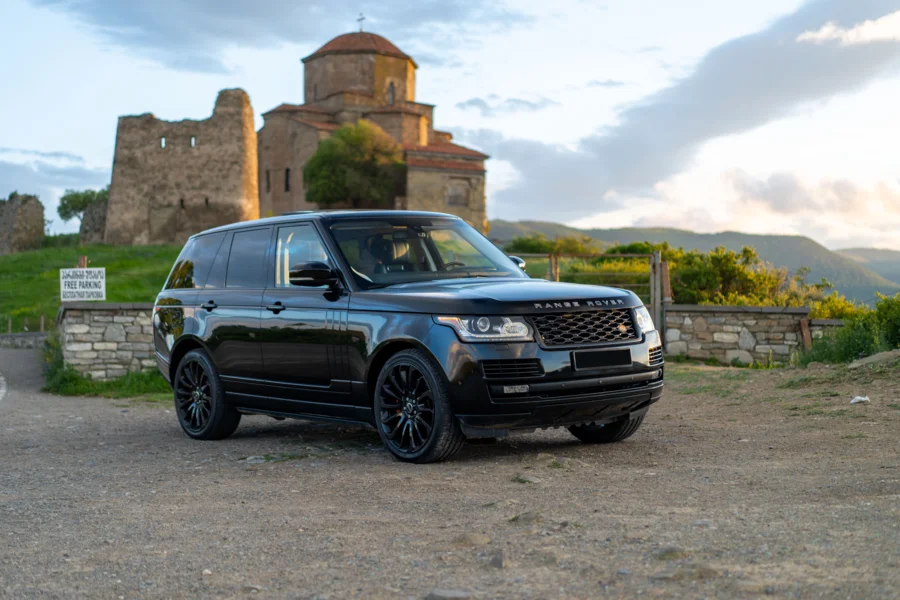
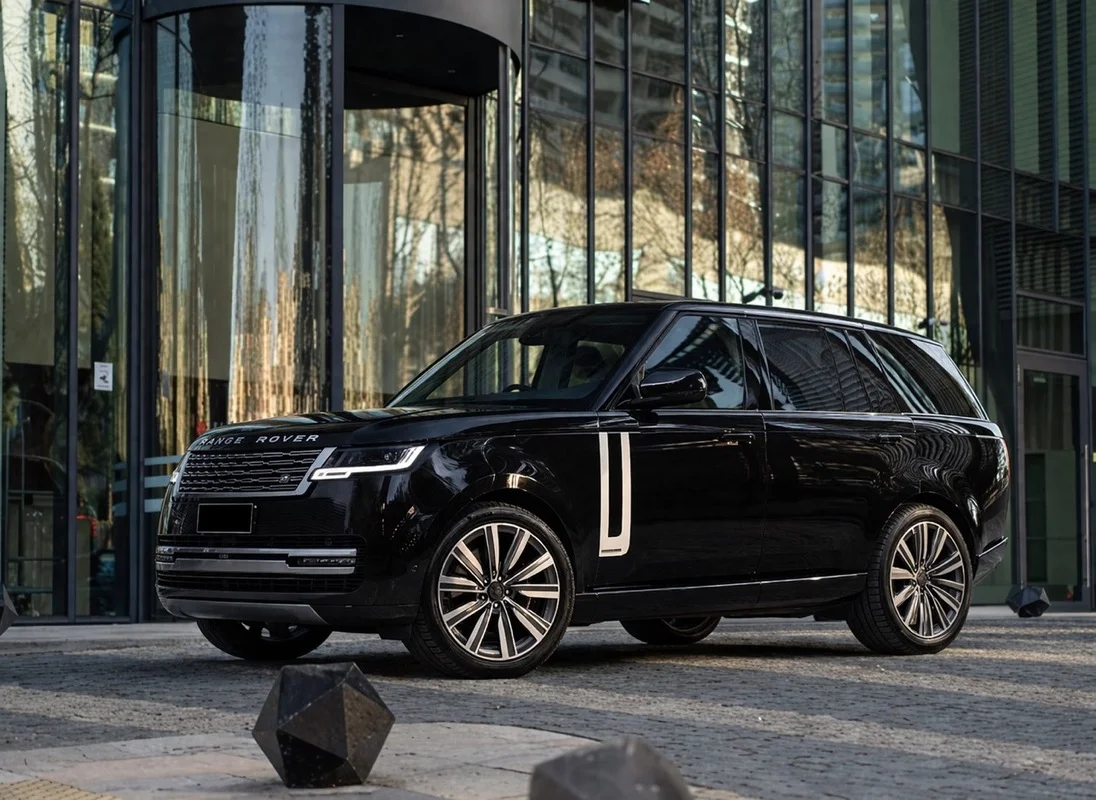
When clients ask how we keep the fleet in such good shape – the condition, the specs, the consistency – the honest answer is: most of our Range Rovers came from the United States. Not bought locally, not sourced from European dealers. Purchased directly at American auctions and shipped to Georgia.

We didn’t start out doing it this way. For a while we sourced locally – and kept hitting the same wall: wrong spec, murky history, or a price that made no sense for the business. American auctions solved all three problems at once. Now it’s our primary sourcing channel.

Below is one real deal, with the numbers at every stage.

What We Were Looking For

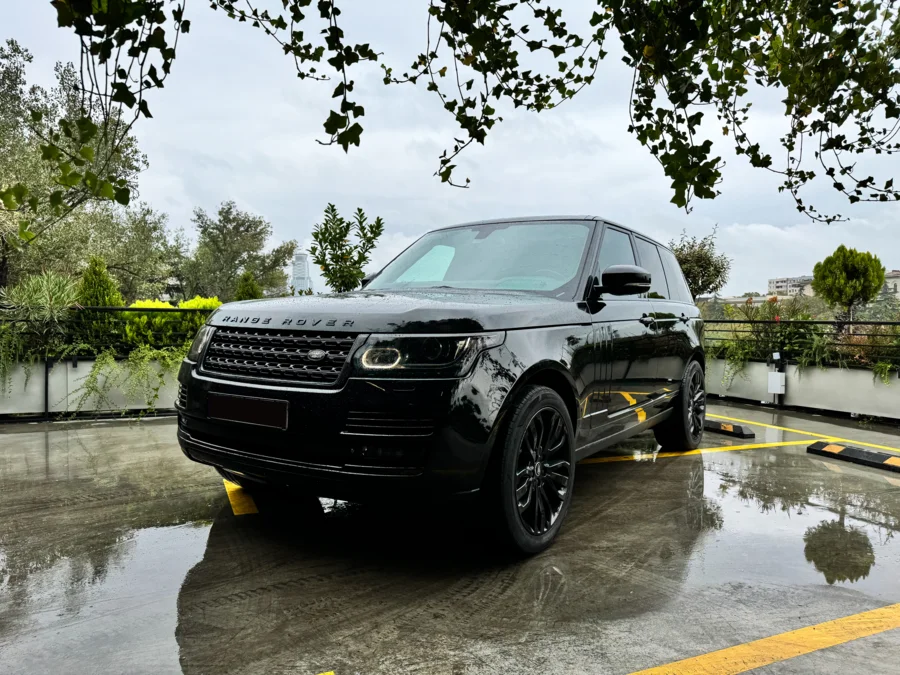
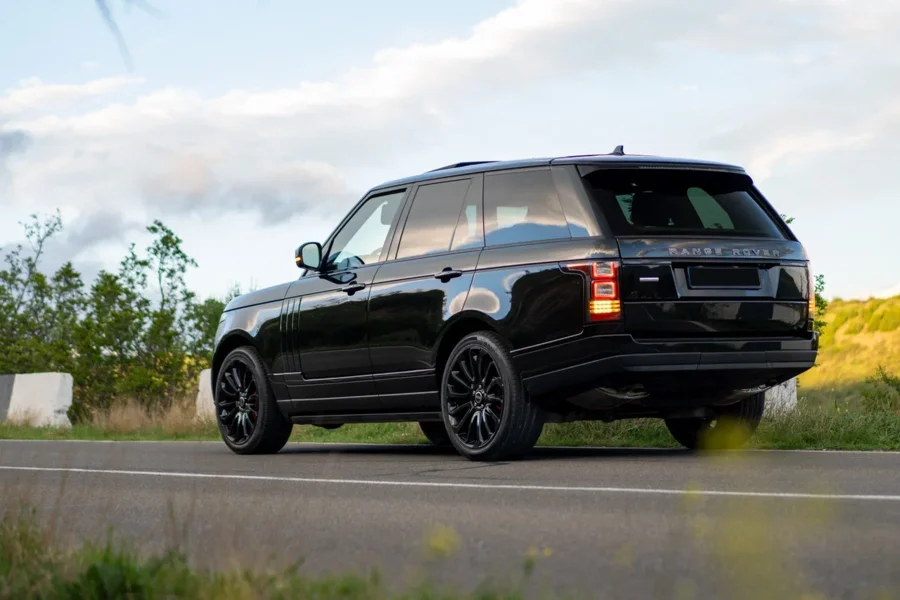
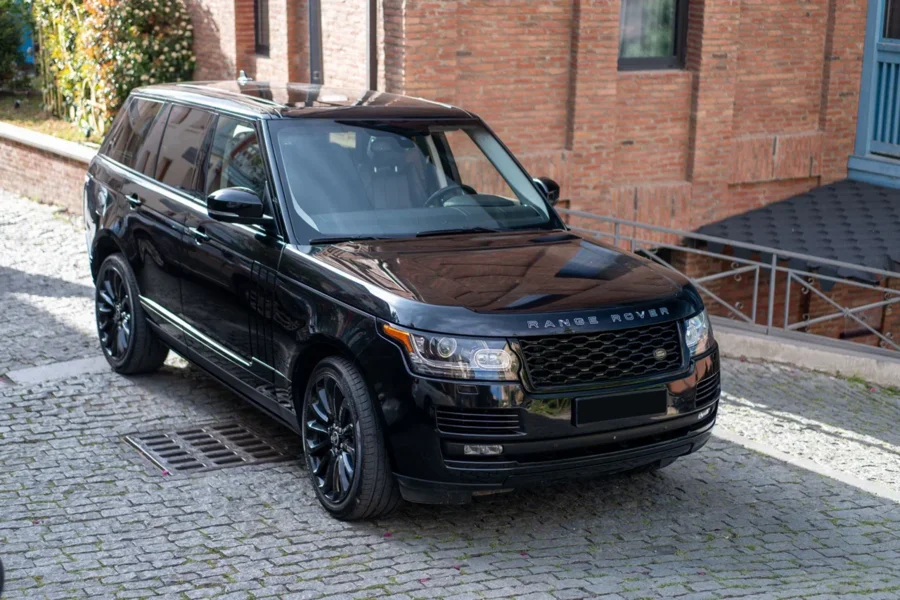
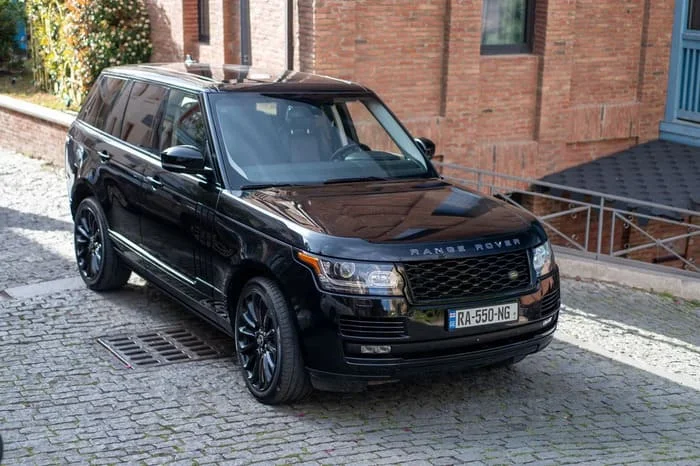
The brief was specific: Range Rover Vogue in Autobiography Black trim, 2024 model year, under 20,000 miles, petrol. Autobiography Black is Land Rover’s top factory specification – 3.0-litre engine producing 400 hp, air suspension, the full active safety package, and an interior finish that in Georgia is either unavailable or priced well above the standard market rate.

On MyAuto and through private sellers, a car like this in decent condition starts from $140,000 – when you can find one at all. We knew the US would come in cheaper. The question was by how much.

How We Work

Every deal runs on a signed contract with staged payments. No verbal commitments, no surprise charges at the end. An initial deposit of $3,000 is locked in at the start – it goes toward the final total and establishes a clear foundation on both sides. From there, the search begins.

We monitor Copart, IAAI, and Manheim simultaneously. Every promising lot is reviewed and confirmed before a bid is placed – the client sees the photos, the VIN history, the auction sheet. Nothing is purchased without sign-off.

The Deal

We found what we needed a few weeks in. Range Rover Vogue Autobiography Black, January 2024, 15,000 miles, 3.0-litre petrol, 400 hp. Clean title, no insurance incidents. Auction price: $80,000.

A payment of $42,000 was made to cover the vehicle and auction commission. Export documents were processed, and the car was handed to the port. Sea freight from the US to Poti, Georgia: 2.5 months. All-in shipping cost: $10,000 – ocean freight, cargo insurance, full export and import documentation, and customs clearance on arrival in Georgia.

Once the car arrived, the final payment of $45,000 was made, ownership was transferred, and the vehicle joined the fleet.

The Numbers

ItemAmount
Initial deposit (applied to total)$3,000
Vehicle purchase + auction commission$42,000
Final payment on handover$45,000
All-in shipping to Georgia$10,000
Sourcing fee (10% of vehicle price)~$9,000
Total~$99,000
Equivalent on MyAuto (Georgia)from $140,000
Savings$41,000 – 40%

A 2024 Range Rover Vogue Autobiography Black with 15,000 miles, landed in Georgia for $99,000. The same car on the local market at the time: from $140,000. The $41,000 gap isn’t a one-off from a lucky lot. It’s a consistent pricing structure between the US and Georgian markets – one that holds deal after deal.

Why We Now Do This for Clients

Rental clients started asking about it themselves. Someone takes a Range Rover for a week, drives it through Georgia, and at some point the question becomes natural: can you bring one for me?

We can. The process is exactly the same as what we run for our own fleet: signed contract, staged payments, active communication at every step. Our fee is 10% of the vehicle’s auction price. Delivery is available to Georgia and to CIS countries – Russia, Kazakhstan, Belarus, and others. Customs terms vary by destination and are worked out individually.

If you want to know what a specific car would cost, leave a request or reach out on WhatsApp. We turn around an estimate quickly.
Renting vs Buying a Range Rover: Which Makes More Sense?

This question comes up constantly – especially among expats who’ve just arrived in Georgia and travelers who’ve found themselves staying longer than planned. There’s no universal answer, because “better” always depends on your specific situation, not on some abstract formula.

We see both scenarios play out regularly: clients who rent a Range Rover for a few weeks, and clients who eventually order one from the US. Here’s how we think about the choice.

When Renting Is the Obvious Call

If you’re in Georgia for less than three months, buying makes no sense from any angle. Rental gives you the car without the commitment: insurance is included, maintenance is on us, and you can switch vehicles or walk away at any point.

If you’re not sure whether a Range Rover is actually your kind of car. It has a very specific character. Some people love it from the first drive; others realize it’s not for them. Renting for a week or two is an honest, low-risk way to find out.

If mountain driving, off-road terrain, and long-haul routes aren’t part of your regular routine. There’s no reason to own a vehicle with those capabilities – and the running costs that come with them – if you don’t use them.

When Buying Makes Sense

If you’re staying in Georgia for a year or more and need the car regularly. Over twelve months, monthly rental payments add up to a figure that could have bought you a car – especially when you factor in importing from the US.

If you want a specific trim, color, and configuration that isn’t available on the local market, or where local sellers are asking a significant premium. Sourcing from the US makes that achievable, typically at 30–40% below Georgian market prices.

If you plan to use the car beyond Georgia. A car you own can be driven across borders, sold, or relocated. A rental car cannot.

The Numbers, Simply

Renting a Range Rover runs from around $2,000 per month, depending on model and terms. Over a year, that’s $24,000 or more – with nothing to show for it at the end.

A Range Rover sourced from the US under order – one that would sell locally for $140,000 – can be landed for around $99,000. A year or two later, you can sell it at market price. The real cost of ownership looks very different.

We’re not pushing anyone toward buying. We’re in favor of people making the choice that actually fits their situation. If it makes sense to buy, we can organize the import. If it doesn’t, rent – and don’t overpay for something you don’t need yet.

A three-to-six month long-term rental at a fixed rate is a practical way to live with a Range Rover before committing to a purchase. If by the end of that period you know it’s your car, you move forward – with experience and without second-guessing yourself.

For expats who are just getting settled in Georgia, this is often the most sensible path: rent for the first few months, then make a considered decision.

How Much Does It Cost to Import a Car from the US in 2026?

“What’s the total?” is the most common question we get about importing cars from the US – and it’s also the most context-dependent. The final figure is made up of several components, each of which varies by vehicle, destination country, and who’s handling the import.

We’ll walk through the cost structure using a real example – a 2024 Range Rover Vogue Autobiography Black – and explain what’s behind each line item, including where people often miscalculate when trying to estimate it themselves.

The Cost Structure: What You’re Actually Paying For

1. Vehicle price at auction

This is your starting point. US auctions – Copart, IAAI, Manheim – offer a wide range, from lightly damaged insurance vehicles to well-maintained dealer trade-ins with full service history. A 2024 Range Rover Vogue Autobiography Black with 15,000 miles sells at auction for around $80,000. The same car on the Georgian market starts at $140,000.

2. Auction commission and agent fees

Auctions charge a buyer’s premium on each lot – typically 2–5% of the purchase price, plus administrative fees. These add up and need to be factored in from the start, not discovered after the fact.

3. Shipping from the US to Georgia

Sea freight from a US port (Savannah, Baltimore, Houston) to Poti includes the freight itself, cargo insurance, and all export documentation. For a standard premium SUV, the all-in shipping cost runs around $10,000. Transit time: 2–2.5 months.

4. Customs clearance in Georgia

Georgia has some of the most favorable vehicle import conditions in the region. For cars under 6 years old, the rates are manageable. As of April 2026, vehicles older than 6 years have become significantly more expensive to import – to the point where it no longer makes financial sense for most buyers.

5. Agent fee for handling the deal

We charge 10% of the vehicle’s auction price. This covers the search, bid coordination, export paperwork, shipping management, and all deal-related communication from start to finish.

Total Cost: A Real Example

2024 Range Rover Vogue Autobiography Black, 15,000 miles:

  • Auction price: $80,000
  • All-in shipping to Georgia: $10,000
  • Service fee (10%): ~$9,000
  • Total: ~$99,000

Market price for a comparable vehicle in Georgia: from $140,000. Savings: approximately $41,000 – around 40%.

What Affects the Final Price

Model and specification. The higher-end and rarer the vehicle, the bigger the gap with CIS market prices. On more mainstream models, the savings are proportionally smaller.

Year of manufacture. Cars under 6 years old are the sweet spot. Older vehicles create a very different customs picture.

Destination country. Keeping the car in Georgia keeps costs minimal. Sending it on to Russia, Kazakhstan, or Belarus adds local customs clearance – and each country has its own rules and rates.

Vehicle condition. We work only with clean-title cars. If someone is offering substantially cheaper, it usually means a damaged-title vehicle or undisclosed restoration costs.

Where Not to Cut Corners

Pre-purchase inspection. A VIN check is the bare minimum. A physical inspection on the ground in the US ensures there are no hidden damages that don’t show up in auction photos.

Legal documentation. Contract, payment schedule, status updates at each stage – everything needs to be in writing. For transactions of this size, verbal agreements are not a reliable foundation.

Fuel in Georgia: Types, Prices and Everything You Need to Know Before You Drive

Georgia produces no oil and relies entirely on imports. That feeds directly into prices, which track the global market and have risen noticeably over the past few years. In early 2026, fuel costs more here than in Russia but less than in most of Europe. Knowing what’s available, where to fill up, and what to expect in mountain regions is worth sorting out before you get behind the wheel.

What fuel types are available

Euro Regular (92/93 octane) – the base grade, Euro-5 standard. Suitable for most cars without high octane requirements. Price in March 2026: 3.04–3.27 GEL per litre depending on the network.

Premium (95 octane) – the most common choice for modern vehicles, and the grade most rental companies recommend. Price: 3.20–3.43 GEL per litre.

Super (98 octane) – for high-performance engines. Available at all major networks, though demand is lower. Price: 3.50–3.80 GEL per litre.

Diesel – Euro-5 standard, with an upgraded Nano Diesel variant at some networks. In March 2026 diesel rose more sharply than petrol: 3.20–3.65 GEL per litre depending on grade and network.

CNG (compressed natural gas) – popular with local drivers, especially taxi operators. Roughly half the price of petrol, which explains the widespread use of gas-converted vehicles in Georgia. CNG stations are available in most cities and along main roads, but are essentially absent in mountain regions – Tusheti, Svaneti, Racha, and the Georgian Military Highway. Do not count on gas in these areas.

LPG (liquefied propane-butane) – significantly rarer than CNG. Infrastructure is underdeveloped and finding a station when you need one is unreliable. Not a practical fuel choice for tourist driving.

Current prices by network – March 2026

Rompetrol: Efix Super – 3.65 GEL, Euro Premium – 3.25 GEL, Euro Regular – 3.12 GEL, Euro Diesel – 3.25–3.30 GEL.

Lukoil: Euro Super – 3.67 GEL, Premium Avangard – 3.30 GEL, Euro Regular – 3.17 GEL, Euro Diesel – 3.52 GEL.

Socar: Nano Super – 3.67 GEL, Nano Premium – 3.30 GEL, Nano Euro Regular – 3.14 GEL, Euro 5 Diesel – 3.40 GEL.

Exchange rate reference: approximately 2.70 GEL to the dollar as of April 2026. A litre of Premium works out to around $1.20–1.25. Since the start of March 2026, petrol has risen by 15–36 tetri and diesel by 37–54 tetri across networks, driven by higher global oil prices.

Major station networks

Wissol – one of the largest local networks, with wide coverage including smaller towns. Competitive pricing, consistent quality.

Socar – Azerbaijani state company, over 100 stations across the country including 37 in Tbilisi. Offers petrol, diesel, and CNG. Popular with gas-converted vehicle owners.

Rompetrol – Romanian company, 81 stations in Georgia. Its Efix-branded fuel is marketed as a premium Euro-5 product. Well represented on transit routes.

Lukoil – one of the longest-established networks in the country. Wide geographic coverage, loyalty card programme available.

Gulf – international network, positioned primarily on key highways and in major cities. Modern equipment, reliable quality.

Regional differences

Tbilisi – full choice of networks, all fuel types, card payment everywhere. Standard market pricing.

Batumi and Kutaisi – major cities with good coverage. Prices are essentially the same as Tbilisi.

Main highways (Tbilisi–Batumi, Tbilisi–Kazbegi, Tbilisi–Kutaisi) – stations appear regularly, predominantly branded networks on tourist routes.

Kakheti, Borjomi, Racha – branded stations exist but are less frequent. Fill up in the nearest city before heading into less populated areas.

Mountain regions – Kazbegi, Svaneti, Tusheti – a fundamentally different situation. Petrol is available, but the choice of stations is minimal and unbranded pumps are more common. In Tusheti, sort out fuel before entering the mountains. The road in is difficult, and opportunities to refuel along the way are essentially nonexistent.

Practical notes for rental drivers

Attendant service. Georgian stations do not follow a self-service model. A station attendant fills the car for you. Tell them the fuel type and the amount, or ask for a full tank.

Payment. Visa and Mastercard are accepted at major networks. Russian bank cards are generally not accepted – you will need cash in GEL or a card from a non-Russian bank. Small and unbranded stations may not accept cards at all.

Fuel quality. At unfamiliar stations, take your cue from taxi drivers and truck drivers – they fill up where the fuel is good. Quality at unbranded stations is inconsistent, particularly for diesel.

American-spec vehicles. A significant portion of the Georgian fleet consists of US-import cars with odometers in miles and often large-displacement engines. If you are renting one of these, confirm the recommended fuel type with the company before filling up.

Full tank on return. Most rental companies operate on a full-to-full basis: you receive the car with a full tank and return it the same way. Fill up at a branded station before drop-off – it will cost less than paying the company’s per-litre rate.

Budgeting for fuel

A working estimate: at 10 litres per 100 km and a Premium price of around 3.30 GEL, every 100 km costs roughly 33 GEL, or about $12. The Tbilisi–Kazbegi–Tbilisi loop (approximately 300 km) comes to around $36 in fuel. Tbilisi to Batumi (approximately 380 km) is around $46. For SUVs with a 12–14 litre per 100 km consumption, add 20–40% to those figures.

How to Buy a Range Rover from the USA Through Georgia

Georgia has become one of the main transit hubs for importing American vehicles into the CIS region. The reasons are straightforward: relatively favorable customs conditions, direct sea freight through the port of Poti, and a well-developed support network – from auction agents to shipping companies and lawyers. For a buyer in Russia, Kazakhstan, or Belarus, this means one thing: sourcing a Range Rover through Georgia can save you 30–40% compared to local markets or official dealerships.

We do this regularly – including for our own fleet. Most of the Range Rovers you see in our rental lineup made this exact journey. So when we walk you through the process, we’re speaking from firsthand experience.

Where Cars Are Purchased in the US

The main platforms are Copart, IAAI (Insurance Auto Auctions), and Manheim. Copart and IAAI handle vehicles that have been through insurance claims – some with minor damage, others more seriously affected. Manheim is a dealer auction, where you typically find well-maintained, used vehicles with service history.

For our order-based sourcing, we work exclusively with clean-title vehicles. The savings aren’t built on buying damaged cars – they come from the fundamental price gap between the US market and CIS-region pricing, which on Range Rovers runs consistently at $30,000–50,000.

Who This Works For

Individuals and businesses from Russia, Kazakhstan, Belarus, Uzbekistan, and Kyrgyzstan. The purchase is structured through Georgia. What happens next depends on your destination country – each has its own customs rules. For those who want to keep the car in Georgia, it’s even simpler: no additional customs clearance required.

How the Deal Works – Five Steps

Step one is defining your requirements: model, year, trim level, color, and budget. This determines what we’re looking for and at what price point.

Step two is the search. We monitor live auction listings and stay in constant contact. When we spot the right car, we confirm with you before placing a bid.

Step three is the purchase. You transfer funds for the vehicle and auction commission. We handle the export paperwork and arrange transport to the port.

Step four is shipping. Sea freight from the US to Poti takes roughly 2–2.5 months. We manage the full logistics chain – freight, customs clearance, and documentation – end to end.

Step five is handover. Once the car arrives and final payment is confirmed, we transfer ownership and hand over the keys. Onward delivery to your country can be arranged separately.

Real Cost Breakdown

A concrete example: Range Rover Vogue Autobiography Black, 2024, 15,000 miles. Auction price: $80,000. Shipping to Georgia, all-inclusive: $10,000. Our service fee (10% of vehicle price): ~$9,000. Total for the client: approximately $99,000.

The same car on the Georgian market (MyAuto): from $140,000. Savings: around $41,000, or roughly 40%.

What to Keep in Mind in 2026

Since April 2026, importing vehicles older than 6 years has become economically unviable due to changes in customs regulations. Cars under 6 years old remain straightforward. This is worth factoring into your brief – a 2019 Range Rover or older is currently not a strong candidate for this route.

The second thing to note is vehicle history. Before any purchase, we run a full VIN check and, where needed, arrange a physical inspection on the ground in the US. It takes a bit more time upfront but eliminates unpleasant surprises on arrival.

If you’re not yet certain whether a Range Rover is the right car for you, renting one first is a sensible move. We offer exactly that – drive it, decide, then order yours.

How to Tell a Legitimate Car Rental Company from a Scam

Georgia’s car rental market is growing fast. So is the number of companies whose real business isn’t renting cars – it’s the dispute at the end. From the outside, they look like everyone else: a website, photos of vehicles, prices. The difference tends to show up later.

We’ve been in this market long enough to watch clients end up in bad situations – not because they were careless, but because they didn’t know what to look for. Here’s what’s worth checking before any money changes hands.

A physical address

A legitimate company has a specific handover location – an office, a parking lot, an address you can find on a map and actually drive to. If every question about where to pick up the car gets answered with “we’ll sort it out when you call” – that’s not flexible service, that’s no address.

A contract with company details

A rental agreement is signed with a legal entity. It should include the company name, registration number, signature, and stamp. If you’re handed a sheet with no company details, or asked to skip the paperwork entirely – you’ll have no recourse if anything goes wrong.

A reputable company will send you the contract before payment, simply so you can read it.

Willingness to answer uncomfortable questions

Before booking, ask: what does the insurance cover, what’s the excess, what happens in an accident, can you drive on unpaved roads. A legitimate company answers these questions calmly and specifically – because there’s nothing to hide.

If the manager deflects, stays vague, or pushes you to pay quickly – that’s a signal. Urgency tactics (“the car is reserved, we need confirmation right now”) are a classic move.

Reviews: not the rating, but the responses to complaints

A 4.9 rating on its own means very little. Look at how the company handles negative reviews. Does it acknowledge the problem, explain its position, offer a resolution – or does it delete comments, respond aggressively, or say nothing at all? Both tell you something.

Pay attention to the detail in positive reviews. “Great experience, would recommend” says nothing. “Car was ready on time, no questions raised about the condition at drop-off” – that’s a real account from a real person.

Pricing below market

The going rate for a decent rental car in Georgia isn’t a secret. If an offer is noticeably cheaper than everything else, it’s worth understanding why. Sometimes it’s a genuine promotion or a basic car with no extras. Sometimes the gap gets made up on return – through disputed damage, unexpected charges, or a deposit that doesn’t come back.

Cheaper doesn’t mean better value. Especially when the final number is calculated after, not before.

We know that choosing a rental company in an unfamiliar country comes down to trust. That’s why we’re happy to answer any questions before you book – about the contract, insurance, deposit, and return conditions. No pressure, no vague answers.

Buy or Rent: What Actually Makes Sense for Expats in Georgia in Year One

It comes up constantly. Someone moves to Georgia — from Russia, Israel, Germany, Ukraine, wherever — gets settled, realises they need a car, and hits the same question: buy now or rent for a while? We work with expats every day and see how this plays out in practice. Not in a spreadsheet — in real life.

The conclusion we keep arriving at: for most people, the first year is better spent renting. Here’s why.

The Georgian Used Car Market Is Its Own Thing

Georgia spent years as a transit country for used cars from the US, Japan, and Korea. Low import duties made it a convenient entry point, and that legacy is still very visible in the market today. A large share of what’s listed are “American imports” — cars with a right-hand drive conversion, a Florida or Texas title, and often a rolled-back odometer. Alongside them are decent European and Japanese cars, but finding those requires either local knowledge, money for a proper inspection, or luck.

The main platforms are MyAuto.ge and SS.ge. Plenty of inventory, not a lot of transparency. If you don’t know the local quirks, can’t read Georgian, and don’t have a trusted mechanic, buying something solid on the first try is genuinely hard. This isn’t Germany, where every dealer hands you a service history. Here, you do your own due diligence — and that takes time and money.

Registration is its own topic. Putting a car in a foreigner’s name is possible, but requires a residence permit or local registration. Without one, you’re going through a Georgian individual or legal entity. It’s not complicated, but it takes time that most people don’t have right after moving.

What a Car Purchase Actually Costs in Year One

Say you have $13,000–$15,000 for a decent used car. Beyond the purchase price, here’s what gets added in the first year:

  • Insurance (mandatory liability + basic comprehensive, if available) — $400–600
  • Two scheduled services — around $400
  • Unplanned repairs — a realistic minimum on a used car is $500–1,000
  • Depreciation on resale after a year — 10–15% of the purchase price, or $1,300–2,000
  • $13,000 sitting in a car instead of working — opportunity cost around $700–900

That’s $3,000–5,000 in costs on top of the car itself, in year one alone. Add time: finding the car, having it inspected, handling paperwork, tracking down a decent workshop when something breaks, and eventually organising the sale at the end of the year.

One of our clients moved from Moscow in 2022 and bought a Toyota Camry for $14,000. The car looked fine — 90,000 km on the clock. Three months in, the gearbox started giving trouble. Another $2,000 in repairs. He’s been with us on a long-term rental ever since and says he wishes he’d started there.

Long-Term Rental: What’s Actually Included

Long-term rental — from a month upward — is a different product from tourist-style daily hire. Different terms, different logic.

With us, a Toyota Camry, Hyundai Sonata, or BMW 5 Series starts from $600–700 per month. That covers full insurance, scheduled maintenance, tyre changes, and a replacement car if something goes wrong. You pick up the keys and drive. No searching for a workshop, no surprise bills.

A year at $700/month comes to $8,400. A purchase with all the real costs attached runs $16,000–18,000 over the same period. The gap is $7,000–10,000 — and that’s before factoring in the time you spend managing a car you own.

Year One Is Uncertain By Nature

When you’ve just arrived, there’s a lot you don’t know yet:

  • Where will you actually be living in six months — Tbilisi, Batumi, or somewhere else entirely?
  • How will your work situation develop?
  • What kind of car do you actually need — something for the city, or a proper SUV for the mountains?
  • Are you staying in Georgia at all?

In our experience, roughly one in three expats who planned to stay long-term changes their plans within the first year — whether that means leaving the country or moving within it. It’s not unusual. That’s just how the first year tends to go.

Selling a car in Georgia quickly and without taking a loss requires time. If you need to leave in a hurry, it becomes a real problem. With a rental, when the contract ends, you hand the car back.

You Won’t Know What Car You Need Until You’ve Been Here a While

Most people arrive thinking they’ll grab something small for the city. Then they discover Kazbegi, Mestia, Tusheti — and realise they actually need a proper SUV. Or the opposite: planned to drive around a lot, got something big, and end up stuck in Tbilisi traffic in the narrow streets of Vera or Saburtalo.

The first few months are spent figuring out how you actually live in this country. Our fleet covers the range — from the Camry and BMW 5 Series to the Range Rover and Mercedes G-Class. Try one, decide it’s not right, switch. That happens, and it’s fine.

When Buying Does Make Sense

There are situations where buying is the right call:

  • You’re staying three years or more, have a residence permit, and have stable work or a business here.
  • You have a trusted mechanic and a working knowledge of the local market.
  • You need a specific model that isn’t available through rental.
  • Family, kids in school, a settled life — you’re not going anywhere.

Over a three-year horizon, the numbers can shift in favour of ownership. By that point you’ll also know the market well enough to buy with confidence.

How Long-Term Rental Works With Us

Every car in our fleet has a known service history. All you need is a passport and a driving licence — no Georgian documents required. We deliver anywhere in Tbilisi, to the airport, to Batumi and back. For clients we’ve worked with for a while, we drop the deposit.

Terms are worked out for each person individually: duration, mileage, vehicle class. If you want advice on buying a car — that’s something we can help with too. It’s part of what we do.

The Short Version

In the first year after relocating, renting is almost always the better option — both financially and in terms of the time and energy involved. Buying makes sense when you already understand how you live in the country and know exactly what you’re getting into.

If you want to talk through what makes sense for your situation, get in touch.

Range Rover for the Long Haul: Who Benefits from Monthly Rental and How to Get a Personal Quote

Long-term Range Rover rental is the perfect choice for clients who need a premium SUV for a month or more. In this guide, we break down exactly who this service is designed for and what advantages it offers. We’ll walk through the key customer segments and typical use cases, compare models across the most important parameters (power, fuel consumption, comfort, off-road capability, and prestige). We’ll cover the economics of renting: approximate rates (in USD per month and for add-on options), the factors that affect pricing (rental period, mileage, insurance, servicing, seasonality, and demand), and rough calculations showing how long-term rental compares to short-term hire and outright purchase. We’ll explain the logic behind personalized pricing — how length-of-stay discounts work (approximate percentages by month, key threshold periods) — with sample calculations for 1, 3, 6, and 12 months. You’ll also find guidance on crafting a soft commercial offer, lead-generation scripts, calls to action, and qualifying questions for evaluating potential clients. Finally, we cover the key risks and conditions of long-term rental: deposits, penalties, inspections, mileage limits, vehicle return, and insurance. Informative and practical — let’s dive in.

Who Is Long-Term Range Rover Rental Right For?

Long-term rental of a premium SUV makes the most sense for people who value status, comfort, and versatility — but don’t want to be tied down by ownership. The main client profiles include:

Senior executives and entrepreneurs. C-suite leaders and business owners rent Range Rovers for business travel and client-facing appearances. The brand’s commanding image and distinctive design signal authority, while the spacious cabin and powerful engine ensure comfort on any road.

Families and expats. For families — especially those with children — long-term luxury SUV rental is a natural fit during relocations or extended work assignments. The generous boot easily swallows a stroller and luggage, and the advanced all-wheel drive system inspires confidence on any surface.

Adventure travelers and outdoor enthusiasts. If you’re planning extended trips out of the city — to country houses, nature retreats, or remote regions — a Range Rover is the obvious choice. High ground clearance and a powerful engine handle gravel tracks, dirt roads, and off-road terrain with ease, while the onboard electronics maintain comfort even in the roughest conditions.

Events and premium services. Organizers of VIP events, weddings, photo shoots, and film productions regularly rent Range Rovers for extended periods. The luxurious interior and visual impact — particularly on Autobiography or SV trims — look exceptional in promotional content, advertising campaigns, and on the red carpet.

Typical use cases span a wide range: long business trips, regular city and regional meetings, weekend escapes to a country home, family holidays, corporate client hosting, and VIP transfers (with or without a driver).

What to Consider When Choosing a Model

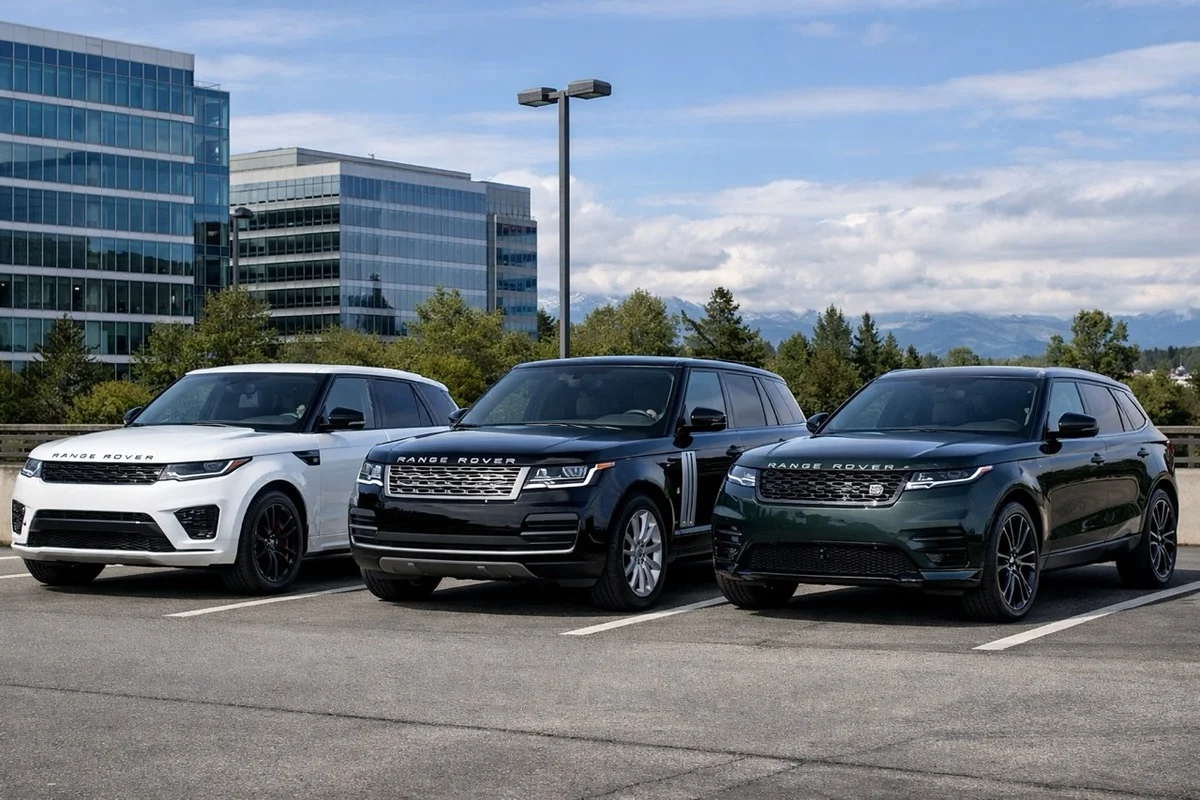
Power and performance For fast highway driving or frequent off-road excursions, go with a Range Rover Autobiography or Sport with a high-output engine — a V8 producing 500+ hp or a V6 with 400+ hp. These deliver strong acceleration and serious towing capability. For predominantly urban use, the Range Rover Velar or Evoque are lighter, more fuel-efficient, and still plenty quick.

Comfort The highest level of comfort comes with top-spec Autobiography trims: premium leather upholstery, massaging seats, advanced infotainment, and near-total cabin silence. The Sport is also supremely comfortable but tuned slightly more dynamically. The Velar offers a cutting-edge interior with touchscreen panels and a smooth, refined ride, while the Evoque is more compact but equally well-appointed.

Fuel consumption The thirstiest model is the Autobiography with its large V8 (15–20 L/100 km in mixed driving). The Range Rover Sport (roughly 12–15 L) and Velar (around 7–10 L) are more moderate. The most economical is the compact Evoque (approximately 6–8 L in mixed conditions). If running costs matter, diesel variants or smaller petrol engines are the way to go.

Off-road capability Every Range Rover comes with all-wheel drive and Terrain Response systems as standard. The Range Rover Autobiography and Sport offer the greatest off-road potential thanks to their ground clearance and engine power. The Velar and Evoque can handle light off-road use (gravel, snow) but are primarily designed for urban and highway driving.

Prestige and image The full-size Autobiography and Sport are symbols of luxury and status — they command attention wherever they go. The Velar and Evoque project a sleeker, more contemporary image that suits the modern urban professional. The right choice depends on the impression you want to make.

The Economics of Renting a Range Rover

Monthly Range Rover rental costs more than a standard crossover, but it’s significantly cheaper than daily rental rates. Approximate monthly prices in Georgia are as follows:

  • Range Rover Autobiography: ~$2,700–$3,900/month (top-spec, premium segment)
  • Range Rover Sport: ~$3,300/month
  • Range Rover Vogue: ~$2,700–$3,300/month

Exact pricing depends on the trim level, vehicle age, and contract terms — the final figure is always agreed individually.

Factors that affect the price:

Rental period. The longer you rent, the lower the effective daily rate. Monthly rentals and above come with a meaningful discount compared to paying day-by-day, and annual agreements are negotiated individually with the most favorable terms.

Mileage. Most companies set a daily mileage cap (typically 150–300 km/day), with excess charged separately (roughly $0.05–$0.10/km). For long-term rentals, we offer unlimited mileage options at no extra cost.

Servicing and maintenance. Our standard rental package includes scheduled maintenance at our own service center and seasonal tire changes. With professionals looking after the vehicle, you never need to worry about repairs.

Seasonality and demand. Prices may be higher during peak periods — the New Year holidays, high tourist season, and major events. Newer models and exclusive trims are priced at a premium. Off-season rental is traditionally more affordable.

Personalized Pricing, Discount Structure, and Sample Calculations

For long-term arrangements, pricing is discussed on an individual basis. The general framework: the first month is billed at the standard rate, with each additional period receiving its own discount coefficient.

Below are sample daily and monthly rates with the effective savings illustrated:

ModelDaily RateMonthly RateEffective Daily RateDiscount
Range Rover Vogue (Autobiography)$200$3,900 (vs. $6,000)$130/day35%
Range Rover Vogue 5.0 Petrol (Supercharged)$125$2,700 (vs. $3,750)$90/day28%
Range Rover Vogue 4.4 Diesel (Autobiography) Black$125$2,700 (vs. $3,750)$90/day28%
Range Rover Vogue 4.4 Diesel (Autobiography) Silver$125$2,700 (vs. $3,750)$90/day28%
Range Rover Sport 3.0 Diesel (Autobiography Sport)$150$3,300 (vs. $4,500)$110/day26.7%
Range Rover Vogue 5.0 Petrol (Autobiography) White$150$3,300 (vs. $4,500)$110/day26.7%
Range Rover Sport SVR 5.0$150$3,300 (vs. $4,500)$110/day26.7%
Range Rover Velar 2.0 Diesel$150$3,300 (vs. $4,500)$110/day26.7%
Range Rover Defender 110 2.0 Diesel$190$4,200 (vs. $5,700)$140/day26.3%
Range Rover Discovery 3.0 Diesel$140$3,000 (vs. $4,200)$100/day28.6%

The comparison between short-term and monthly rates makes the math clear: long-term rental brings the effective daily cost down by roughly a third — making it nearly twice as cost-effective as paying by the day.

The takeaway is simple: the longer you rent, the lower your average daily rate and the greater your discount. We always recommend asking your manager about “monthly pricing” or a “guaranteed long-term discount” to get the most out of your rental.

Long-term Range Rover rental is an all-in-one solution: a premium vehicle on subscription, with flexible terms that reduce your costs at every stage. We provide detailed quotes, straightforward conditions, and support throughout your entire rental period. Get in touch or leave a request today — we’ll put together a tailored offer built around your needs.

What kind of cars do Georgians like?

Our insider’s view — after thousands of deals and hundreds of conversations under the hood

Over the years of working in the car rental business in Georgia, we have seen a lot. We have all kinds of customers — tourists, locals, businesspeople, newlyweds who need a stylish ride to their mountain wedding. And everyone has their own idea of the perfect car. But honestly? When it comes to choosing a car, Georgians are people with character. And that character is very clear if you know what you’re looking for.

Today, we want to share what we see with our own eyes every day. Not statistics from ministries, not marketing reports — the real-life experience of a company that works with cars and people.

An SUV is not a whim, it is a necessity

Let’s start with the basics. Georgia is a country where the asphalt ends exactly where the most interesting part begins. Kazbegi, Tusheti, Svaneti, Racha — if you want to see the real Georgia, you need a proper four-wheel drive. And Georgians understand this on a genetic level.

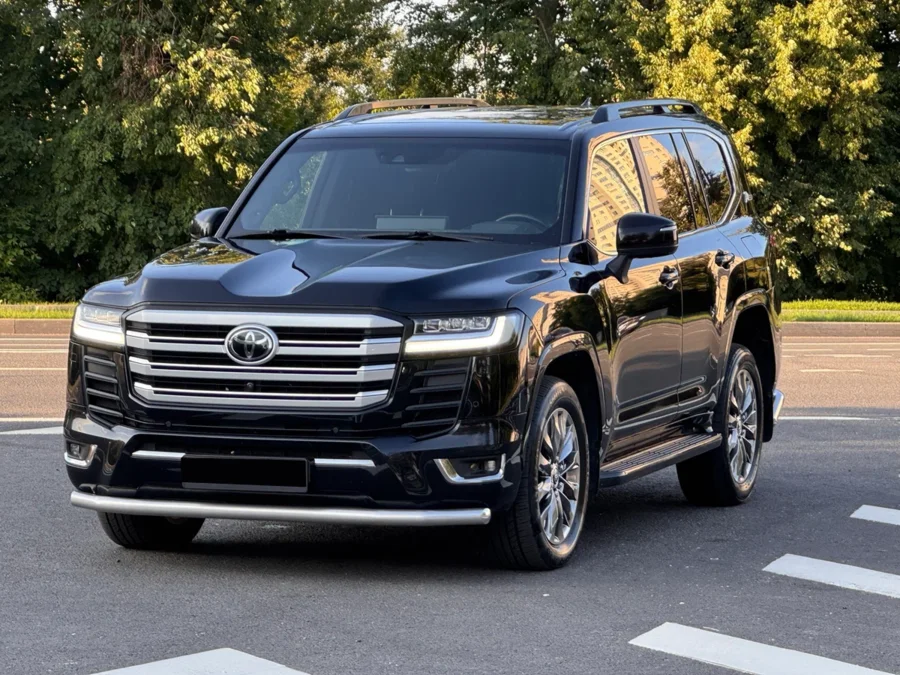
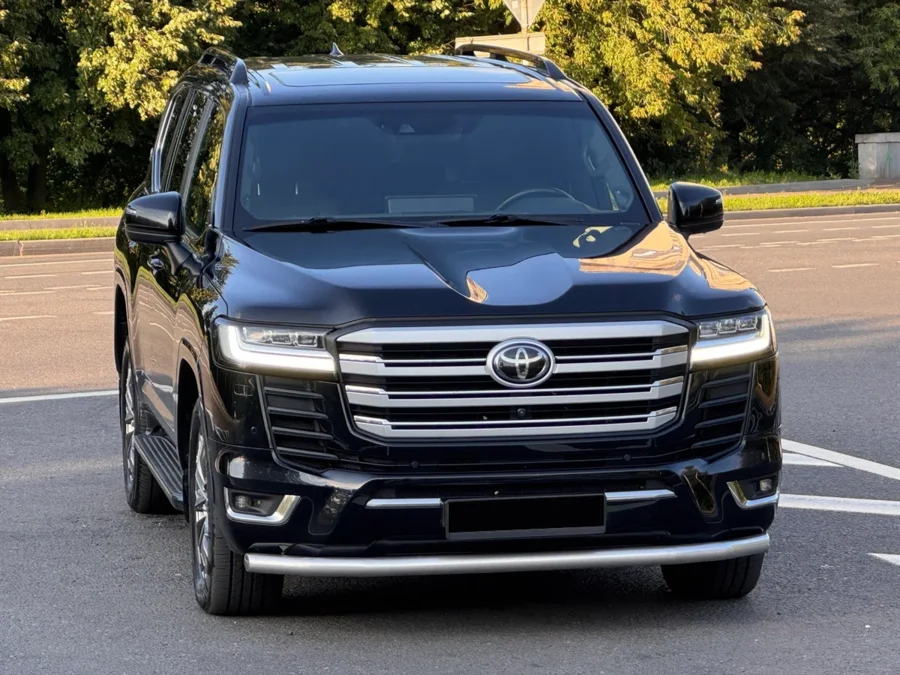
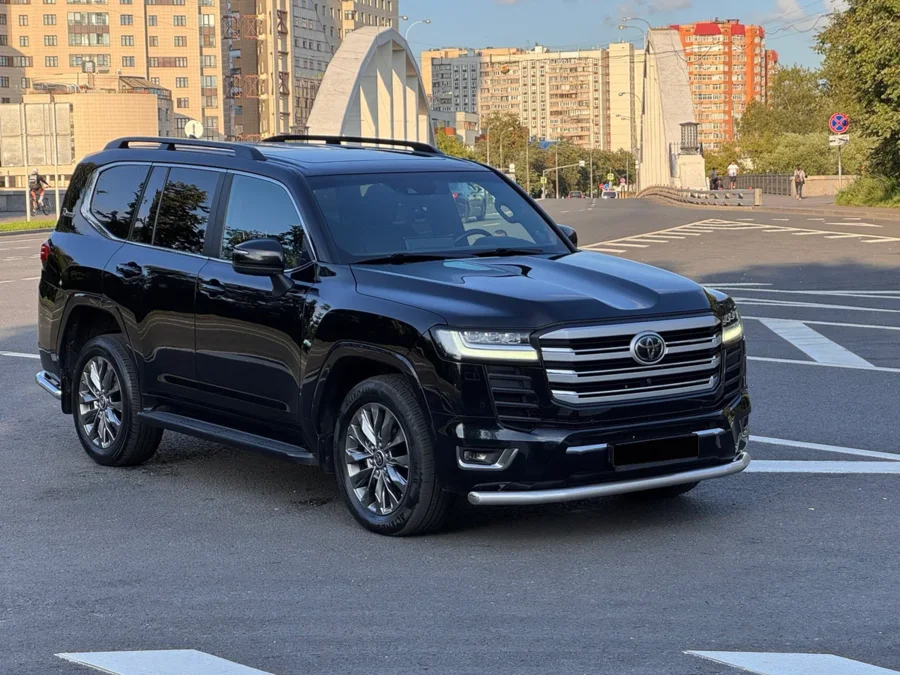
The Toyota Land Cruiser is almost a cultural phenomenon here. Seriously. We’ve noticed that when a local customer rents a car for a long trip — say, from Tbilisi to Mestia or to the high mountain pastures — the first question is almost always the same: “Do you have a 200?” They mean the Land Cruiser 200. This is a car with a reputation, and here it is known and respected. Reliability, off-road capability, ease of maintenance — in conditions where the nearest service station may be 80 kilometers away along a mountain serpentine road, these are not trivial matters.

The Mitsubishi Pajero also enjoys enduring popularity, especially among older drivers. It is a proven, straightforward vehicle, a “workhorse” in the best sense of the word. We have heard many times from customers: “I grew up with one of these, I know every bolt.” That is worth a lot.

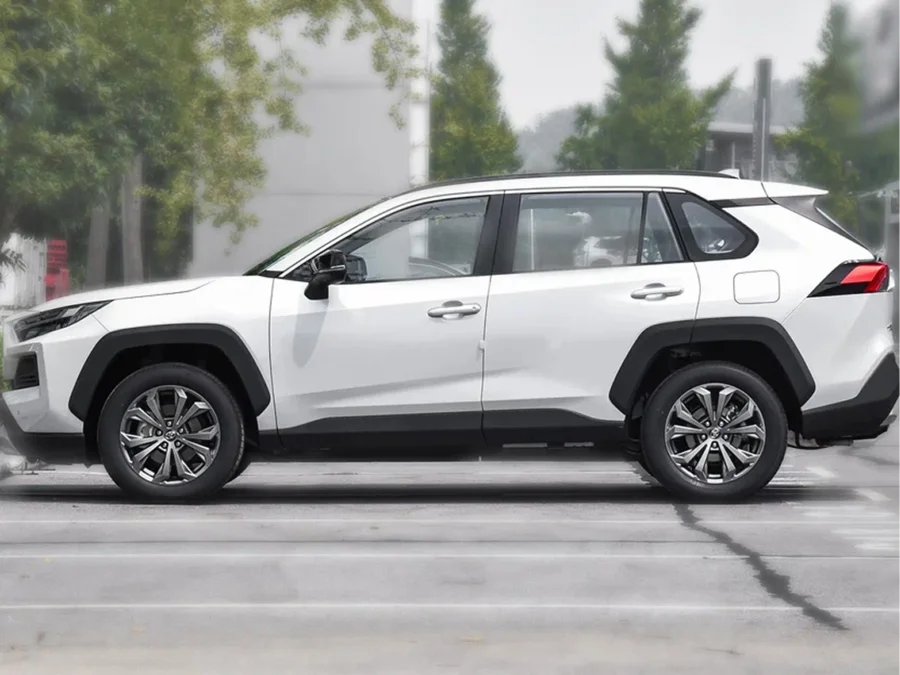
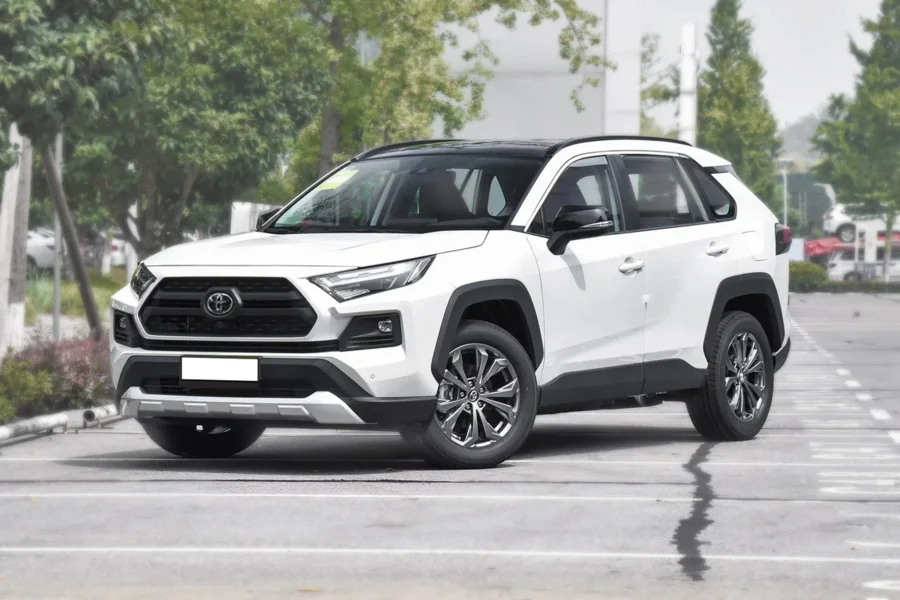
Among the more modern options, the Toyota RAV4 and Mitsubishi Outlander are rapidly gaining popularity. They are the choice of city dwellers who want to be able to get off the asphalt. They are comfortable, have normal ground clearance, and fuel consumption is not excessive. Everything is fair.

Tbilisi is a different story

The logic changes in the city. Tbilisi is traffic jams, narrow streets in the Old Town, parking spaces where you literally have to “fit in,” and endless hills. The priorities are different here.

The Toyota Prius has become something of a symbol of the profession for Tbilisi taxi drivers, but ordinary drivers have also grown fond of it. Fuel savings in city driving are real, and people count their money. At the same time, the car is reliable, spare parts are available, and there are plenty of service centers. It’s the ideal formula for everyday use.

The Hyundai Tucson and Kia Sportage are very popular cars in Tbilisi and Batumi. The Korean auto industry has made a very confident entry here: the combination of price, quality, and service availability does the trick. We see this: when people want something “decent, but without unnecessary frills,” they often choose Korean cars.

I would like to mention the Chevrolet Captiva separately — a car that has found a second life in Georgia. It is valued here for its size, simplicity, and affordability. Families with children, trips to the sea, loading up luggage — the Captiva handles it all without question. It’s not the most modern design, but it’s practical to a fault.

Germans? Yes, but with nuances

BMW, Mercedes, Audi — they are loved in Georgia. Especially BMW. This is not a stereotype — it is what we see in the flow of cars every day. Here, a BMW is perceived as a marker of success, and this works for both young people and established businessmen.

But there is a nuance that everyone who really knows the market understands: maintaining a German car in Georgia costs a lot of money. Spare parts are more expensive, there are fewer specialists, and non-original parts sometimes come as a surprise. That’s why smart people buy German cars for the city and short trips — and they buy well-maintained ones.

From our experience, customers who rent Mercedes E-Class or BMW 5 Series cars are usually business people who have come for negotiations or those who want to make an impression. And that’s perfectly normal. A car is also a form of communication.

Lada? Don’t laugh.

It may sound surprising, but in the regions — especially in mountain villages — old Nivas are still everywhere. And not because people can’t afford anything better. It’s because in conditions of real off-roading, the lack of normal roads, and the need to repair the car yourself with whatever means are at hand, the Niva works. You don’t feel sorry for it. You understand it. It has no electronics that can be damaged by dust or water.

We treat it with respect. Choosing the right tool for the job is what real motoring is all about.

What’s Happening Right Now

The Georgian market is changing fast. Over the past few years, we’ve noticed some clear trends:

The rise of electric vehicles. Especially in Tbilisi. Teslas are no longer a rare sight — people are importing them, driving them, talking about them. Charging infrastructure is growing, though unevenly. Young, tech-savvy, urban — that’s your typical EV owner in Georgia today.

Japanese used cars from direct imports. A massive slice of the market. Cars come in from Japan — both right-hand and left-hand drive — with honest mileage and solid condition. Toyota Aqua, Honda Fit, Nissan Note — you see them everywhere in city traffic. Georgians know how to pick a car with a good history.

The SUV obsession isn’t going anywhere. Crossovers and off-roaders keep growing their share of the market. And it’s not just about the roads — it’s about status, comfort, and the ability to say “I can afford this.” The market responds: more models, more options, and Chinese manufacturers are moving in more aggressively.

Chinese Cars — A Story of Their Own

Chery, Haval, Geely, BYD — none of these are exotic anymore. We’ve watched attitudes shift in real time. Three or four years ago, most clients raised an eyebrow at Chinese brands. Now? Not so much. The specs are solid, the looks are respectable, and the price is hard to argue with.

The one question we always hear is: “But what about servicing?” And it’s the right question. The service infrastructure for Chinese brands in Georgia is still being built out, but the direction is good. Give it a couple of years and this will be a fully established, widely accepted segment of the market.

What Do All These Preferences Have in Common?

If you had to distill it down to a formula — the Georgian driver respects:

Reliability. The car needs to work. No breaking down in the mountains, no letting you down on a long drive.

Practicality. Big families, lots of luggage, varied terrain — all of that gets factored in.

Appearance. Georgia is a country with a strong culture of hospitality and personal presentation. Looking the part matters.

Serviceability. No surprise here — people tend to stick with brands their local mechanic actually knows.

And honestly? That’s a pretty smart approach. Not chasing trends for the sake of it, not showing off for its own sake — real criteria for real life.

Our Take

After years of working with clients every day, we’re convinced: the cars people choose in Georgia reflect the way people actually live here. Richly, fully — somewhere between the mountains and the sea, between city and countryside, between tradition and the modern world.

That’s exactly why our fleet covers all of it — dependable 4x4s for mountain routes, comfortable sedans for business trips, and practical city cars for everyday use. We understand what different people need, because we’ve met those people, heard their stories, and helped them find the right car for the right moment.

If you’re planning a trip through Georgia and want more than just a car — you want the right vehicle for your route and your goals — we’d love to help.

CabrioGE — car rental in Georgia. Tbilisi, Batumi, airport.

Detailed Range Rover review

We have compiled a comprehensive guide to the interior and options of different generations (2010–2026) and models (Range Rover, Sport, Velar) of the Range Rover. In it, our experts discuss finishing materials (leather, Alcantara, fabrics), the availability of a built-in refrigerator/minibar, ergonomics (seats, controls, accessibility), “premium quality” feel, panoramic roof, and other comfort options. 

Interior trim and materials

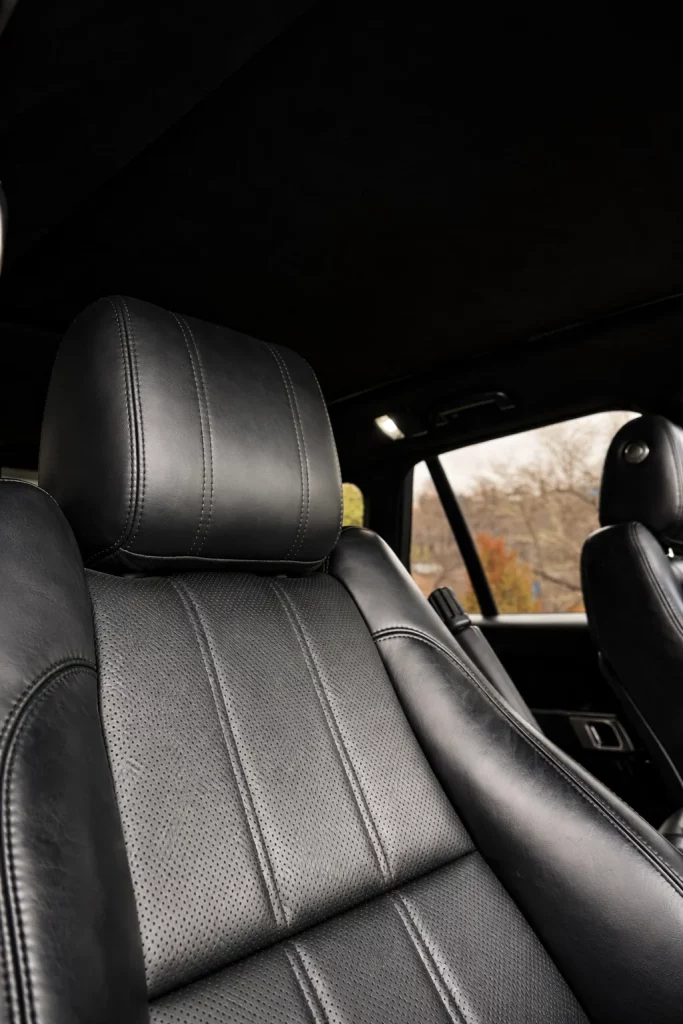
Range Rover interiors are traditionally made from the highest quality materials. The more expensive trim levels feature genuine Windsor leather (often semi-aniline) in dark or light colors (Ebony, Ivory, Light Cloud, etc.), which is dense, soft, and pleasant to the touch. In addition to leather, modern Range Rovers (especially after 2022) offer new premium textile inserts – a combination of high-tech Ultrafabrics™ microfiber and Kvadrat™ wool.

These are eco-friendly alternatives to leather that look stylish and feel comfortable, have no noticeable odor, and save some weight. The top-of-the-range SV Bespoke and Autobiography versions feature exclusive elements: Alcantara (Suedecloth) on the ceiling and body pillars, wood veneer panels (e.g., poplar, oak, or makmehra), and ceramic and metallic accents on buttons and handles. Our experience shows that in the new models, the emphasis has shifted towards minimalism and technology: large touch screens are integrated into austere horizontal panels, but the quality of the materials has not suffered – it is still top notch. In general, the interior is designed in the brand’s signature style: natural leather is combined with expensive lacquered trim and well-designed buttons.

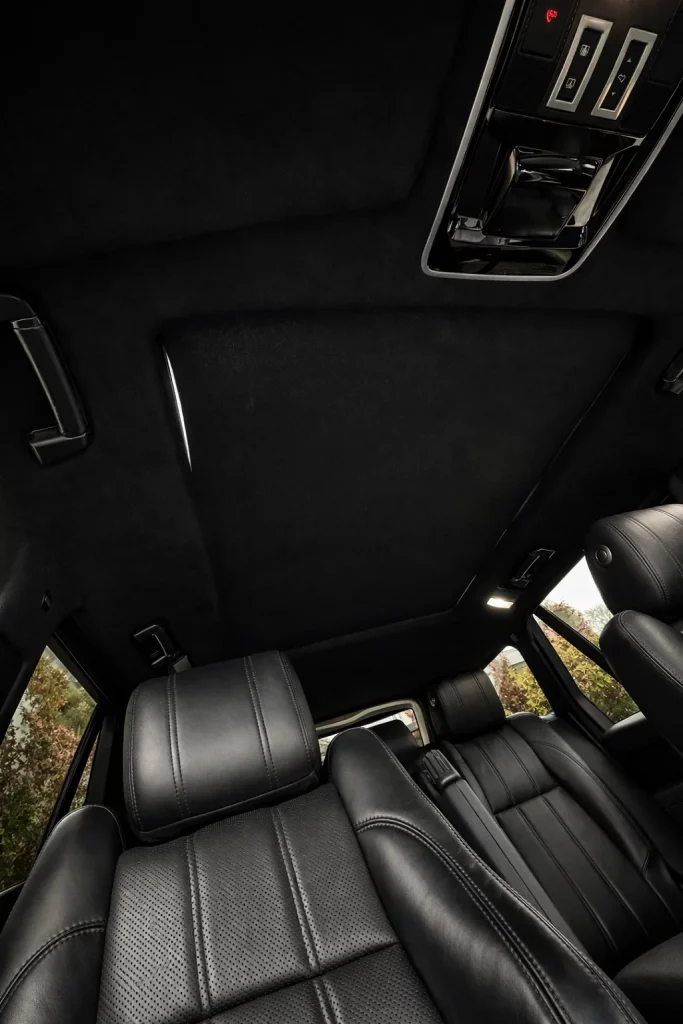
Ceiling materials: Almost all Range Rover versions feature a panoramic sunroof with a fabric or Alcantara curtain. SV versions feature a black Alcantara ceiling, which adds to the closed coupe atmosphere. In standard configurations, the ceiling is upholstered in soft light-colored fabric or artificial suede, which is high-quality with no visible seams. 

Refrigerator and minibar

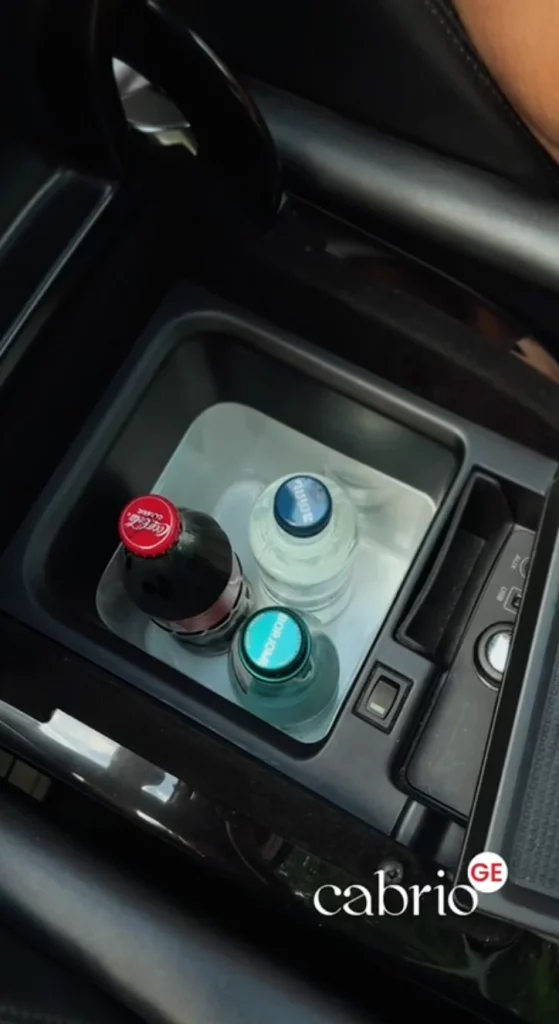
Rent a Range Rover and Range Rover Sport (especially in the Autobiography, SV, and Executive Lounge configurations) offer an optional built-in refrigerator in the center console. This is a compact electric box, usually for four 0.5–0.75 liter bottles, with cooling down to ≈+5°C (powered by 12V). According to customer experience, it can handle drinks even in hot weather and keeps them cool throughout the trip.

Let’s note right away: this refrigerator is more of a luxury bonus than a necessity. We sometimes hear jokes from customers like, “None of my friends have ever used the refrigerator in their car, so why do I need it?” Indeed, if you expect moderate use, you can do without it. However, many car owners note its usefulness on long trips: one of our customers emphasized that the small compartment always comes in handy in winter (to defrost drinks) and in summer (to drink only cold drinks in the heat). 

Ergonomics: seats, controls, accessibility

Seats. In the Range Rover, the front seats are a veritable throne for the driver and passenger. They are multi-position adjustable (up to 20–24 directions in new models): you can change the height, angle of the backrest and cushion, extend the support section under the thighs, and adjust the side support and lumbar support. We pay close attention to the seats: all motors and buttons must work smoothly, without jamming or extraneous noises. Expensive versions feature massage functions with several modes (waves, dots, etc.). Our experience shows that you should try each mode and feel the difference—the massage is truly noticeable and helps you relax during the trip. All these “little things” affect overall comfort. According to our customers’ experience, even minor discomfort in the seat can be felt strongly during long journeys, while a properly selected seat allows you to drive several hundred kilometers without fatigue.

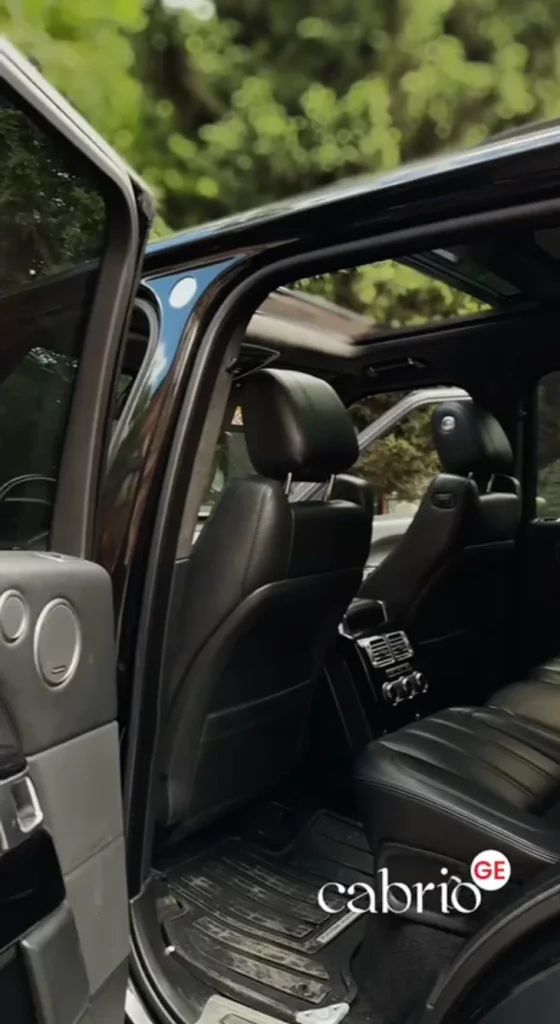
Accessibility. Range Rover is known for its “Command Driving Position” – a raised seating position with excellent visibility. This is convenient, but the downside is heavy doors and a high threshold. In practice, we recommend checking how easy it is to get in and out of the car: open the door completely, sit down and stand up. Make sure that nothing gets in the way: optional deployable aluminum side steps significantly reduce the effort required to get in. Many customers, especially those who are short or elderly, appreciate this option, which is available on some versions as an option. Also, pay attention to the interior layout: all cars in this class have a storage area between the driver and passenger, cup holders in the armrests, and numerous niches in the doors. 

A sense of quality “at your fingertips”

The key sensation in a premium interior is the materials and assembly. When we first sit in a Range Rover, our hand automatically slides over the trim elements: the soft-touch dashboard panels, the stainless steel on the buttons, the thick pile of the carpets. The door handles are particularly impressive: they are built into metal frames and make a satisfying “thunk” sound when pressed – so solid that it brings a smile to your face. There are simply no “cheap buttons” in the Range Rover—every toggle and switch has a pleasant weight and a good fit. For example, one of our employees compared the sound of the doors closing to those of a Rolls-Royce—they slam shut so tightly and solidly.

Finishing materials are used throughout the interior. We even pay attention to the lower parts of the doors and niches – they are covered with soft plastic or leather, not hard, inexpensive material. The wood inserts on the dashboard and doors are real natural veneer, not imitation: smooth and even, without any lacquer smudges, well fitted into the panels. The leather on the seats is thick and elastic, with even seams and no protruding threads. All these little details inspire confidence: our customers literally run their hands over the front panel and note the absence of any play. 

Panoramic roof and visibility

All current Range Rover models offer a panoramic roof, often large and covering almost the entire length of the interior. The Range Rover Sport and Velar usually have multi-panel panoramic sunroofs that are covered by electric blinds. The space and light that such a roof provides have a noticeable effect on the feeling of freedom: our customers often say that with the roof fully open, the interior seems to “open up to the landscape.” One of them described it this way: “When you’re driving on the highway, it feels like you’re not in a car, but under a wide glass roof — it’s very cool.”

Additional comfort and premium options

Range Rover offers a variety of additional options. Heated steering wheel is usually included as standard or in the Climate/Comfort packages – it is easily activated with a button and quickly warms your hands. Heated center armrest and door armrests (optional) are especially important in cold climates.

Massage functions are perhaps a must-have feature in top-of-the-line trim levels. A total of 3-4 back and neck massage modes are available. In our experience, regular drivers really feel relaxed after 20-30 minutes of massage – their backs don’t ache. Our customers are constantly surprised: “I thought this massage was just a marketing gimmick, but it really does relieve fatigue.”

Ambient lighting (panoramic interior lighting) allows you to choose from a wide range of colors (up to 30 shades). Customers like to change the color of the lighting to suit their mood: cool white or blue add a “technological” feel, while warm orange and sand tones create a cozy atmosphere. In addition, in the higher-end versions, it is worth paying attention to the audio system: the standard Meridian (Signature) with 23-35 speakers provides truly powerful and clear sound. We always recommend turning on your favorite music and evaluating the volume and uniformity of the sound: there are no “dead” zones, and the bass does not “rumble” in the doors.

Special Offer Range Rover for Long-Term Rentals