









Гнедько Марина, Автор в Cabrio - Page 2 of 5 | CabrioGE

Car Rental Services in Georgia: Market Overview and Our Company’s Advantages

Georgia is rapidly transforming into a prime destination for road travel. The development of road infrastructure and a surge in tourism have made car rentals one of the most convenient ways to see the country. Local roads are constantly improving: major highways are paved, and the new Rikoti Pass highway connects the east and west of the country, significantly shortening the journey between Tbilisi and Batumi. While cities offer public transport and taxis, once you venture outside Tbilisi or Batumi, the schedule of marshrutkas (fixed-route minibuses) is unpredictable and often depends on the driver’s mood. Having your own car provides flexibility—you can stop at wineries, head into the mountains, visit beaches, or explore small villages without being tied to a bus schedule.

For families and groups of travelers, renting a car in Georgia allows for a personalized itinerary, a comfortable pace, and a sense of safety. Depending on the season and region, a sedan or crossover is sufficient for most trips; SUVs are only necessary in winter or for hard-to-reach high-altitude areas.

Market Structure: International Brands, Local Companies, and Aggregators

The car rental market in Georgia has come a long way from the “artisanal” businesses of the 1990s to today’s modern digital services. In the late 1990s, international brands entered the market, bringing standardized procedures, deposit systems, and insurance protocols. The 2010s saw an expansion of local operators: they offered flexible terms, expanded delivery locations, and moved rental services beyond the capital.

By the late 2010s, three types of players had emerged:

  • International Brands — Avis, Hertz, etc. They offer predictability, new cars, and high service standards. The downside is the high price and rigid conditions regarding deposits and insurance.
  • Local Companies — Small fleets catering to tourists. Advantages: Flexibility, the ability to deliver the car to a hotel or airport, a personal approach, and practical route advice. The downside is an inconsistent level of service and an older fleet.
  • Aggregators — Platforms like Local Rent, Discover Cars, etc., which display offers from various companies. They help compare prices, car classes, and rental terms. Pros of local aggregators: A large selection of 4x4s and flexible terms (no International Driving Permit required, no deposit, cash payment, free cancellation 24 hours in advance); cons: cars are often older and may have minor cosmetic damage.

Advantages and Disadvantages of Various Services

International Brands Global companies offer standardized service, often newer vehicles, and uniform rules. Travelers accustomed to Europe or the US will appreciate the predictability: booking via credit card, with deductibles and insurance following a familiar scheme. However, rental prices are higher, and conditions are less flexible—usually requiring a credit card, a deposit of $500–$1,000, and full coverage, including paid options. Car delivery outside the office is charged separately, and negotiations are limited to template rates.

Local Rental Agencies Local companies are valued for their flexibility and customer focus. They offer:

  • The ability to choose a specific model, not just a “car class”;
  • Cash payments and often no deposit or a minimal deposit of $200–$300;
  • Car delivery to any point in the country for free or a nominal fee;
  • Phone support, quick vehicle replacement, or booking changes. Drawbacks include the uneven technical condition of the fleet (many cars are imported right-hand drives or vehicles with removed catalytic converters), as well as a lack of formalized contracts: often, the agreement is signed on paper without full insurance coverage.

Aggregators Platforms like Local Rent aggregate offers from various companies and private owners. Pros: Wide selection (sedans, hybrids, crossovers, 4x4s), low prices (average cost in 2025 is $40–$44 per day), real photos of the cars, and filters for winter tires, child seats, etc., along with free cancellation. The downside is that the aggregator is merely a middleman: service quality, insurance, and technical condition depend on the specific company, and cars are often 6–10 years old.

Peer-to-Peer Rental A separate segment is renting from private individuals via classifieds or social media. While you can sometimes find a good price, it’s a “lottery”: no insurance, paperwork difficulties, and the risk of being left without help in the event of a breakdown. It is more advantageous to choose licensed operators or verified aggregators.

Choosing a Vehicle: Sedan, Crossover, or SUV

The choice depends on the route and season:

  • Cities and Highways (Tbilisi, Batumi, Kutaisi, main roads): A sedan or compact crossover is sufficient. Most tourist roads today are paved, and even mountain routes (Kazbegi, Gergeti Monastery) are accessible by standard cars.
  • Kakheti, Wine Regions, Borjomi, Racha, Mestia, Svaneti: In the warm season, a crossover will suffice; in winter or rainy weather, it’s better to choose a 4WD SUV with ground clearance of over 18 cm.
  • Extreme Routes (Tusheti, Omalo, Abkhazia, South Ossetia): Entry in rental cars is prohibited; it is recommended to visit these regions with a driver or as part of an organized tour.

Average Market Prices in 2025: Economy sedan — $40–$55/day, urban crossover — $60–$90, premium SUV — $100–$150; for rentals of 7 days or more, a 10–20% discount applies. Trains or buses are cheaper but deprive you of the freedom to stop at wineries, canyons, and lakes.

Documents, Insurance, and Deposits

For car rentals in Georgia, a national driver’s license with Latin characters is sufficient; international permits are not required. The minimum age for most companies is 21, with at least two years of driving experience.

Basic insurance (Third-Party Liability) is usually included. However, repairs and vehicle damage are only covered if you purchase CDW or Super CDW. Many travelers choose full coverage immediately to avoid deductibles. Deposits vary: international brands block $500–$1,000 on a card; with local companies, the deposit may be non-existent or range from $200–$300, returned in cash upon the car’s return. Some platforms offer rentals without a deposit, but the car will likely be older and the insurance basic.

Additional Services and “Pitfalls”

  • Delivery and Return: Almost all local companies offer free car delivery to hotels or airports, as well as the option for one-way rentals (picking up in one city and returning in another) for a reasonable fee. This is especially convenient if your route starts in Tbilisi and ends in Batumi.
  • Extras: Child seats, ski racks, GPS navigators, Wi-Fi modems, winter tires, and roof boxes are available upon request. During the winter season (December 1 – March 1), winter tires are mandatory on mountain roads.
  • Technical Condition: When receiving the car, it is important to inspect it and document all scratches via photo and video, as well as check the oil level and tire condition. This protects you from disputes upon return.
  • Seasonal Rates: In summer (May–October), rental prices are 20–40% higher due to peak demand; in spring and autumn, they are lower; in winter, the cost of SUVs for ski resorts increases.
  • Cleanliness and Fuel: Some companies require the car to be returned clean; a car wash in Tbilisi costs 2–10 GEL. It is important to return the car with a full tank if the contract specifies “full-to-full.”

Our Service: The Advantages We Offer

We believe every rental format has its strengths, and we maintain a neutral stance regarding the client’s choice. However, our service combines the best qualities of a local company and an international operator.

Extensive Fleet and Wide Selection Our fleet includes sedans, city crossovers, SUVs, and other vehicles. We update our fleet regularly. For those who prioritize comfort and style, we offer premium sedans and SUVs with enhanced safety and “all-inclusive” packages. For families or groups, we have spacious minivans and high-clearance 4x4s.

Personalized Pricing We are not an aggregator or a faceless international corporation. Every request is handled by a real manager who will select a car suited to your route and discuss the cost. We are ready to agree on an individual price based on the rental period, season, number of extra services, and itinerary. Unlike major brands, we do not strictly require expensive insurance and do not block large sums on your card; if necessary, the deposit can be left in cash or waived entirely.

Nationwide Delivery and Flexible Service We organize free car delivery to any point in Georgia—airports, hotels, train stations, ski resorts, or even the border. If needed, we can arrange a one-way rental: you pick up the car in Tbilisi and return it in Batumi or Kutaisi to continue your journey by plane or train.

Our cars are equipped with monitoring systems: we track tire pressure, engine performance, and maintenance schedules. In the event of any issue, we promptly provide a replacement. Our 24/7 technical support is available via phone, chat, or WhatsApp—no robots or automated replies; you speak with a person familiar with your needs.

Frequently Asked Questions

  • How much does a car rental in Georgia cost? The average cost for a sedan is $40–$55/day, a crossover is $60–$90, and a premium SUV is $100–$150. We are flexible with pricing, offering discounts for long-term rentals and off-season trips.
  • Is an International Driving Permit required? A national driver’s license with Latin characters is sufficient. We provide instructions in English, Russian, and Georgian.
  • Is delivery to remote regions possible? Yes. We deliver cars anywhere in Georgia, including mountain resorts and small towns. One-way rentals are also available.
  • What is included in the price? The basic package includes: standard insurance, unlimited mileage, 24/7 roadside assistance, and route consultations. Extras like child seats, Wi-Fi, winter tires, and SIM cards can be ordered in advance.
  • Can I discuss the price individually? Certainly. We aren’t robots: our managers are ready to negotiate the price based on the rental duration, season, and chosen model. The longer the rental and the earlier you book, the better the terms.

Travel in Comfort

The car rental market in Georgia is diverse: every format has its advantages and limitations. International brands offer predictability, local companies offer flexibility, and aggregators offer ease of choice. Regardless of the service you choose, renting a car allows you to see Georgia in all its diversity: from the vineyards of Kakheti to the snowy peaks of Svaneti.

Our rental service, CabrioGE, combines the strengths of various formats, offering a personal approach, a modern fleet, a rich set of services, and the ability to negotiate terms. We are confident that the right car choice will make your journey unforgettable. Plan your route, book in advance, and set off on an adventure across Georgia’s roads!
Why Rent a Car in Tbilisi?

Many tourists come to Georgia thinking they will limit themselves to the capital, a wine tasting in Kakheti, or, for example, a trip to the Black Sea coast. But once you have a car, the picture changes. Having your own vehicle turns a vacation into a true road trip, where your time belongs only to you. You can set off at dawn to the Jvari Monastery, stop along the way at a viewpoint overlooking the old capital Mtskheta, and continue the route to the snow-capped peaks of Kazbegi without worrying about schedules.

Georgia’s roads are improving every year, and by 2026, it takes only 3–4 hours to reach Stepantsminda and Gergeti Trinity from Tbilisi via the highway. However, the most interesting places in our country lie off the main roads – small villages with wooden towers in Svaneti, the windy plateaus of Javakheti with volcanic lakes, wineries in Kakheti, and the mountainous region of Racha with monasteries and vineyards. Buses don’t go there, and minibuses (marshrutkas) in 2025 were finally limited to a 150 km range. Our clients note that a trip to villages like Shuakhevi or Girevi in Khevsureti in a 4×4 rented from us was the highlight of the entire trip – the route via the Abano Pass offers breathtaking views and a real sense of adventure.

Places You Can Only Reach by Your Own Car

Want to see true wilderness and silence? Here are a few destinations that have no public transport:

  • Ushguli and Mestia in Svaneti – high-mountain villages with defensive towers, where life flows as it did hundreds of years ago. The road is narrow and may be closed in winter, but in a rented all-wheel-drive vehicle, this adventure becomes a pleasure.
  • Kakheti beyond Signagi – the wine villages of Napareuli, Tsinandali, and Kvareli. Winemaking here remains a family affair, and only with your own transport can you visit small estates, sit in the courtyard with the owners, and taste wine from a qvevri.
  • The cave cities of Uplistsikhe and Vardzia. Tourist buses go only to the main sites; if you want to stop at the lesser-known Vanis Kvabebi Monastery or enjoy canyon views, you will need your own car.
  • Racha and Lechkhumi – remote villages with ancient monasteries. Our regular clients – a family from Vilnius – told us that thanks to our 4×4, they reached Salkhino Monastery and Tabatskuri Lake, where there is no civilization, and chose how long to stay fishing.
  • Tusheti and Khevsureti – the most remote regions of Eastern Georgia. The road via Abano Pass is accessible from May to October, requires confident driving, and only all-wheel-drive vehicles. There are no buses, and organized tours are expensive; however, with your own SUV, you can stop in any village, climb to the Shatili Fortress, or spend the night with locals.
  • The Black Sea coast and the mountains of Adjara – Batumi can be reached by train, but you won’t visit Sarpi beaches, tea plantations, or Merisi hot springs without a car.

These places are often mentioned in guides as “hidden gems,” but they can only be reached via dirt roads. We not only provide suitable vehicles, but also share trusted routes and contacts for local guides.

Convenience and Comfort of Car Rental in Every Way

Your Schedule

Georgian minibuses run on a schedule, which should be seen more as a recommendation. Drivers stop at their discretion, don’t accept cards, and are often overcrowded. With your own car, you forget about schedules: you leave at a convenient time, take breaks for photos or picnics, avoid traffic, and choose scenic detours. Many of our clients, especially families with children, note that being able to stop for a toilet break or snack whenever needed saves nerves and makes the trip much more enjoyable.

Comfort and Safety

We are often asked whether it is dangerous to drive in Georgia. Yes, the local driving style is bold, but this is exactly why renting a car gives you more control. You choose the speed, maintain distance, and decide where to stop. Our vehicles have ABS, airbags, air conditioning; for families, we provide child seats. Regular diagnostics, seasonal tire changes, and insurance are included. In case of emergencies, we offer 24/7 support: our managers can tell you the nearest service station, hotel, or gas station.

Personal Space

Even good public transport cannot compare to the space of your own car. Strollers, suitcases, hiking gear, and flea market souvenirs fit in the trunk. Groups of friends travel together, not in separate bus rows; you can talk, listen to music or podcasts, and plan the next day on the go. One of our regular clients, Andrei from Kyiv, shared how convenient it was to transport surfboards and wine boxes purchased at the Telavi festival – impossible in a taxi.

Cost-Effective for Long Routes and Groups

At first glance, renting a car may seem more expensive than a bus ticket. But if you travel for several days, especially in a group, the cost is shared among passengers, and expenses for taxis and organized tours disappear. A one-day trip to Kakheti by taxi can cost as much as renting a car for three days. Moreover, we have no hidden fees: insurance, a second driver, 24/7 support, and unlimited mileage are included. We offer seasonal discounts – for example, in the off-season, economy-class rentals start from 30 USD per day.

Easy Pickup and Return

We understand that every minute counts on vacation. That’s why we have pickup points at Tbilisi, Batumi, and Kutaisi airports, deliver the car to your accommodation, or pick it up wherever convenient. The process is fast, with no deposits or credit holds; all documents are clear and transparent. Guests arriving at night can schedule a meeting with our representative, who will wait with a sign. For those who prefer to plan ahead, we create personalized routes and advise on the best vehicle type.

Our Advantages: Why Clients Choose Us

  1. Local Knowledge and Honest Prices. We are not an international corporation, we do not charge airport fees, and we do not hide commissions. Our team lives in Tbilisi and knows all the road nuances – from where to stay overnight to which passes close in winter.
  2. Fleet for Any Route. Our fleet includes economical sedans for city trips, spacious minivans for families, crossovers, and SUVs with increased clearance and chains for mountain roads. We regularly update vehicles, monitor their condition, and equip them with GPS, child seats, and phone holders.
  3. Transparent Terms and Insurance. The rental price includes mandatory and optional insurance with a small deductible. An additional driver is added for free, mileage is unlimited, and bookings can be changed without penalties.
  4. 24/7 Support. Our support team is available around the clock, speaking Russian, English, and Georgian. We help with towing, advise on the nearest service, or simply tell you where the best Racha wine is made.
  5. Happy Customer Reviews. We build relationships on trust, and many travelers return to us again.

Rent Your Car with Us

If you are still wondering whether to rent a car in Tbilisi, the answer is simple: yes, if you want to see the real Georgia. Freedom of movement, access to places without tourists, comfort, and safety are just some of the benefits.

As an experienced rental company, we are ready to be your guide. Choose a car on our website, indicate dates and pickup location – and your booking will be confirmed within minutes. Travel where buses don’t go, discover places not mentioned in guides, and enjoy Georgia on your own terms.

You can book a car and start your journey right now. We are waiting for you in Tbilisi!

Wedding in Georgia: Traditions, Values, and Choice of Transportation

Why Georgia Has Become a Favorite Wedding Destination

In recent years, Georgia has become one of the most popular destinations for wedding tourism. Guests do not need to go through complicated bureaucratic procedures: to get married, valid passports are sufficient, along with their translation into Georgian and, if necessary, documents confirming the dissolution of any previous marriage. Registration takes place at the House of Justice and takes one to two days, and the ceremony can be held either in the city or in nature. Only two witnesses are required for the marriage; they can be brought along or arranged through an agency. The country has no visa requirements for citizens of most states, and documents issued in Georgia are recognized worldwide. Because of this, couples from Europe, the Middle East, America, and the CIS come to us — we see newlyweds combining the ceremony with a honeymoon, seaside vacation, or wine tasting.

Traditions of a Georgian Wedding

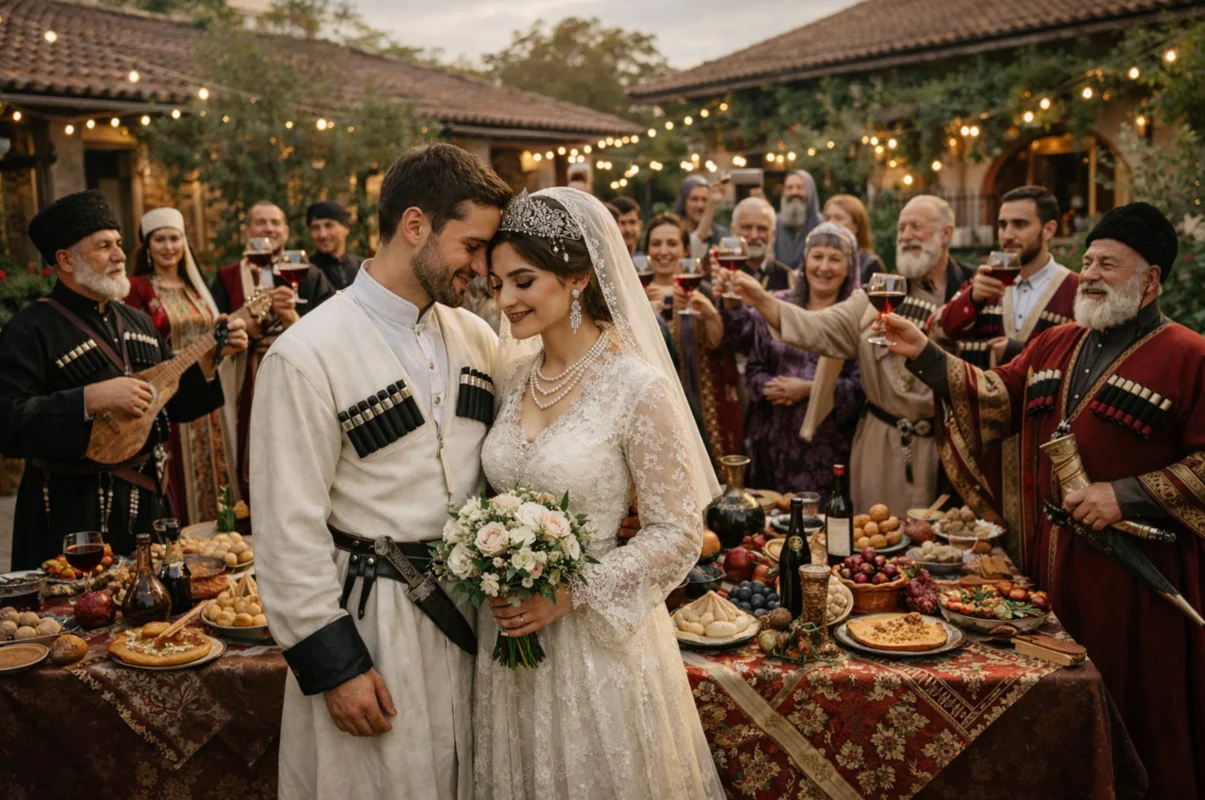
The wedding cycle consists of three stages: machankloba — matchmaking, when relatives and friends arrange meetings between potential spouses; nishnoba — the official engagement; and kortskhili — the wedding celebration itself. The celebrations are widely known for their scale: the number of guests often exceeds two hundred per family. Refusing to attend is considered a serious offense and can lead to family conflict. Bridesmaids and groomsmen traditionally should not engage in romantic relationships with each other to avoid scandals.

Home Rituals

After registration, at the groom’s house, the newlyweds follow ancient customs. The bride, upon entering the house, steps on a decorative plate and circles a pot with oil or grain three times, then touches the cauldron as a symbol of the home hearth. The groom may climb onto the roof and release a white bird to let go of the old life and welcome the new one. In some regions, the groom dips the wedding ring into a glass of wine, takes the first sip, and passes it to the bride, after which he retrieves the ring and places it on her finger.

Wedding Feast (Supra)

A Georgian wedding is unthinkable without a lavish feast. At the head of the table sits the tamada — the host and chief toastmaster. He gives toasts dedicated to the couple, their parents, future children, and parents-in-law. Each table is assigned a deputy who continues the tradition. The feast can last until the next morning, and jokes about family fights have become part of folklore. Guests should remember that wine is served in small glasses, but there are many toasts, so it is important to keep pace and not overindulge in alcohol.

Wedding Procession and Noisy Parade

After the ceremony, it is customary to organize processions along the streets. Newlyweds often appear through the sunroof or on the roof of the car, followed by a long column of cars honking and signaling. In some families, it is considered an honor to be immediately behind the bride and groom’s car, so vehicles maneuver, overtake each other, and sometimes create chaos on the road — forums describe convoys of 20–30 cars moving at high speed, honking simultaneously and occupying multiple lanes. Such spectacles are memorable, but foreigners should remember traffic rules and not try to compete with locals.

National Values and Atmosphere

Hospitality is a key feature of Georgian culture. Even a stranger in the house becomes a dear guest, cared for as if they were family. At a wedding, this trait is especially prominent: hosts make sure that no one leaves hungry, and everyone takes home a jug of wine and sweets.

Respect for elders and family. Parents and senior relatives play an important role in decision-making. Traditionally, marriages were previously arranged by families, and although in cities young people often make decisions independently, parental blessing remains important.

Faith. Most Georgians practice Orthodox Christianity, but the country is tolerant of other confessions; therefore, interfaith marriages are allowed in Georgia, and marriage registration is purely secular. If desired, a church ceremony can be held after state registration.

Wedding Convoy: Most Popular Cars

As a car rental company, we observe how our clients’ requests have changed over the years. While previously the main star of a wedding was a white “Volga” or a family-decorated car, today newlyweds aim to make a strong impression.

  • Luxury Brands — Rolls‑Royce, Maybach, Bentley, and Maserati — are consistently associated with royal elegance. In Tbilisi, Hummer H2, Cadillac Escalade, and Lincoln Town Car limousines are popular: these vehicles accommodate 16–25 people, feature stylish interiors, and powerful audio systems.
  • Premium Sedans — Mercedes‑Benz S-Class, BMW 7 Series, Lexus LS, or Audi A8. These models are chosen by couples who value comfort but want to avoid the bulkiness of a limousine.
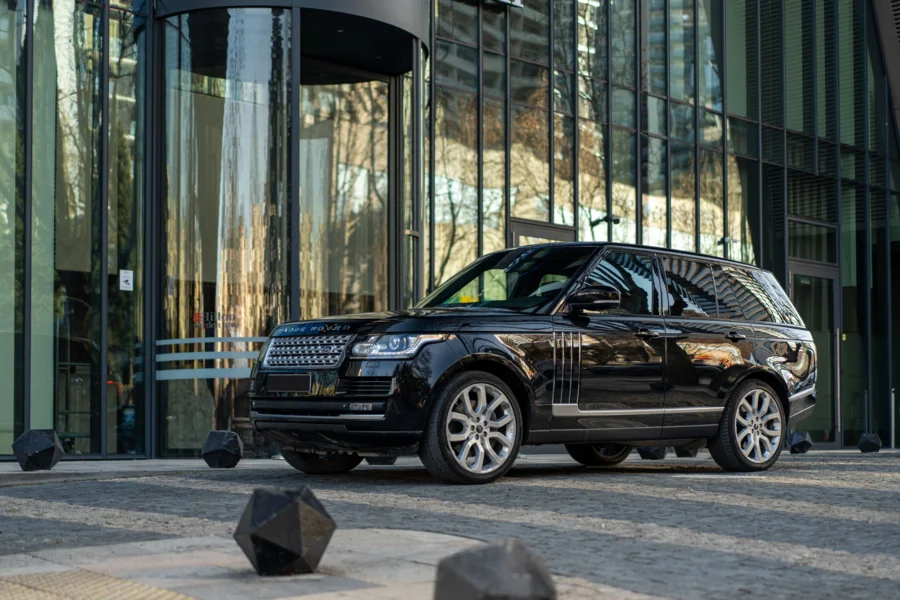
  • SUVs and Crossovers — Range Rover, Toyota Land Cruiser, and Mercedes‑Benz G-Class are suitable for weddings in the mountains or at wineries.
  • Party Buses and Coaches — for large weddings, we provide decorated minibuses and buses to transport guests in a single convoy.

When choosing transportation, newlyweds consider the style of the event, number of guests, route, and budget. Thanks to a large fleet, we can offer models from Mercedes, BMW, Range Rover, Toyota, Lexus, Audi, and others.

Tips for Tourists and Foreigners

Respect Traditions

  • Stay Until the End. Leaving early at a Georgian wedding is considered impolite. If you cannot stay until morning, inform the hosts.
  • Follow the Tamada. Do not interrupt the toasts and do not raise your glass before the tamada does.
  • Give Gifts. Cash in an envelope is the most common gift, especially if you are unsure of the couple’s taste.
  • Dress Respectfully. For a church ceremony, women are recommended to wear a headscarf, and men should wear trousers and a shirt.

Precautions

  1. Mountain Roads. For trips to Kakheti, Mtskheta, or Kazbegi, choose vehicles with all-wheel drive and trust professional drivers.
  2. Toasts and Alcohol. Georgian toasts are not only an opportunity to drink but also part of the culture. Wine is served in small glasses, but there are many toasts, so watch your consumption. It is better to stay sober when driving.
  3. Nighttime Feasts. Plan your energy in advance: banquets can last until morning, and afterwards guests face the journey home.
  4. Language Barrier. In large cities, many speak English and Russian, but in remote areas a translator may be needed.
  5. Documents and Legal Accuracy. Make sure all documents are correctly translated and certified. If you conclude a prenuptial agreement, it should also be prepared by a notary.
  6. Weather and Season. Summers in Tbilisi are very hot, so prepare vehicles with air conditioning and water; winters in the mountains may have snow — choose SUVs.

Conclusion

A wedding in Georgia is a celebration of the soul. Ancient traditions, genuine hospitality, delicious cuisine, and beautiful nature come together here. We, as a car rental company, help make this day special: offering vehicles for every taste, assisting with logistics, recommending reliable vendors, and sharing our experience. Georgia is open to foreigners: the marriage registration process is simple, and organizing the celebration can easily be combined with a trip.

The key is to respect local customs, plan ahead, and trust professionals. Then a wedding journey to Georgia will leave the warmest memories and provide the beginning of a new happy story.

Long-Distance Car Rental: Which Vehicle Is Ideal

Traveling across Georgia and beyond often requires reliable and convenient transportation. Most of our clients rent a car for long-distance trips to visit the seaside, mountains, wine regions, or even travel outside the country. Over the years, we have honed our understanding of which cars are suitable for each task and what affects comfort during long journeys.

What to Consider When Choosing a Car

When choosing a car for a trip, especially for several days, it is important to consider a number of factors:

  • Comfort and Ergonomics. Long hours behind the wheel should be easy: pay attention to comfortable seats, climate control, audio system, and the presence of cruise control.
  • Spacious Interior and Trunk Capacity. For families and groups, it is better to choose crossovers and SUVs with five or seven seats. For example, the Toyota Land Cruiser 300 2021 in our fleet is equipped with a large trunk, comfortable seats, and an ISOFIX system for child seats.
  • Off-road Capability. If your plans include the snowy Gudauri pass, a trip to the Kazbegi mountains, or off-road driving, it is better to choose a four-wheel-drive car. Range Rover Vogue, Defender, Land Cruiser Prado 150, or Lexus LX570 handle challenging roads confidently thanks to high ground clearance and all-wheel drive.
  • Fuel Efficiency. On highways, moderate power and fuel consumption matter. If you plan to drive many kilometers on asphalt, consider economical sedans and crossovers: Toyota Camry, Volkswagen Passat, Volkswagen Tiguan, or Hyundai Tucson consume 6–8 L/100 km and remain comfortable for long trips.
  • Power and Dynamics. For mountain serpentine roads and high-speed highways, more powerful options are preferable. Porsche Panamera, Range Rover Sport, BMW X6, and Mercedes‑Benz GLE 400 Coupe provide sufficient torque for overtaking and climbing.
  • Number of Passengers. Family trips or tourist groups often take seven-seater vehicles: Mercedes‑Benz GLS 450, Mercedes‑Benz GL 450 4MATIC, Cadillac Escalade, or Audi Q7. If traveling as a couple, a comfortable sedan is sufficient.

The Best Category for Travel – SUVs

Our experience shows that SUVs and large crossovers are most often chosen for long trips. They combine comfort, spaciousness, and off-road capability, which is important in Georgia where routes may include mountain passes, dirt roads, and valleys.

Range Rover. The Vogue, Sport, Velar, and Discovery models are popular among guests planning trips to the mountains and roads with varying surfaces. The Range Rover Vogue 5.0 Petrol (Autobiography) in white combines a powerful engine (525 hp), a luxurious interior, and a set of modern driver-assist features. The Range Rover Defender 110 2.0 Diesel and Discovery 3.0 Diesel are economical and more budget-friendly while still offering high off-road performance.

Toyota Land Cruiser and Prado. These vehicles are known for their reliability and endurance on rough roads. Clients traveling to the Samtskhe-Javakheti and Kakheti regions often rent the Land Cruiser 300 with a navigator, rear-view camera, and large trunk. If you want to save, we recommend the Land Cruiser Prado 150 – slightly more compact but still family-friendly.

Lexus LX570, GX460, and RX350. For those who value a premium interior, smooth ride, and reliability, these models are ideal. The LX570 seats up to eight passengers and is equipped with all modern comfort features, while the RX350 is better suited for four to five people and consumes less fuel.

Mid-Size Crossovers: Rational Choice for Highways

For those seeking a balance between comfort and economy, we recommend considering mid-size crossovers:

  • Hyundai Tucson, Santa Fe, and Palisade – spacious yet economical options for families who prefer a relaxed trip on highways.
  • Volkswagen Tiguan and Touareg – convenient choices for those who value German engineering quality and moderate fuel consumption.
  • Mazda CX‑9 and Audi Q7 – great for large families: seven seats, modern multimedia, and assistance on mountains or highways.
  • BMW X5/X6/X7 – sporty crossovers with dynamics and a comfortable interior. Perfect for those who want to enjoy driving over long distances.

Sedans – Comfortable Option for Smooth Roads

Not all trips require an SUV. When the route is along smooth highways, premium sedans become an excellent choice:

  • Mercedes‑Benz S-Class (S450, S600 Long, Maybach) are known for their luxurious interiors and smooth ride. They are chosen by business travelers and couples planning long trips across cities and highways.
  • BMW 320 and BMW 750 – comfortable cars with balanced fuel consumption. Ideal for long business trips.
  • Toyota Camry – a simple and reliable sedan, favored by our regular clients as an economical and convenient option for trips to the seaside or nearby regions.

Minivans for Large Groups

Traveling in a group or with a large amount of luggage requires a special vehicle.

Mercedes‑Benz Marco Polo 250 d 2.1 Diesel – a versatile seven-seater minivan often chosen by those traveling with children or friends. It offers ample luggage space, comfortable seats, and a modern multimedia system.

For larger groups, Cadillac Escalade and Hyundai Palisade are also suitable – eight seats, high safety standards, and additional features such as climate control for each row and an entertainment system.

Our Experience and Client Stories

At CabrioGE, we regularly help clients choose a car for a specific route:

  • A family from Tel Aviv rented a Mercedes‑Benz GLS 450 4MATIC for a two-week trip around Georgia. The seven-seater vehicle with a spacious trunk comfortably accommodated three children and all their gear. Clients especially appreciated the heated/ventilated seats and cruise control, which came in handy on the Tbilisi–Batumi highway.
  • A corporate travel group rented a Toyota Land Cruiser Prado 150 for a winter trip to Bakuriani. The all-wheel-drive system and winter chains ensured safe mountain climbs, while the navigator and rear-view camera helped quickly orient in unfamiliar areas.
  • A couple from Germany interested in wine tours chose a Volkswagen Passat. Thanks to economical fuel consumption and a spacious trunk, they traveled comfortably between regions and were able to bring home several cases of wine.

These examples show that a properly chosen car is key to an enjoyable trip, and our fleet allows you to select a vehicle for any need.

Why Book Long-Distance Trips with Us

  1. Wide Selection of Cars. Our fleet features over 30 premium and comfortable models, from economical sedans to luxury SUVs.
  2. Transparent Terms. We offer fixed daily rates, long-term rental options with discounted rates, and clear contracts without hidden fees. Each car page shows terms: deposit, insurance, permission for cross-border travel, etc.
  3. Additional Options. On request, we can install a child seat, provide a roof rack, winter chains, or even hire a professional driver.
  4. Free Delivery in Tbilisi. You can request car delivery to the airport, hotel, or home. We also discuss the possibility of return in another city.
  5. Route Support. Our managers are available 24/7 to assist with technical issues, payments, and route questions.

How to Book a Car

Booking takes just a few minutes. Choose a suitable model in the “Fleet” section of our website, set the rental dates, and submit a request. Our manager will contact you to clarify details, help select additional equipment, and prepare the contract. Before the trip, we conduct a thorough inspection, wash the car, and fill it with premium fuel.

Conclusion

Renting a car for long distances is the optimal solution for those who want to see more and feel free. CabrioGE has a fleet that allows you to select a car for any journey: from an economical sedan to a luxury SUV. We value service quality, care about safety, and are confident that the right car will make your trip comfortable and unforgettable.

What Kind of Meat Is Eaten in Georgia – A Gastronomic Journey

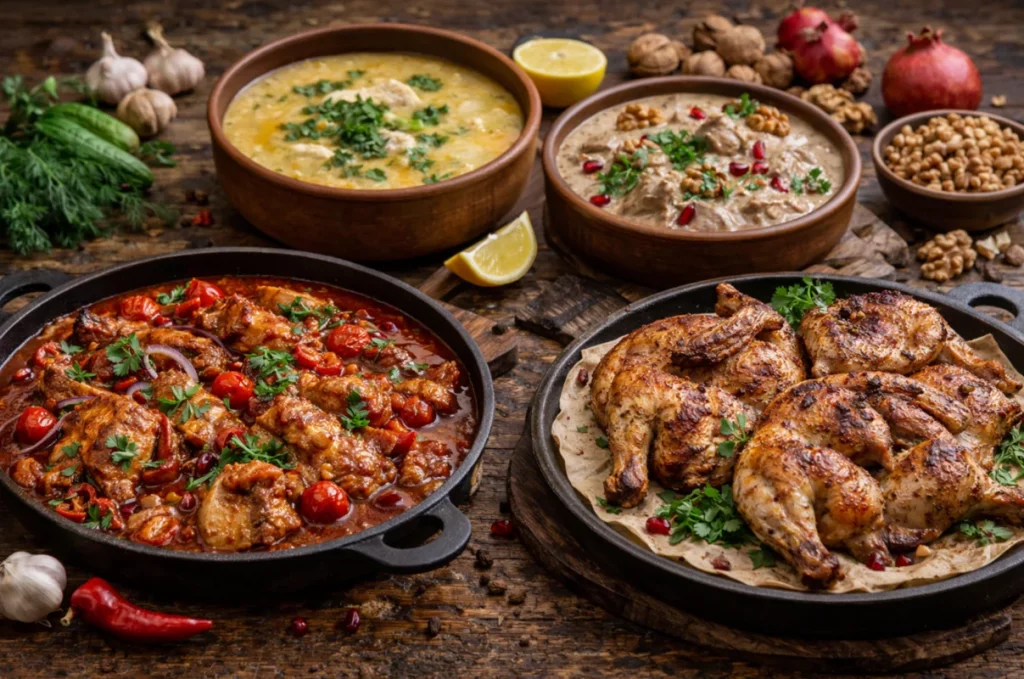
In Georgia, meat is prepared with soul. There are no strict dietary restrictions here, so the tables are laden with beef, lamb, pork, and poultry. At the same time, each region uses meat in its own way: on the western slopes, people prefer domestic poultry, especially chicken and turkey, while in the east, rich and hearty dishes are often made from beef, pork, and lamb. In this article, we share our own observations and experience gained during tours around Georgia and through communication with our clients.

What Will Surprise You About Georgian Cuisine

When you first arrive in Georgia, you will be impressed not only by the variety of meat dishes, but also by the atmosphere of the feast. Every meal here turns into a full-fledged supra – a celebration where guests gather around the table, toasts follow one after another, and the tamada (toastmaster) keeps the conversation flowing and refills the glasses. In such an atmosphere, the flavors of meat seasoned with fresh herbs, spices, and walnut sauces are revealed especially vividly.

Traveling by rental car through Kakheti, Samegrelo, and Svaneti, you will see how the owners of family wineries grill mtsvadi (barbecue) right in their yards, while grandmothers in the mountains prepare chili for fragrant chikhirtma (a soup made with chicken or lamb broth). Such an experience is difficult to convey in words, but we have tried to capture it in this journey across Georgia’s meat map.

What Types of Meat Are Popular in Georgia

Beef

Mtsvadi, Kharcho, Chashushuli

Beef is the main meat in most regions. In eastern Georgia, it is considered the primary ingredient. From beef, the following dishes are prepared:

  • Mtsvadi – juicy charcoal-grilled barbecue. Our guides drew guests’ attention to three types of mtsvadi:
    1. Classic – tenderloin pieces marinated in onions and spices;
    2. Basturma – barbecue made from dried and spiced meat;
    3. Barbecue with eggplant – slices of lamb and beef are wrapped in eggplant strips and then grilled on a skewer.
  • Kharcho – a rich soup made from beef, rice, walnuts, and sweet-and-sour additions such as tomatoes, plums, or pomegranate. The classic version is prepared with beef or lamb, but modern variations can be found with chicken or pork. We noticed that in colder regions kharcho is served more often, and farmers like to add more fat to the meat.
  • Chashushuli (or ostri) – aromatic stewed meat in tomatoes. In Tbilisi, we tasted this delicacy made from veal; the owner of a small restaurant on Kote Abkhazi Street told us she adds red wine and fresh cilantro to the sauce.

Lamb and Young Lamb

Chakapuli, Ojahuri, Salkhino

In mountainous regions – Svaneti, Racha, and Tusheti – lamb is considered the primary meat. Local flocks graze on alpine meadows, which makes the meat tender and aromatic. Here are our favorite dishes:

  • Chakapuli – a spring stew made from lamb or veal. According to the recipe, the meat is stewed in broth with white wine, tkemali sauce (plum sauce), and plenty of tarragon and cilantro. We cooked chakapuli with a family in Telavi: the hostess used young lamb ribs, added green plums, and a tangy herbal aroma instantly filled the house.
  • Ojahuri – roasted meat with potatoes and spices. The name of this dish means “family-style,” and it is traditionally served in a clay pan called ketsi. In Tbilisi, we ordered ojahuri made from pork, but in Guria and Svaneti lamb is offered more often. This is a universal dish for large groups: the meat is fried until golden brown, then stewed with onions, garlic, and khmeli-suneli.
  • Salkhino – a large baked piece of lamb cooked whole with vegetables. If you prefer festive outdoor dinners, order this dish during a picnic in the vineyards.

Pork

Muzhuji, Abkhazuri, Kupaty

Pork in Georgia is loved just as much as beef. In the western regions (Imereti, Guria, Samegrelo), pork is often combined with spicy sauces and wine. Several characteristic examples:

  • Muzhuji – a cold appetizer made from boiled, partially marinated pork, often from trotters, tails, and meat set in wine vinegar. We were served muzhuji in a summer kitchen in Kutaisi: the pork was tender, and the vinegar’s acidity was perfectly refreshing on a hot day.
  • Abkhazuri – patties made from beef or lamb mince wrapped in caul fat and grilled. Local cooks sometimes add pork for juiciness; clients noted that such patties resemble homemade lula kebab.
  • Kupaty – Georgian sausages made from pork with garlic, coriander, paprika, and barberry. They are first boiled and then fried in a pan. In the villages of Svaneti, kupaty are served with matsoni (sour milk) and adjika.

Domestic Poultry

Chakhokhbili, Chikhirtma, Satsivi, Chicken Tabaka

The situation with poultry differs between western and eastern Georgia. In the west, most of the meat diet consists of domestic poultry: chickens and turkeys. Poultry dishes here are especially aromatic thanks to the abundance of spices and sauces:

  • Chakhokhbili – a meat stew traditionally made from chicken. Today, housewives also use lamb, pork, or other poultry. The dish is fried without oil, then stewed in tomato juice with cilantro, parsley, basil, and garlic. One of our clients from Germany said that chakhokhbili changed his perception of stewed chicken.
  • Chikhirtma – a thick soup made from chicken or lamb broth with corn flour, egg yolks, and lemon juice. In Samegrelo, we tried chikhirtma with spicy adjika added.
  • Satsivi – a cold walnut sauce with spices poured over chicken or turkey. This is a mandatory dish on the Christmas table. When we conducted a Christmas tour in Tbilisi, the hostess of the apart-hotel prepared satsivi from home-raised chicken, and our guests helped grind the walnuts.
  • Chicken Tabaka – young chickens fried in a wide pan under a press. The meat turns out with a crispy crust and juicy center. Usually, chicken tabaka is fried without spices and served with crushed garlic and herbs.

Other Types of Meat and Offal

Georgian cuisine is not limited to familiar types of meat. Among the unusual ingredients:

  • Offal and organ meats. Kuchmachi is a hot dish made from liver, heart, lungs, and sometimes tongue, stewed with walnuts and spices. Our clients who enjoy culinary experiments often noted the bright, rich taste of kuchmachi.
  • Pheasant and other game. Originally, chakhokhbili was made from pheasant, which is reflected in the name of the dish. Although pheasant is rare today, in some family restaurants in Adjara we tried zhuzhiki – small birds similar to quails.
  • Fish and seafood. Since Georgia has access to the Black Sea, dishes made from sturgeon, mullet, and mussels are often found on the menu. However, fish is usually served separately and not mixed with meat.

How Meat Is Served and What Complements It

Bright sauces and herbs are always served with meat dishes. Barbecue is accompanied by tkemali – a sweet-and-sour plum sauce; chicken is served with satsebeli made from tomatoes and cilantro; and beef is complemented with aromatic adjika. Herbs – cilantro, tarragon, basil, parsley – are not just a garnish but a full-fledged ingredient. Meat is rarely eaten alone. It is always accompanied by mchadi (cornbread) or puri (wheat bread), beans, and eggplants. The table also features pickled vegetables (mzhaveuli) and churchkhela – nuts strung on a thread and coated in thickened grape juice. Wine is an essential companion to any meat feast, especially white varieties from Kakheti and red wines from the Racha region.

Why We Love Georgian Meat

Georgian cuisine is not just a list of recipes, but stories of people, family traditions, and the spirit of hospitality. When asked “what kind of meat is eaten in Georgia,” we answer: they eat what grows nearby, what can be cooked together and shared with everyone at the table. This is the main value of the Georgian feast – to share, to invite, to treat generously.

We hope our experience will help you immerse yourself in the gastronomic world of Georgia!

What to Do in Case of a Car Accident in Georgia: A Detailed Guide

Traveling around Georgia in a rental car means freedom, adventure, and new experiences. However, even on vacation, unforeseen situations may occur, such as a road traffic accident. What should you do if you get into an accident while driving a vehicle from our rental company? Don’t worry – we have prepared a detailed guide to help you stay calm and handle all formalities correctly. Read on to learn the step-by-step action plan, tips for taking photos, communicating with other parties involved, and handling insurance matters.

First Steps at the Accident Scene

If an accident occurs, the most important thing is not to panic and to follow a clear algorithm. First, make sure you are safe, then take the necessary actions. Below is a step-by-step instruction for dealing with an accident in Georgia:

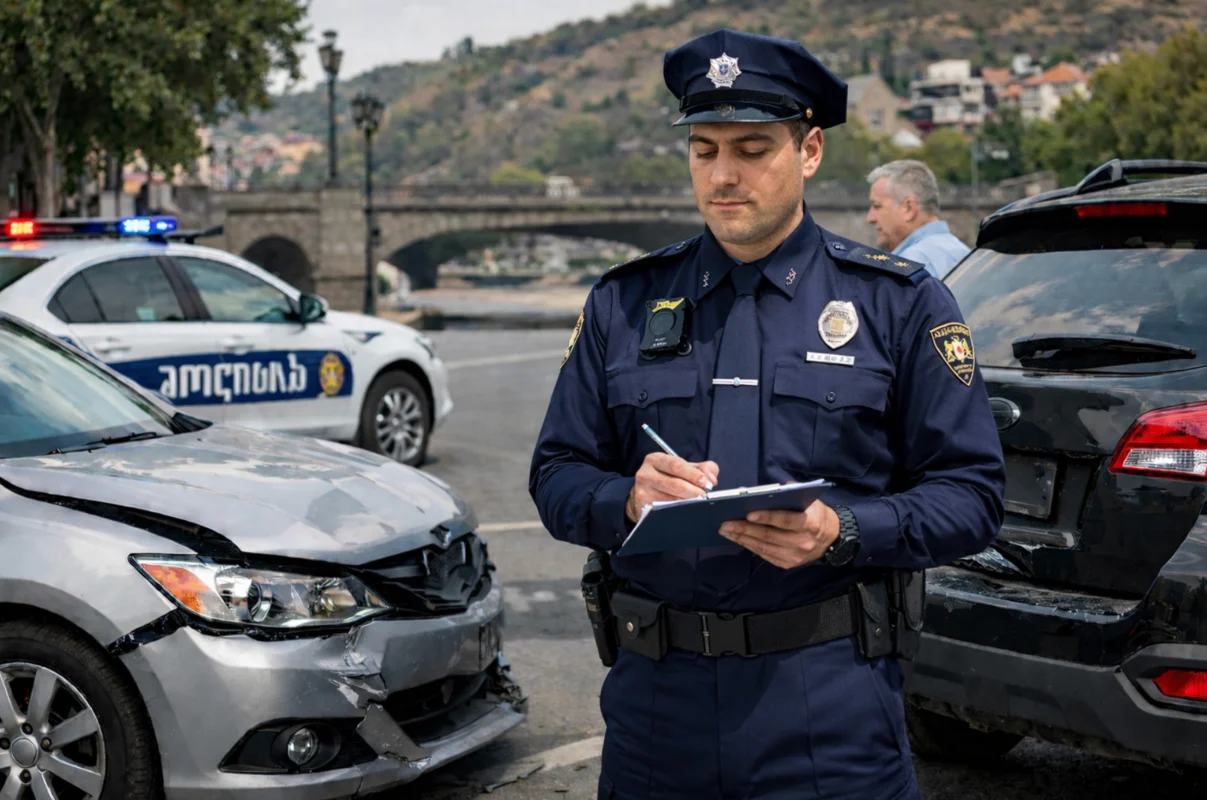
In the event of an accident in Georgia, you must stop the vehicle, turn on the hazard lights, place a warning triangle, and call the police using the single emergency number 112 (works without a SIM card; Russian-speaking operators are available). Do not leave the scene until the police arrive, document the damage with photos/videos, and complete the required paperwork for the insurance company.

Step-by-step instruction:

  1. Stop – turn off the engine, put on a reflective vest, and place the warning triangle.
  2. Call 112 – report the accident, the exact location, and whether there are any injuries.
  3. Wait for the police – do not move the vehicle until the patrol arrives. During this time, take photos/videos of the overall accident scene: skid marks, road signs, vehicle positions, and damage.
  4. Exchange information – record the contact details of the other party and their insurance information, and provide yours in return.
  5. Wait for the police report – after inspection, you will be issued an official accident report (certificate).
  6. Notify the insurance company – inform the insurer about the incident within the required timeframe.

By following these steps, you will ensure proper order at the accident scene and lay the foundation for a successful resolution. Below, we will review each point in more detail and provide additional advice.

Photo Documentation: What and How to Photograph

Proper photo and video documentation of the accident scene will help resolve matters with the insurance company and clarify any disputes. Here is what is recommended to capture:

  • Overall view: Start with several photos showing the general scene. Capture how the vehicles are positioned relative to each other and the road. Include nearby landmarks – road signs, traffic lights, markings, buildings. These photos will provide a complete picture of the circumstances.
  • All vehicles involved: Photograph each vehicle from different angles. It is important that the license plates are clearly visible along with the damage. Avoid close-up shots of the plate alone – it is better if the plate is visible within the overall context of the vehicle and surroundings. Take multiple shots: front, rear, and sides.
  • Close-ups of damage: Record all visible damage in detail. Photograph dents, scratches, broken headlights, and shattered glass – every detail. Ideally, these close-ups should still show some reference to the vehicle or surroundings to make them more convincing.
  • Traces and conditions: Photograph skid marks, debris, broken parts, and glass fragments on the road. If the accident occurred at night, use flash to ensure small details are visible. Also document road conditions – wet asphalt, potholes, snow, or other factors that may have influenced the situation.
  • Documents and signs: If possible, photograph the other driver’s insurance document (with their permission) or at least record its details. You may photograph a driver’s license only with the owner’s consent. Do not forget to photograph nearby road signs or traffic lights, especially if they are relevant (e.g., “Yield” sign, pedestrian crossing). These details help reconstruct the event.

Tip: Make sure the photos are clear and sharp. If it is dark, in addition to using flash, you may ask someone to illuminate the area with headlights or a flashlight. The better the photo quality, the easier it will be for the insurance company and police to assess the situation. Save all photos and videos – they are your main evidence.

Communication with the Other Party

An accident is stressful for everyone involved, so it is important to behave politely and correctly. Here are some recommendations:

  • Stay calm: Start the conversation in a calm tone. Even if you believe the other party is at fault, avoid shouting or arguing. Take a few deep breaths and maintain a friendly tone. Your goal is to resolve the situation, not to release emotions.
  • Be respectful: Address the other driver politely. In Georgia, people value courtesy and composure. If you do not speak Georgian, you may try Russian or English. Avoid direct accusations; instead, describe the situation neutrally.
  • Exchange information calmly: Ask for the other driver’s name, phone number, insurance details, and license plate number, and provide your own information in return. Say something like, “Let’s exchange details for the insurance company.”
  • Do not sign anything without understanding: If the other driver asks you to sign a document on the spot, do not rush. Politely state that you prefer to wait for the police and official documentation.

Friendliness and restraint work wonders even in unpleasant situations. A calm tone reduces tension and helps the process go faster and more smoothly.

How to Stay Calm in a Stressful Situation

Being involved in an accident is stressful, especially in a foreign country. Your main tools are calmness and a clear mind.

  • Breathe deeply: Take slow, deep breaths to lower adrenaline and regain control.
  • Follow the plan: Focus on completing each step one by one. A clear action plan reduces confusion.
  • Do not overthink worst-case scenarios: Insurance and police procedures exist to resolve such issues. You are not alone – you have support from the police, insurance, and CabrioGE.
  • Allow yourself to decompress: After completing the formalities, take a short break, drink water, and restore your breathing.

Stress is natural, but by acting step by step, you can keep emotions under control.

If the Other Party Is Uncooperative

If the other party behaves improperly, refuses to provide information, or attempts to leave the scene, act carefully:

  • Avoid conflict: Do not respond with aggression. Wait for the police.
  • Document everything: Record or photograph the license plate and vehicle. Do not pursue the vehicle yourself – call 112 immediately.
  • Call the police promptly: Inform the operator about the behavior of the other party.
  • Contact CabrioGE: You can always call CabrioGE for support, translation assistance, or further guidance.

CabrioGE Insurance and Police Report

All CabrioGE vehicles are insured under CASCO, meaning most damages are covered. However, proper documentation is required.

  • A police report is mandatory. Always call 112, even for minor damage.
  • Notify CabrioGE. Contact us immediately after ensuring safety.
  • Collect all documents: Ensure the police report contains complete information and forward it to the insurance company promptly.
  • Deductible and coverage: CASCO usually covers damages, though a deductible may apply. Proper documentation ensures financial protection.

In summary: police report + insurance notification = financial protection. Our car rental company in Georgia will do everything possible to ensure a smooth compensation process.

Conclusion

No one is fully insured against accidents, but knowing how to act will make the situation much easier. Georgia is a hospitable country, and assistance is readily available. The 112 service provides Russian- and English-speaking operators, and the CabrioGE team is always ready to support you.

We hope this guide gives you confidence. May your journeys be safe and filled only with pleasant memories. But if something unexpected happens, now you know what to do step by step. Calmness, politeness, and following the recommendations will help you handle any road situation quickly and without unnecessary stress. The CabrioGE team wishes you a safe journey and is always ready to assist you when needed. Have a great trip!

Deposit When Renting a Car

Traveling through picturesque Georgia in a rental car offers freedom and unforgettable experiences. But before setting off on your adventure, it’s important to understand what a car rental deposit is and why it is required. As a rental company with extensive experience, we will explain all the details: why a security deposit is necessary, how we handle it, and how we ensure the refund process is clear and fully transparent.

Why Is a Deposit Required When Renting a Car?

The deposit (or security deposit) is an amount we ask you to provide as a guarantee before your trip. It serves as protection for both parties — for you and for us. It allows the company to quickly cover minor unforeseen expenses if something unexpected happens during the rental. For example, insurance policies usually include a deductible — the portion of repair costs that the customer is responsible for in case of damage. The deposit covers these minor expenses. It also encourages careful driving and compliance with traffic regulations, as it is in everyone’s interest to complete the journey without issues.

We always strive to be максимально open with you: transparency and honesty are the foundation of good relationships. The deposit you provide when renting is a guarantee of peace of mind. For you, it means we take care of our vehicles and are ready to clarify any details (we hand over the car in excellent condition and calculate all expenses fairly). For us, it ensures that any small unexpected costs can be promptly covered if they arise.

How the Deposit Works in Our Company

In our practice, everything is simple and clear. When booking a vehicle, we temporarily block $200 on your card (or accept this amount in cash at the office) — this serves as the future deposit. Upon receiving the vehicle, these $200 are officially оформляются as the security deposit. Step by step:

  • Booking and vehicle pick-up. When booking, we ask you to provide $200 as a reservation guarantee. This amount is not charged immediately but simply blocked on your card (or accepted in cash upon pick-up). When you arrive, we verify your documents and hand over the vehicle: the blocked amount becomes the official deposit.
  • Full tank at departure. The vehicle is provided with a full tank of fuel. We note this during the inspection together with you — you can clearly see that the tank is full. This ensures accurate calculation of fuel consumption during your trip.
  • Vehicle return and expense calculation. At the end of the rental period, we carefully inspect the car together with you. We check the fuel level and look for any new damage. If the vehicle is not returned with a full tank, we calculate the cost of refueling and deduct it from the deposit. Similarly, if minor damage or fines are identified, we discuss them on the spot and include these expenses in the final calculation.
  • Refund of the remaining deposit. Once all expenses have been accounted for, we return the remaining balance of the deposit. If the amount was blocked on your card, we release the hold — the funds usually return to your account within one to two banking days (often almost immediately). If the deposit was paid in cash, we return the balance right after the calculation.

This way, the entire procedure is transparent and straightforward — you always see what you are paying for and receive a precise calculation on the spot.

Examples of Typical Situations

The deposit may be used in various everyday situations during your trip:

  • Returning the car without a full tank: If the vehicle is returned without a full tank, we simply refuel it and deduct the fuel cost from the deposit (usually a small amount, such as $10–$30).
  • Minor traffic fines: A speeding or parking fine may be issued during or even after your rental period. We monitor such fines, provide you with the official notice, and settle the payment using the deposit.
  • Minor damage: For example, a scratched bumper, a scraped door, or a broken mirror. Small defects are covered by the deposit — we arrange the repair or replacement (typically amounts up to several dozen dollars).
  • Other unforeseen expenses: In rare cases, this may include towing services or fines issued in mountainous regions. We inform you immediately about any such expenses and cover them from the deposit.

These situations are uncommon, but this is exactly why the deposit exists — to resolve minor issues quickly and complete the rental smoothly.

Transparent Calculations — Always in Your Presence

All calculations are performed immediately upon vehicle return, in your presence. This ensures complete transparency:

  • We inspect the vehicle together and compare it with the handover report, discussing any identified damage (if present).
  • We check the fuel level and, if necessary, calculate the amount required to refill the tank, showing you the current fuel prices.
  • If fines are identified, we show you the official notices or receipts and immediately include them in the final calculation.
  • All expenses are fully visible to you: we provide receipts and documentation, so you know exactly what you are paying for.

With this approach, you will not face any unpleasant surprises after your trip. All expenses are discussed and settled on the spot in a calm and transparent manner.

Why $200 Is a Reasonable Minimum

Based on our many years of experience in car rental, a $200 deposit is a fair and justified amount. It is well balanced for several reasons:

  • Coverage of typical expenses. Almost all standard minor costs (fuel shortage, one or two fines, small scratches) fit within $200. If the deposit were significantly lower, even one such issue could exceed it.
  • Alignment with insurance deductibles. All our vehicles are insured, but every policy includes a deductible. A $200 deposit generally covers this deductible, meaning minor damage can be handled efficiently.
  • Convenience and responsibility. For most travelers, $200 is a reasonable amount that is not burdensome, yet it encourages responsible driving.
  • Avoiding additional charges. With a lower deposit (for example, $50–$100), customers would often need to pay extra after the rental. With $200, such situations are extremely rare, and the return process remains smooth.

Of course, for returning customers or long-term rentals, we are flexible and open to discussing individual terms. However, in standard situations, $200 is the optimal deposit — you are not overpaying, and we can confidently cover ordinary risks.

How the Deposit Is Refunded If Everything Is in Order

If you return the vehicle in the same condition in which it was received (full tank, no new damage, no fines), the deposit is refunded immediately:

  • Card release: If the deposit was blocked on your bank card, we immediately release the hold. The funds are automatically returned to your account (usually within one to two days, often sooner).
  • Cash refund: If you paid the deposit in cash, we return the full amount during the vehicle inspection — without delays or additional fees.
  • Documentation: You receive confirmation (paper or electronic receipt) of the deposit refund for your records.
  • Final inspection: We confirm together that there are no new defects. After signing the final report, the rental is officially completed.

In the ideal scenario (full tank, no issues), you receive your $200 back immediately. We do everything to ensure the process is simple, fast, and convenient, so you leave us with only positive impressions.

Car rental in Georgia is an excellent way to experience the country in all its diversity. We aim to minimize bureaucracy and maximize your enjoyment. The deposit is simply a formality that helps us care for our vehicles and ensures your peace of mind. We will be happy to welcome you to our office in Tbilisi. Have a safe journey and a wonderful vacation!

How to Check and Pay Traffic Fines in Georgia – A Detailed Guide for Tourists

Learn how to quickly check traffic fines in Georgia and pay them on time. This guide is prepared by our car rental company based on real situations experienced by our clients. We will share all the methods for checking fines, payment options, and useful tips to ensure your trip goes smoothly without unnecessary worries.

Ways to Check Traffic Fines in Georgia

Checking for traffic fines in Georgia can be done in several ways. Below are all available options, including the official online portal, SMS notifications, banks and payment terminals, as well as a dedicated resource for fines related to fare evasion in public transport:

  • Through the official Ministry of Internal Affairs portal (videos.police.ge) – The main website of the Georgian Ministry of Internal Affairs for checking fines. Note: it is accessible only from within Georgia, so outside the country a VPN with a Georgian IP is required. On the portal, you can enter vehicle details to find out about issued fines.
  • SMS notifications – In Georgia, it is common to notify vehicle owners about new fines via SMS. If the vehicle owner (or renter) has a registered Georgian phone number, the system automatically sends an SMS when a violation is detected by a camera. Tourists with foreign numbers only receive SMS if the contact number was registered (for example, in the border service database or with the car rental company).
  • Through banks and payment terminals – Major Georgian banks (e.g., Bank of Georgia, TBC Bank) and payment terminal networks (TBC Pay, Pay Box, etc.) allow you to check fines by vehicle number. At the terminal screen or with a bank employee, select the fines payment section and enter the car’s registration number (sometimes the vehicle registration certificate number is also required). The system will show any unpaid fines and their amounts.
  • Through the Tbilisi Transport Company website (ttc.com.ge) – This resource is intended for checking fines for fare evasion on public transport in Tbilisi. If a controller issued you a fine on a bus, metro, or funicular for unpaid travel, you can check and pay it online. The TTC website has a section called “Payment of penalties”, where you can check by fine number (protocol) or by the owner’s personal ID. For tourists, it is more convenient to use the fine receipt number issued on the spot.

How to Use the Official Ministry of Internal Affairs Portal

To find out about fines through videos.police.ge, follow these steps:

  1. Connect to a Georgian VPN. The MIA website may not open outside Georgia – use a VPN with a Georgian IP address to bypass this restriction.
  2. Go to the Georgian MIA portal (videos.police.ge). The interface is usually in Georgian (browser translation is possible).
  3. Choose the checking method. The portal offers several tabs: search by protocol (fine number), search by the offender’s personal data, or search by vehicle information. For tourists, the easiest is to search by vehicle data.
  4. Enter the vehicle details. You will need to enter the vehicle registration number (Latin letters and numbers) and the vehicle registration certificate number (series/number) or VIN. Example: ABA1234 and the registration certificate number from the documents.
  5. Click the search button. The system will display a list of all fines associated with this vehicle. You will see the violation date, description (in Georgian, but main words are understandable: e.g., speeding, parking, etc.), and fine amount.

Our experience: Many tourists have contacted us unable to access the official website on their own. We help clients check fines through our internal system – especially useful when the traveler has already left Georgia and does not have a Georgian VPN. Thanks to our staff in Tbilisi, one tourist found out about a speeding fine in time and managed to pay it before penalties were added.

SMS Notifications of Fines

If a local phone number was provided when registering the vehicle in Georgia (or when renting), the system automatically sends an SMS notification when a fine is issued. The message usually includes: date and type of violation, fine number, and amount due.

  • For local vehicle owners: make sure your current phone number is linked to the vehicle documents. Then you will immediately receive a message for any violation (e.g., detected by camera).
  • For tourists with their own vehicles: foreign plates are also detected by cameras (since 2023, “smart” cameras recognize foreign numbers). However, SMS will only arrive if Georgian authorities know your contact. At the border, you may have left your phone number in the entry form – in that case, there is a chance to receive a notification.
  • When renting a car: usually the SMS about a fine goes to the car owner (rental company). Many rental companies immediately inform clients about received fines, forwarding the SMS or email. Our advice – stay in contact with the rental company after your trip: if a fine arrives, discuss who and how will pay it.

Practical example: One of our clients rented a car in Tbilisi and left the country unaware of a violation. A couple of weeks later, the rental company received an SMS about a parking fine and contacted us. We helped the tourist pay the fine remotely, avoiding problems with re-entering Georgia.

Checking Fines via Banks and Terminals

Bank branches: In almost any Georgian bank branch, staff can check your fines. Just provide the cashier with the vehicle registration number (and the registration certificate if required). The bank employee will access the MIA database and inform you if there are any outstanding fines. This method is convenient if you are already in Georgia and face difficulties with online checks.

Payment terminals: Terminals are installed nationwide (e.g., TBC Pay, Pay Box, etc.), where you can independently enter data to check for fines. How to do it:

  1. Select the payment category on the terminal screen (usually “MIA Fines” or the road police icon).
  2. Enter the vehicle number. Some terminals may request additional information – the vehicle registration certificate number for verification.
  3. After entering the data, the system will display your fines (if any) with amounts. You can immediately pay with cash or card.
  4. Be sure to keep the receipt issued by the terminal. It serves as proof if questions arise with the police or at the border.

Tip: Payment terminals often have Russian or English interfaces, making it easier for tourists. In case of difficulties, locals or our guide can assist you. Many clients noted that TBC Pay terminals are convenient – the menu is intuitive and payment can be completed in a few minutes.

Fines for Fare Evasion: TTC Website

If you received a fine in public transport (e.g., ticket inspectors fined you for unpaid travel on a Tbilisi bus or metro), these fines must be checked separately. Tbilisi Transport Company (TTC) manages these violations.

To check a fare evasion fine:

  • Go to the TTC website and find the section “Payment of penalties via internet” (available in English and Georgian).
  • Choose the checking method: by protocol number or by personal ID (if you have a Georgian ID). For tourists, it is easier to use the protocol number indicated on the receipt issued by the inspector.
  • Enter the required information to get fine details and amount. You can also pay the fine online using a bank card directly from this site.

Fines for fare evasion are usually small (around 5–10 GEL), but must be paid. Otherwise, questions may arise on your next visit or when applying for a transport card. We recommend keeping the receipt issued by the inspector until the fine is fully paid.

Ways to Pay Traffic Fines

Paying Georgian fines is as versatile as checking them. Choose the method that is most convenient for you:

  • Online payment: If you successfully found the fine on the official MIA portal, payment options are usually listed there. Most often, you need to go through an electronic payment system (e.g., via Bank of Georgia or another bank) and enter your card details. Some fines (e.g., from Tbilisi Transport Company) can be paid directly on the service website. Note: foreign Visa/MasterCard cards are usually accepted, and the currency is automatically converted to GEL.
  • Through payment terminals: As described above, terminals allow both checking and paying fines. After the amount appears on the screen, simply pay (cash or card, depending on the terminal). The terminal will register the payment. This method is convenient for those already in Georgia – terminals are located in shopping centers, gas stations, bank lobbies, and other busy places.
  • At bank branches: You can pay the fine directly at the cashier of any major Georgian bank. Inform the cashier you want to pay a traffic fine, provide the vehicle number and ownership or rental document (if necessary). The bank employee will locate the fine in the system and accept payment in cash or by card. A receipt will be issued. This traditional method is reliable, though it may take more time (queue, processing).

Tip from our company: If you have already left Georgia and discovered a fine but online payment is not available, contact us. We can assist with remote payment through our representatives in Georgia so you settle the fine on time.

Important Details and Payment Deadlines

Do not neglect paying fines in Georgia. Keep in mind several important rules and consequences:

  • Fines do not expire. In Georgia, a traffic fine does not disappear over time. Even after several years, an unpaid fine remains associated with you or your vehicle. In other words, fines do not “vanish” until paid.
  • 20% discount for prompt payment. Georgian law encourages drivers to pay fines promptly. If the violation is detected by an automated camera, paying within 10 days gives you a 20% discount on the fine amount. This is a great reason to settle fines immediately and save money. The discount is applied automatically: simply pay, and the system deducts 20%.
  • 30 days without penalty. The standard payment period is 30 calendar days from the date of the fine. Payment must be made within this period; otherwise, a penalty interest (late fee) starts accruing. This increases the total amount, so delays are unwise. The interest is small (daily percentage of the fine), but over months it can add up.
  • Problems on exit and re-entry. Unpaid fines may cause issues at the border. Georgian border and customs authorities receive fine debt information. If the fine is overdue, you may be asked to pay immediately upon exit (some border points have cashiers or terminals). Moreover, with large unpaid fines, entry into Georgia may be denied until debts are settled. We know cases of tourists turned back at the border due to unpaid fines. Therefore, we strongly recommend settling all fines before the end of your trip.

Features and Recommendations for Tourists

Below are specific tips based on common situations travelers face. These recommendations are based on our experience with tourists in Georgia:

  • If checking fines from outside Georgia: The main difficulty is accessing official services. Solution: use a VPN with a Georgian IP to access videos.police.ge or similar sites. There are also special online services and bots that help check fines remotely. For example, the Russian-language Telegram bot @FinesGe_bot can find fines and even send notifications for new ones using the vehicle number and registration certificate. Use such tools if the official portal is inaccessible. Don’t forget to save screenshots or fine numbers to pay later without issues.
  • If a fine arrives after returning a rented car: This happens if cameras recorded a violation but the information was processed days later. Usually, the rental company receives the notification (SMS or email) and may either pay the fine from your deposit or ask you to pay it yourself. Our advice: check the rental agreement for the fine policy. Reputable companies (like ours) inform clients and provide a receipt for payment. If you have already left, contact the rental company – they can pay the fine on your behalf (with reimbursement from you) or suggest a convenient remote payment method. Do not ignore such fines: even after leaving, the debt remains with the vehicle, and questions will arise on your next visit to Georgia.
  • Convenient mobile apps and websites: While traveling, a computer is not always available – much can be done from a smartphone. Fortunately, bank platforms (e.g., Bank of Georgia or TBC mobile apps) allow clients to pay fines online. With a Georgian bank card, you can see and pay fines in a few clicks. For visitors without local banking, online bots and websites help – the Telegram bot mentioned above, or web services with mobile support. The TTC website is also mobile-optimized for public transport fine checks. We recommend installing a VPN on your phone in advance to quickly access the official MIA portal if necessary.

We hope our guide helps you understand the nuances of checking and paying fines in Georgia. Our company strives to make your trip comfortable and safe – sharing advice based on personal experience and that of hundreds of tourists. Follow traffic rules, and if a fine is issued, now you know how to promptly check and settle it. We wish you pleasant and carefree travels in hospitable Georgia!

Where You Should Not Drive a Rental Car in Georgia

Georgia is an amazing country for road trips. The roads connect the seaside with high mountains, ancient monasteries with bustling cities. As a car rental company, we aim to help you see all the beauty of Georgia safely. From our own experience, we know there are destinations where it’s better not to go by rental car. These restrictions are not arbitrary; they are based on real incidents: some routes too often end with a ruined holiday, towing, and expensive repairs. Our goal is to protect you from such problems and make your trip pleasant and safe.

Why These Restrictions Exist

To help you understand the reasons behind these prohibitions, here are the main factors why we do not recommend certain roads and regions:

  1. Dangerous road conditions. In some areas there is no asphalt—only broken dirt roads with potholes, rocks, and steep drops. Crossing mountain passes on such roads is very risky in a standard car. What is manageable for a prepared 4×4 can be disastrous for a city-type rental vehicle.
  2. Lack of insurance coverage. Insurance does not apply on the restricted routes and in remote regions. If something happens to the car there, the renter is fully responsible for all costs. Neither comprehensive insurance nor extended coverage will cover damage on forbidden roads.
  3. Vehicle wear and damage. Driving on rough off-road terrain seriously damages the suspension, tires, and mechanical components. The rental agreement explicitly states that the car must not be used outside of its intended purpose—such as driving where there is no proper road surface. If you deliberately violate these terms, the company may charge fines and require compensation. Simply put, repairing a “destroyed” suspension can be extremely expensive.
  4. Unavailability of assistance. Most “forbidden” routes are far from towns and rescue services. In the mountains, there is often no mobile signal—you won’t even be able to call us or 112. Even if signal appears, sending a tow truck to such places is difficult and slow, and sometimes physically impossible until weather conditions improve. You risk being stranded without help, fuel, or food for a long time.

Remember that we track the location of our vehicles for your safety. If the car enters a restricted region, we can see it via GPS. In critical situations, we may contact you to clarify the situation, and in cases of serious violation, we can even remotely block the vehicle. These measures are in place to prevent accidents before they happen. In simple terms, we do not want your long-awaited holiday to turn into a dangerous rescue operation. Believe us, such cases have happened—and now we aim to prevent them.

So what are these routes, and why are they so risky? Below we provide a detailed overview of specific roads and regions in Georgia where you should not go with a rental car. We also explain why they are dangerous, what incidents have occurred in practice, and how you can visit these places safely without violating rental terms.

Dangerous Mountain Routes (Forbidden Roads)

Some roads in Georgia may appear on a map as a convenient shortcut or an enticing adventure route. But if you are not in a prepared 4×4 with serious off-road experience, avoid them. GPS navigation (especially Google Maps) sometimes guides travelers along these paths without warning about road conditions. As a result, tourists end up on broken mountain switchbacks where 10 km/h is already an achievement and regret not knowing the risks beforehand. Below are the three most well-known dangerous routes forbidden for rental cars.

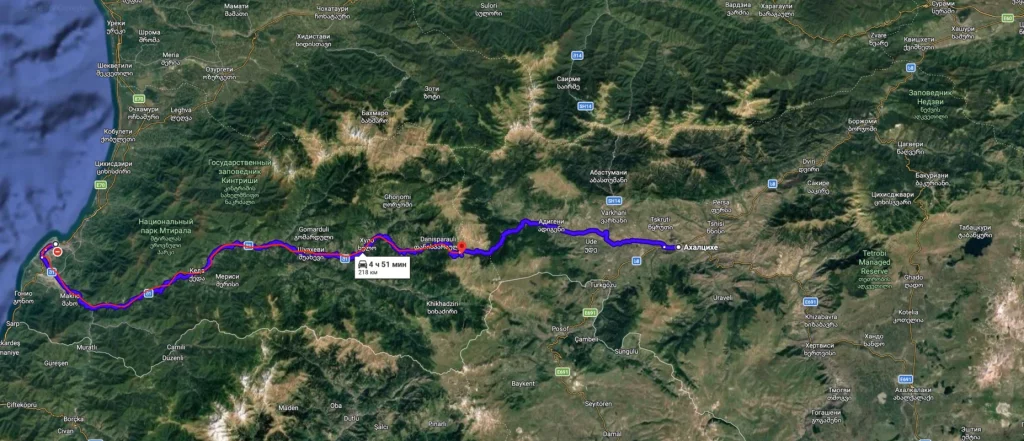
Akhaltsikhe – Batumi via Goderdzi Pass

The road through Goderdzi Pass after Khulo – asphalt ends and a challenging dirt road begins.

If you plan a route from Tbilisi or Kutaisi to Batumi, many maps by default route through Akhaltsikhe and then Goderdzi Pass. On paper, it looks attractive—a direct path through the mountains, shorter than the detour via Kutaisi. But under no circumstances agree to drive Goderdzi Pass in a standard car! This is one of the main forbidden routes. The reasons are simple: for about 30–40 km between the village of Khulo (Adjara) and the Goderdzi resort there is no asphalt at all. The road is a mountain switchback made of gravel, dirt, and rocks. On ascents and descents, the car shakes, with many sharp turns without guardrails. In dry weather there is dust and potholes; in rain, mud knee-deep. Navigation may show ~5 hours from Akhaltsikhe to Batumi, but in reality, an unprepared driver will spend 8–9 hours—the most stressful of your life.

We have had clients who ignored warnings and went through Goderdzi, then called us in distress. One crew tore two tires on rocks—only one spare, no help nearby. Others got stuck in mud after rain on the pass and needed the whole village to help pull the car out. Even local road service tractors hesitate to attempt the difficult sections of this road. Insurance does not cover the pass—so all damage and expenses fall on the travelers. Therefore, we strictly forbid the Akhaltsikhe–Batumi route via Goderdzi Pass. From the capital and central Georgia to Batumi, take the detour via Kutaisi. Yes, it’s a few extra kilometers, but the entire route is on proper roads: for example, Akhaltsikhe – Borjomi – Kutaisi – Batumi is completely safe for any car. Trust us, it’s better to spend an extra hour than to pull your car out of a mountain ditch.

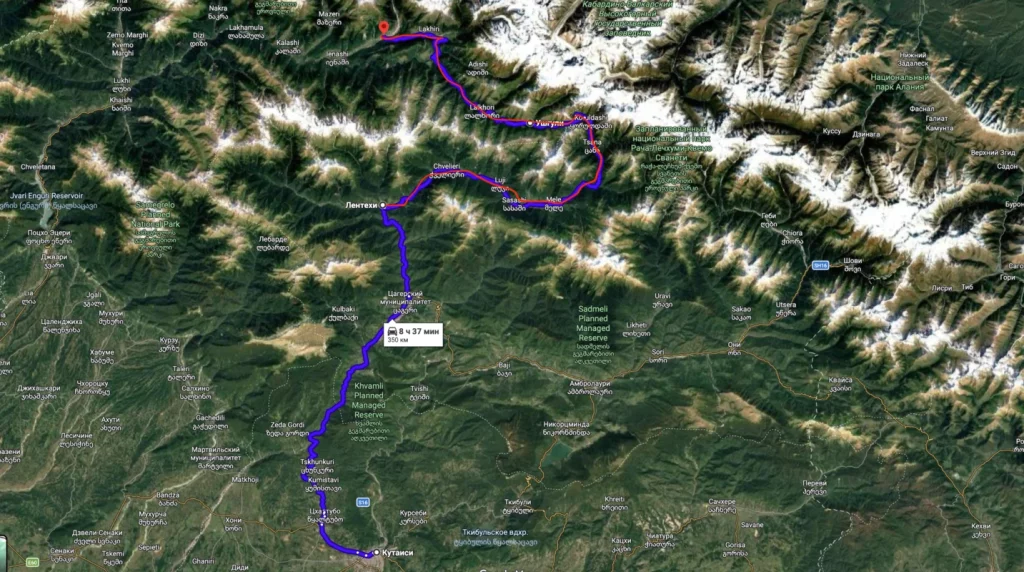
Lentekhi – Ushguli – Mestia (Zagari Pass)

Another “trap” set by navigators is the route to Upper Svaneti via Lentekhi and Zagari Pass to Ushguli. If traveling from Kutaisi to Mestia, this path may also lure you. Warning: do not drive directly from Lentekhi to Ushguli in a rental car! This high-mountain route is open only in summer (May to September) and even then only for prepared 4x4s with very experienced drivers. The Lentekhi–Ushguli road is a narrow mountain trail, partly carved into slopes. There is no asphalt; the surface is dirt, large rocks, river crossings, and muddy ruts. Zagari Pass is about 2,600 m high, and weather can change instantly—you may encounter snow or heavy rain even in midsummer. In colder seasons, the road is completely snowed in and closed until the snow melts.

We’ve heard from extreme travelers about the beauty of the area but also received distress calls: “Help, we slid off the Lentekhi–Ushguli route…” One of our cars returned with a cracked oil pan and destroyed shock absorbers—insurance did not cover it. Therefore, absolutely forbidden: the Lentekhi – Ushguli – Mestia route is off-limits for standard rental cars. Even if you have a capable 4×4, you may go only with explicit permission from the rental company (rarely granted for an additional fee, fully equipped). Overall, we strongly advise against taking this risk. To see Ushguli safely, plan an alternative route: drive the main road through Zugdidi to Mestia (the paved Military–Sukhumi highway via Jvari Pass is allowed). From Mestia, you can visit Ushguli on a guided jeep tour with a local driver. This way you safely reach Europe’s highest village without incidents. Many local guides in Mestia offer tours to Ushguli—take advantage of them instead of risking a rental car off-road.

Sairme – Abastumani Mountain Road (Zekari Pass)

The route connecting the Sairme resort (Imereti) with the village of Abastumani (Samtskhe–Javakheti) is famous for its beauty. Tourists enjoying Sairme’s hot springs sometimes want to cut through to Abastumani via the Zekari Pass. But we do not rent cars for this adventure. Reason: the Sairme–Abastumani road is a narrow mountain dirt road with very sharp turns and continuous elevation gain. There is no pavement, only gravel and dirt, with frequent rockfalls. Driving here is unpredictable and dangerous, especially without experience on slippery or uneven surfaces. One wrong move could put you at the edge of a cliff or puncture a tire on a protruding rock. Insurance does not cover Zekari Pass, and calling for help is nearly impossible. Driving at night is even worse—no lighting, no signal. Therefore, the Sairme–Abastumani road is listed among forbidden routes. To get from Sairme to Abastumani, you must return to the main road (via Bagdati – Kutaisi – Khashuri or other regional detours). Yes, it adds distance, but your car remains intact. Trust us, an extra 100 km on proper roads is far better than an hour of shaking on a cliff edge with no guarantee of arrival.

Hard-to-Reach Regions (No Rental Cars Allowed)

Besides specific roads, there are entire regions in Georgia where we do not allow rental cars. These are either high-mountain areas with extreme off-road terrain or territories not controlled by the Georgian authorities (conflict zones). The rental agreement explicitly lists these regions: Truso, Juta, Vashlovani, Tusheti (Omalo), Shatili, as well as Abkhazia and South Ossetia. Do not underestimate the associated risks—poor road conditions, lack of communication and insurance, the possibility of getting lost, or even running into legal trouble. Below we explain what these destinations are and why you cannot go there with a rental car.

Truso Gorge

Truso Gorge is an amazingly beautiful and secluded area on the border with South Ossetia. You can see mountain landscapes, abandoned villages, and mineral springs with bright-orange streams. Travelers are highly recommended to visit Truso… but not in their own car. The road into the gorge goes from the village of Kobi (on the Georgian Military Road) deep into the mountains along the river. The first few kilometers are reasonably passable; you can reach Almasani village with a standard car. Beyond that—stop: the section from Almasani to the main sights of Truso Gorge is considered forbidden. The dirt road is narrow, broken, and in some places runs directly above the river cliff. Attempting it without a 4×4 and off-road skills is risky. We have had incidents where adventurous tourists in rental crossovers tried to go further, tearing tires or scraping the underbody, and later paid for repairs. Insurance does not cover these locations—all responsibility falls on the renter. Our recommended option: drive your car to Almasani, leave it in a secure place, and continue the journey with a local guide. Residents of nearby villages offer tourists jeep transfers directly to the hot springs and the old fortress in the gorge. This is relatively inexpensive and safe, and most importantly—you can see all the beauty of Truso without damaging your car or stressing yourself.

The Road to Juta (Sno Gorge)

Juta is a high-mountain village in the Khevi region, not far from Stepantsminda (Kazbegi). It is famous for breathtaking views of the Chaukhi mountains and excellent trekking opportunities. The route there sounds harmless: only about 20 km from the turn off the Georgian Military Highway, through the village of Sno and further into the mountains. Many tourists think: “Why not drive to Juta in our rental car?” Let us explain: the last 7–8 kilometers of the road after the village of Sno are poorly maintained dirt road, in places running along a slope above the gorge. The asphalt ends quite quickly, and then begins a bumpy ride over rocks, river fords, and sharp turns. A regular car will suffer there: there is a high risk of damaging the undercarriage, slipping a wheel into a hole, or overheating the brakes on the descent. It’s no coincidence that driving rental cars from Sno to Juta is prohibited by all companies. We don’t want you to repeat the fate of one of our clients who returned with a torn-off bumper and a cracked radiator after such a trip. The better approach: drive calmly to the village of Sno (the road there is asphalted and in good condition). In Sno, hire transport from locals – drivers in UAZs or other 4×4 vehicles often wait there, offering to take tourists to Juta. Alternatively, arrange a Juta tour from Kazbegi in advance – such services are also popular. Trust us, the beautiful mountains of Juta are worth seeing, but not at the cost of a damaged car.

Vashlovani National Park

Vashlovani is a unique reserve in the far southeast of Georgia, in the Kakheti region (near the border with Azerbaijan). Its landscapes are strikingly different from the usual green Georgia: semi-desert, savannah, dry forests, canyons, and mud volcanoes. A true wilderness! It’s no wonder that eco-tourism enthusiasts are eager to get there. But we must warn you: you cannot drive into the heart of the park in a rental car. There is no asphalt road inside Vashlovani – only a network of dirt tracks created by jeeps. You can drive on asphalt to the nearby town of Dedoplistskaro and further to the village of Kasristskali on the park’s edge. Up to Kasristskali you may drive your own car, but no further. Entry into the national park itself with a regular car is prohibited because it’s all off-road. After rain, these steppe dirt roads turn into impassable mud, with vehicles sinking up to the axles. Even in dry weather, it is easy to puncture a tire on a sharp stone or hit the undercarriage on an exposed rock while descending into a canyon. Communication in the reserve is almost nonexistent; imagine being stuck somewhere near the Takhti-Tepe area without phone signal or water – not a great prospect. Evacuating a car from deep inside the park is extremely difficult; sometimes tractors or even a helicopter are required (yes, there have been cases of tourists rescued from Vashlovani by air!). Insurance companies will not cover such incidents – the costs are yours. Therefore, we strongly advise: if you want to see the beauty of Vashlovani, use the park’s services. The park administration can organize a 4×4 tour with a ranger or guide – they will take you to all interesting spots and ensure your safety. Alternatively, you should go in your own prepared 4×4, knowing the area well and with a companion in a second vehicle (even experienced expeditions do not venture there alone). But in a rental car – absolutely not, it’s too dangerous for you and the vehicle.

Tusheti and the Village of Omalo

The road to Tusheti (Abano Pass) – a narrow dirt road winding along the steep slopes of the Caucasus mountains.

Tusheti… A magical word for adventure seekers. It is one of the most remote regions of Georgia, home to authentic mountain villages (Omalo, Dartlo, Bochorma, etc.), medieval towers, and untouched nature. Tusheti is called “the land where time stood still.” But it is also infamous for the road leading to this region. The only car road to Tusheti goes via Abano Pass (altitude ~2,900 m) and is officially recognized as one of the most dangerous in the world. Locals jokingly call it the “Road of Death.” It is a narrow serpentine carved into the rocks of the Greater Caucasus: on one side a sheer wall, on the other – a cliff hundreds of meters deep. There is neither asphalt nor guardrails. The surface consists of clay, stones, and gravel, which are washed away and collapse during rains. In some places, waterfalls flow directly across the road, eroding the ground under the wheels. Every year, people die there; along the road, makeshift memorials mark the spots where cars have fallen. Driving to Tusheti in a rental car is strictly prohibited. We even ask about your plans to continue past Kvemo Alvani (the last village before the ascent) – that’s how serious it is. The road is open only 4–5 months a year (roughly June to October); the rest of the time, Tusheti can be reached only by helicopter. Even when the pass is formally open, only highly experienced drivers in prepared 4×4 vehicles go there. Many tourists hire local Tushetian drivers – and rightly so. They know every turn, can pass on narrow stretches, and feel the car at the edge of slipping. A stranger without such skills venturing there is almost committing suicide. We’ve had clients beg for a jeep to go to Tusheti “at their own risk.” We always refuse – life and health are more valuable. Moreover, insurance companies explicitly exclude this road from coverage. If you venture there and damage the car, the policy will not pay a single tetri, and evacuation from Tusheti costs astronomical sums (if even possible). Think about it: it’s not worth it. If you dream of seeing sky-high Tusheti – please! But not behind the wheel of a rental car. First reach the villages of Pshaveli or Kvemo Alvani (the road there is asphalted), and then switch to transport operated by experienced local drivers. In season, UAZ “minibuses” regularly run from Alvani to Omalo; or order a jeep tour of Tusheti with a guide. Yes, it costs extra, but you will return safe, and the impressions will be joyful, without horror.

The Road to Shatili (Khevsureti Region)

The village of Shatili in Khevsureti is famous for its unique architectural ensemble – ancient defensive towers merged into a single stone fortress. It is a historical monument and a very picturesque place in a high-mountain valley on the border with Chechnya. You can reach it via the only road from the Mtskheta-Mtianeti region, through the Bear’s Cross Pass (Datvisjvari, ~2,676 m). Route: Tbilisi – Zhinvali – Barisakho – Shatili, about 150 km, half of which is dirt serpentine. Asphalt ends after the village of Gudani. From there to Shatili, the road is challenging: it first climbs steeply into the mountains, then winds along the ridge and descends into the Arguni river valley. The surface on this pass is very poor – large sharp stones, grader tracks, and deep ruts in places. The edges of Bear’s Cross Pass partially collapse into a ravine, making it difficult for two cars to pass. Any mistake can result in serious damage or a fall off the road. We forbid our cars from going beyond Gudani towards Shatili. A regular car cannot make it anyway, and attempts in crossovers have ended badly. For example, once tourists insisted they had an SUV and would “carefully drive through.” Result – a spring broke on the next pothole, and the car stopped at the top of the pass. No way forward or back. Locals managed to evacuate them, but the car required major repairs. Of course, no insurance covers such adventures. So again: do not drive to Shatili in a rental car. If you really want to go – fine, drive on asphalt to Gudani or even to the villages of Barisakho/Shatili (while the surface is still good). There are tourist centers there, and you can switch to prepared transport. Or take a tour from Tbilisi – there are now many one-day excursions to Shatili and the nearby village of Mutso in 4×4 vehicles. This way, you see the beauty of the ancient towers and sleep peacefully, without trembling at every turn of the Bear’s Trail.

Abkhazia and South Ossetia

Finally, let us separately mention the regions of Abkhazia and South Ossetia. Formally, they are within the internationally recognized territory of Georgia, but de facto are uncontrolled republics. Driving there in our car is strictly prohibited for political and legal reasons. First, no insurance applies in these territories, as they are frozen conflict zones. Any accident, theft, or car damage in Abkhazia or South Ossetia is your personal problem; the insurance company will not even consider the case. Second, entering there from the Georgian side is practically impossible legally. All official borders are closed: Georgian checkpoints will not let you pass. Some foreigners might theoretically enter Abkhazia from the Russian side, but that requires crossing the international border at the other end of the country, which violates the rental agreement (taking the car outside Georgia without permission). And even if you somehow manage to bring a rental car into Sukhumi or Tskhinvali, know that from the Georgian legal perspective, it’s illegal, and we immediately see the car missing via GPS and report it to the police. There have been cases where cars crossing into the conflict zone were confiscated by local “authorities,” and retrieving them later is nearly impossible. So, you risk both the car and your legal standing. We warn you in advance – do not attempt to drive to Abkhazia or South Ossetia in a rental car. If you want to see the Abkhazian coast, enter from the Russian side using your own transport or an organized tour, but definitely not with a car rented in Tbilisi or Batumi. As for South Ossetia – there is absolutely nothing for tourists there now; it is a closed military zone. Georgia has so many beautiful places that can be visited legally and safely that there is no reason to risk it for dubious adventures.

Conclusion: Plan Your Route Wisely

We have listed the main destinations where you should not drive a rental car. Some names may be new to you, others may be places you have been eager to visit. Trust us, we fully understand your curiosity: Georgia is full of hard-to-reach treasures that attract adventurers. However, our duty is to warn you about dangers and protect you from unnecessary risk. We have seen too many cases where ignoring these recommendations led to a ruined vacation, stress, and large expenses. So listen: if the rental company says “no” – it really means no. This is not out of greed or strictness, but out of concern for your safety and the protection of our property.

What if you really want to see mountain villages and wild parks? The answer is simple: choose alternative ways. Local 4×4 tours are well developed in Georgia – in almost every mountain village, you can find drivers ready to take you to hard-to-reach places in their vehicles for a reasonable fee. Many tour companies offer jeep tours to Tusheti, Khevsureti, Svaneti, Vashlovani Plateau, etc. This is an excellent option: you get to your destination without risking yourself or someone else’s car. Another option is to cover part of the way on foot (for example, walking through the Truso Gorge independently after the accessible part of the road). This “drive as far as possible, then walk or hire a local” combination often gives even more impressions than simply driving the whole way in your car.

In any case, plan your route in advance. When picking up the car, be sure to tell our managers where you intend to go. We will advise which roads are currently in good condition and where it is better to take a detour. And we will definitely warn you if your route is on the “blacklist.” Our goal is not to restrict your freedom but to help you plan your trip so it goes smoothly. Georgia is a hospitable and amazing country, and on good roads in your rental car, you can see dozens of wonderful places: from the wine valleys of Kakheti to the ski resorts of Gudauri, from the caves of Vardzia to the beaches of Adjara. Just consider the local infrastructure and follow our advice. Then your road trip in Georgia will be not only exciting but also safe. We wish you a pleasant journey and vivid impressions! GarmoniZ! (Which in Georgian means “Safe journey!”)

Fuel Guide for Road Travelers in Georgia

Welcome to our practical and lively guide to fuel stations in Georgia! We share plenty of useful tips to ensure your journey by car through Georgia goes smoothly and without surprises at the pump. Below, we’ll explain how to distinguish diesel from petrol, avoid mistakes when choosing fuel, where to find stations (especially in the mountains), how to pay, and what to consider during winter at high altitudes. Let’s go!

Petrol or Diesel? How Not to Mix Up Fuel

Fuel labeling in Georgia is different from what you’re used to. If you are accustomed to the numbers “92” or “95,” be prepared to see different names on the pumps. Petrol is divided into classes here: Regular (92 octane), Premium (95), and Super (98). Diesel is simply called Diesel. At major chain stations, names are usually duplicated in English, but at some stations (for example, Socar), all signs may be only in Georgian. Georgian letters can be confusing, so don’t rely solely on intuition from the labels – it’s better to ask.

Visual cues can also help. Pay attention to the color and shape of the nozzle: often, diesel nozzles differ in color (for example, black or green), while petrol nozzles have another color (often green or blue, depending on the chain). However, there’s no universal standard, so the main thing is to read the label on the pump. Usually, the fuel type is indicated in small print: look for words like “Diesel” for diesel or “Premium/Regular/Super” for petrol. By the way, „ბენზინი“ in Georgian means petrol, and „დიზელი“ means diesel. If you see these letters, keep in mind they indicate different fuel types.

Staff at Georgian fuel stations usually approach and fill the car themselves. In big cities and chain stations, attendants often know basic words in Russian or English. They may ask themselves: “Premium? Diesel?”. Don’t hesitate to clarify and point to the correct pump if in doubt. Sometimes an attendant tries to guess the fuel based on the car model – for example, seeing an SUV and automatically reaching for the diesel nozzle. It’s better to specify the fuel type yourself – say, for example: “95 Premium, full tank” or “Diesel, 20 liters”. This helps both the staff and keeps you safe.

How Not to Make a Fuel Mistake: Tips and Real Cases

Mixing up fuel is every traveler’s nightmare, but it happens, and we want to help you avoid it. Here are our tips based on client experiences:

  • Double-check the label on the pump. Especially if you’re at a new station. One of our tourists once stopped at a remote station where all signs were in Georgian. He looked for the numbers 92 or 95 on the display in vain. Fortunately, he remembered our advice and asked the attendant directly: “ბენზინი? Diesel?”*. The staff pointed to the correct pump, preventing a mistake. Don’t be afraid to ask – better to check twice than later have to tow the car because of wrong fuel.
  • Follow the rental company’s or our guide’s recommendations. If you rented a car, the fuel type is usually indicated on the fuel cap or in the documents. Our team always notes the fuel type in the client guide, but double-check: diesel or petrol, and which octane. There was a case where a client assumed that a large car must be diesel – and requested diesel. Luckily, the attentive attendant asked again, because it was actually a petrol engine! Since then, we always repeat: if unsure – check the manual or ask us.
  • Don’t rely on the car’s color or guesswork. On our trips, we’ve encountered funny myths: that “all Georgian cars run on gas” or “in the mountains, everyone uses diesel”. This is not true. Only your car’s technical data determines the fuel. So read the labels, don’t guess.
  • Avoid dubious stations with unclear names. Besides major chains, Georgia has small private stations. They may have their own signs or none at all. Travelers have sometimes filled up at an unnamed pump in a village and received fuel of unknown origin. We recommend using well-known chainsWissol, Lukoil, Socar, Gulf, Rompetrol, etc. Fuel quality is more reliable, staff is trained, and the chance of mixing up fuel is lower.

If you accidentally fill the wrong fuel – don’t start the engine. This is golden rule. Call for help from the station staff; at major stations, they can often drain the tank or advise a service. Once we had to evacuate a client’s car where 10 liters of “wrong” fuel were added. Nothing serious happened – all fixed – but a lost day of vacation is nobody’s idea of fun. So it’s better to avoid the situation by paying attention from the start.

Where to Find Fuel Stations: Cities, Highways, and Mountains

Cities and highways: In major Georgian cities – Tbilisi, Batumi, Kutaisi, etc. – stations are abundant, often at every step. On main streets and exits, you’ll encounter well-known chains. On main highways between cities, stations also appear regularly, roughly every 20–30 km, sometimes more often. For example, on the road from Tbilisi to Batumi, you won’t run out of fuel: before the pass, after the pass – stations everywhere. Most stations operate 24/7, so you can find one even at night (especially chain stations). In small towns, some stations may close late, keep that in mind.

Note: Fuel prices in Georgia are slightly higher than in Russia, so many travelers try to enter with a full tank. However, importing petrol in cans across the border is prohibited. If you travel from Russia via Upper Lars, better fill up in Vladikavkaz, leaving cans empty – Georgian customs will make you pour the excess. After crossing the border, the first station is in Stepantsminda (Kazbegi), about 10 km away. So you won’t run out, but don’t cross the border with an empty tank.

In the mountains: Mountain areas are a different story. In popular mountain towns, there are stations, but few. For example, in Mestia (Svaneti) only a couple of pumps operate; in Stepantsminda, as mentioned, you can fill up. But if you turn into remote villages, don’t count on a station. In Tusheti, Ushguli, Racha and other remote regions, go with a full tank. Moreover, when heading into mountains, fuel up in advance as much as possible, preferably in the last major town before the climb. We recall a case when tourists went toward Omalo (Tusheti) with half a tank, thinking “there will surely be something there.” They almost ran out on the way back – local residents sold them a couple of liters from a can at a high price. Lesson learned: mountains – only with a full tank and refill at the first opportunity.

Fuel reserve: In some very remote locations, locals may sell petrol or diesel from barrels or cans – for example, at the edge of a national park or a pass marked “SOS Petrol.” But this is a last resort! Quality is questionable and prices are high. Better plan your route so you have enough fuel to reach civilization. If in doubt – take a can and fill it at a legal station in advance (within the country, not across the border). A full can in the trunk for emergencies in the mountains – peace of mind, especially in winter.

Density and availability: On tourist routes, stations are usually every 50 km or more often, but on secondary roads there may be nothing for tens of kilometers. Always check station availability on a map before venturing into unknown roads. Our tip: apps like Google Maps, Maps.me, or GPS devices show stations; plus we usually provide our clients with a list of reliable points along the route. Use navigation – no unpleasant surprises.

Fuel Payment: Cash, Cards, and Details

In Georgia, fuel is paid exclusively in lari (GEL) – the national currency. No dollars or rubles are accepted, so make sure you have lari in advance. Exchange money in the city; stations offer poor rates and may not have exchange facilities.

Most stations accept bank cards. At chain stations in Tbilisi or Kutaisi, you can confidently use Visa or Mastercard – terminals are almost everywhere. You can either hand your card to the attendant (they often carry a mobile terminal) or go with them to the cashier. Apple Pay/Google Pay often works in major cities if your card is linked. But always have a backup plan – cash. In remote areas, small villages, or very old stations, cash may be the only option. For example, in a mountain village, you may be told: “Cash only”. Also, sometimes the terminal loses connection or temporarily fails – we’ve encountered this a few times, especially after snow in the mountains. Keep some cash in your glove box or wallet specifically for fuel.

How payment works: There are variations. Sometimes in Georgia, payment is upfront – you specify the amount, pay, and they dispense that much fuel. For example: “20 GEL, Regular” – you hand over the cash, and the attendant fills that amount. But usually, you fill first, then pay according to the meter. Especially if requesting “full tank,” the amount is unknown in advance. In that case, the attendant fills to the click, tells the total (or shows it on the display – e.g., “65 GEL”), and you pay – cash or card. Always wait for the meter to reset before refueling if paying afterward. Standard procedure, but better to check: previous reading may not be cleared. We haven’t encountered fraud at Georgian stations, but attentiveness helps.

Tips for the attendant – optional. Tipping is not mandatory in Georgia, but if you received good service, advice, or window cleaning, leave a couple of lari. Attendants, especially in the provinces, work for modest salaries and appreciate gratitude. We sometimes reward them when we see genuine effort.

Remote areas: In high-altitude villages, even official stations may lack a terminal – internet is weak. Carry cash. Also, in very remote places, fuel may be sold from a shop or a resident’s yard – “poured from a can – pay cash”. Naturally, no cards there. Rule of thumb: the farther from civilization, the more cash for fuel!

Winter and High-Altitude Refueling: What to Watch

Georgian winter in the mountains is serious. Extreme cold, snow, thin mountain air – all affect the car and refueling process. Here are our tips for winter (and high-altitude) road trips:

  • Winter diesel and anti-gel. If traveling in a diesel car during winter, note: special “winter” diesel may not be available everywhere. In cold areas (Gudauri, Kazbegi, etc.), branded stations usually sell fuel with additives, but in extreme cold (-15°C and below) we strongly recommend adding anti-gel. It prevents diesel from gelling. Buy anti-gel in advance in Tbilisi or other cities (inexpensive and prevents morning startup problems). We once met a tourist who couldn’t start their diesel in Gudauri – fuel had gelled overnight. Adding anti-gel is simple: pour the bottle into the tank before refueling, then fill up – mixture mixes better.
  • Don’t keep the tank empty in frost. In high mountains and cold, avoid starting with a nearly empty tank. Condensation can form in the empty space, freezing and blocking fuel flow. Keep at least half a tank, preferably more. Useful in case of traffic/snow delay – full tank lets you stay warm in the car.
  • Queues and refueling time. Popular winter resorts (like Gudauri) may have queues at the only station before weekends. Many arrive to ski and refuel at the bottom. We advise refuel early or during off-peak hours. Weekdays, early morning or late evening, chances are higher to avoid lines. If there’s a queue – stay calm: walk around, have coffee (but stay near the car!). In extreme cold, don’t stand outside long – wait in the car with heater, or dress warmly.
  • Pump operation in cold. In extreme cold, equipment can be slow. Fuel flow may be weaker, attendant takes longer, terminal may glitch. Understand – the staff is cold too, pumps handle thick fuel slowly. We once saw a nozzle freeze in its holder – attendant thawed it with a hairdryer for five minutes. Funny, but -15°C isn’t laughing matter! Patience and warm gloves are key.
  • Trust but verify. In bad weather, you may rely fully on the staff – you’re cold and want to get back inside. Generally, attendants are conscientious, but check: ensure they fill the correct fuel, nozzle in your car (not neighbor’s – this has happened). Keep an eye even from inside the car.
  • How not to freeze while refueling. Joke – you won’t freeze in seconds ????. But tips to stay warm: wear a jacket or at least a hat. Many dash out lightly – thinking “just a second.” In mountains, that “second” can stretch if payment delays. If station has a shop – go inside, have hot coffee/tea – warms you and supports locals. On stations without a shop – do warm-up exercises: walk a bit, jump, get blood flowing. Don’t stand still. And turn on the heater once back in the car!
  • Power loss at altitude is normal. Bonus tip – not fuel, but mountains: above 2000–2500 meters, thin air reduces engine power. Not fuel quality, just physics. Don’t worry, use lower gear, drive slower but safely. Good fuel helps – as long as it’s in your tank ????

Conclusion and Final Tips

We aimed to make this guide as useful as possible, based on real adventures (and a few quirks) from our experience. Georgia is an amazing country for road trips, and fuel stations are part of the local color and everyday experience, which can be enjoyable if you’re prepared. Finally, here’s a quick summary:

  • Always check the fuel you are getting. Labels Regular, Premium, Super guide petrol; Diesel for diesel. Better to ask staff than deal with consequences later.
  • Refuel at major chain stations whenever possible. Higher chance of quality fuel and clear labeling. Use small stations only if necessary, and be extra careful there.
  • Keep the tank full before entering mountains and remote areas. Plan so you don’t end up with an empty tank mid-pass. Full tank into mountains, refill whenever possible.
  • Carry cash lari for fuel. Cards work almost everywhere, but “almost” is key. In remote areas or during connectivity issues, cash saves you. A few dozen lari as backup – must-have for drivers.
  • Prepare especially for winter. Diesel – anti-gel; driver – warm clothes. Don’t let the car freeze (full tank and additives), and don’t freeze yourself (dress warmly, drink hot drinks, take breaks indoors). Driving should bring joy, not frostbite ????.

We hope our guide from the CabrioGE team has made you confident about refueling in Georgia. Now no diesel or petrol will scare you, even if the signs are in Martian! Refuel correctly, drive safely, and enjoy the beautiful Georgian roads. See you on the route – we guarantee a full tank of impressions!

Special Offer Range Rover for Long-Term Rentals