






Архивы Food - Cabrio | CabrioGE

What Kind of Meat Is Eaten in Georgia – A Gastronomic Journey

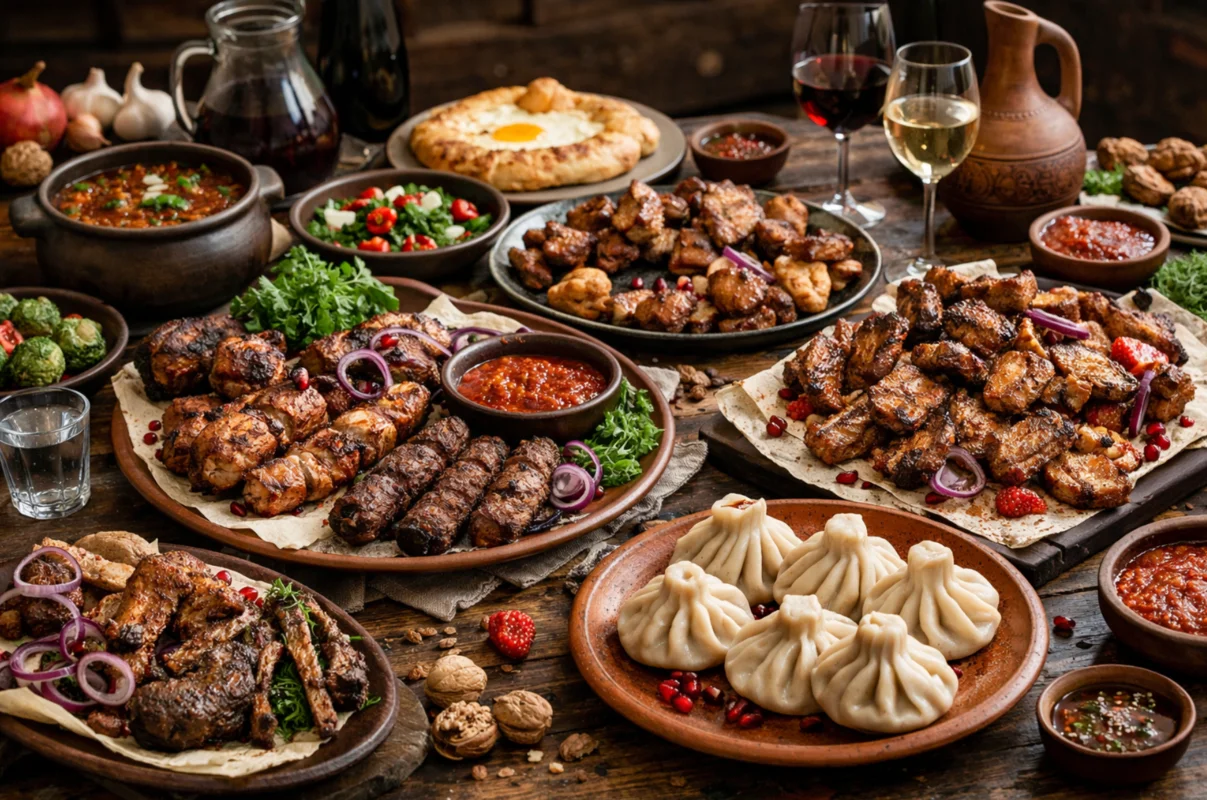
In Georgia, meat is prepared with soul. There are no strict dietary restrictions here, so the tables are laden with beef, lamb, pork, and poultry. At the same time, each region uses meat in its own way: on the western slopes, people prefer domestic poultry, especially chicken and turkey, while in the east, rich and hearty dishes are often made from beef, pork, and lamb. In this article, we share our own observations and experience gained during tours around Georgia and through communication with our clients.

What Will Surprise You About Georgian Cuisine

When you first arrive in Georgia, you will be impressed not only by the variety of meat dishes, but also by the atmosphere of the feast. Every meal here turns into a full-fledged supra – a celebration where guests gather around the table, toasts follow one after another, and the tamada (toastmaster) keeps the conversation flowing and refills the glasses. In such an atmosphere, the flavors of meat seasoned with fresh herbs, spices, and walnut sauces are revealed especially vividly.

Traveling by rental car through Kakheti, Samegrelo, and Svaneti, you will see how the owners of family wineries grill mtsvadi (barbecue) right in their yards, while grandmothers in the mountains prepare chili for fragrant chikhirtma (a soup made with chicken or lamb broth). Such an experience is difficult to convey in words, but we have tried to capture it in this journey across Georgia’s meat map.

What Types of Meat Are Popular in Georgia

Beef
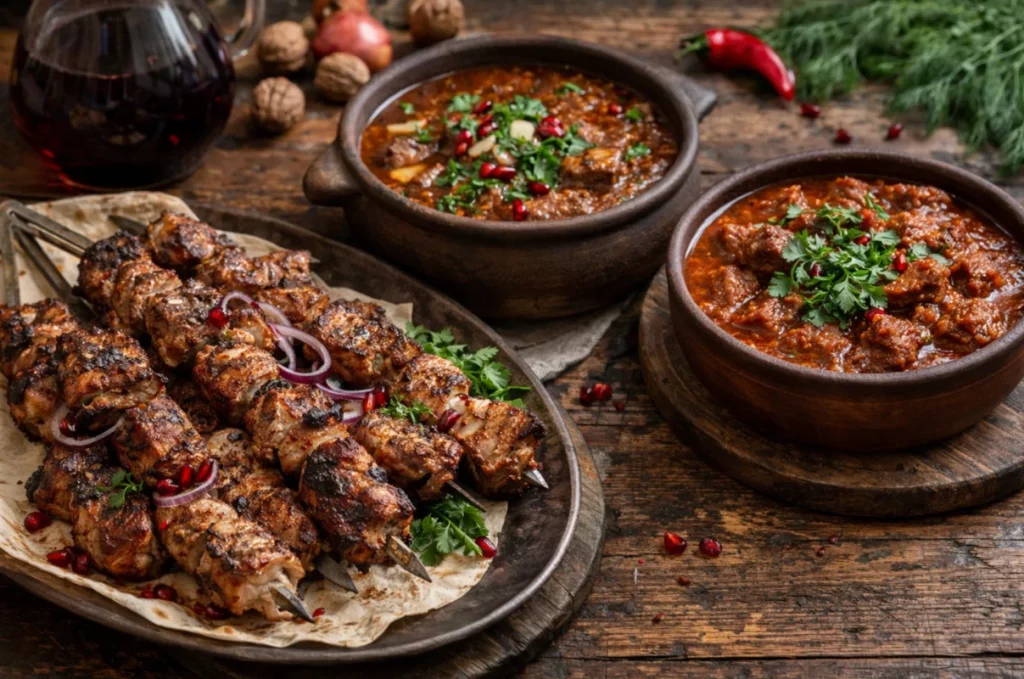
Mtsvadi, Kharcho, Chashushuli

Beef is the main meat in most regions. In eastern Georgia, it is considered the primary ingredient. From beef, the following dishes are prepared:

  • Mtsvadi – juicy charcoal-grilled barbecue. Our guides drew guests’ attention to three types of mtsvadi:
    1. Classic – tenderloin pieces marinated in onions and spices;
    2. Basturma – barbecue made from dried and spiced meat;
    3. Barbecue with eggplant – slices of lamb and beef are wrapped in eggplant strips and then grilled on a skewer.
  • Kharcho – a rich soup made from beef, rice, walnuts, and sweet-and-sour additions such as tomatoes, plums, or pomegranate. The classic version is prepared with beef or lamb, but modern variations can be found with chicken or pork. We noticed that in colder regions kharcho is served more often, and farmers like to add more fat to the meat.
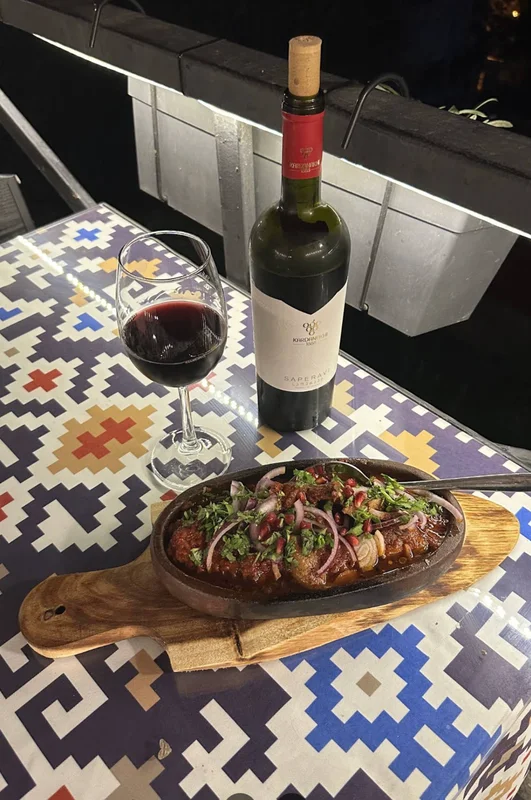
  • Chashushuli (or ostri) – aromatic stewed meat in tomatoes. In Tbilisi, we tasted this delicacy made from veal; the owner of a small restaurant on Kote Abkhazi Street told us she adds red wine and fresh cilantro to the sauce.

Lamb and Young Lamb
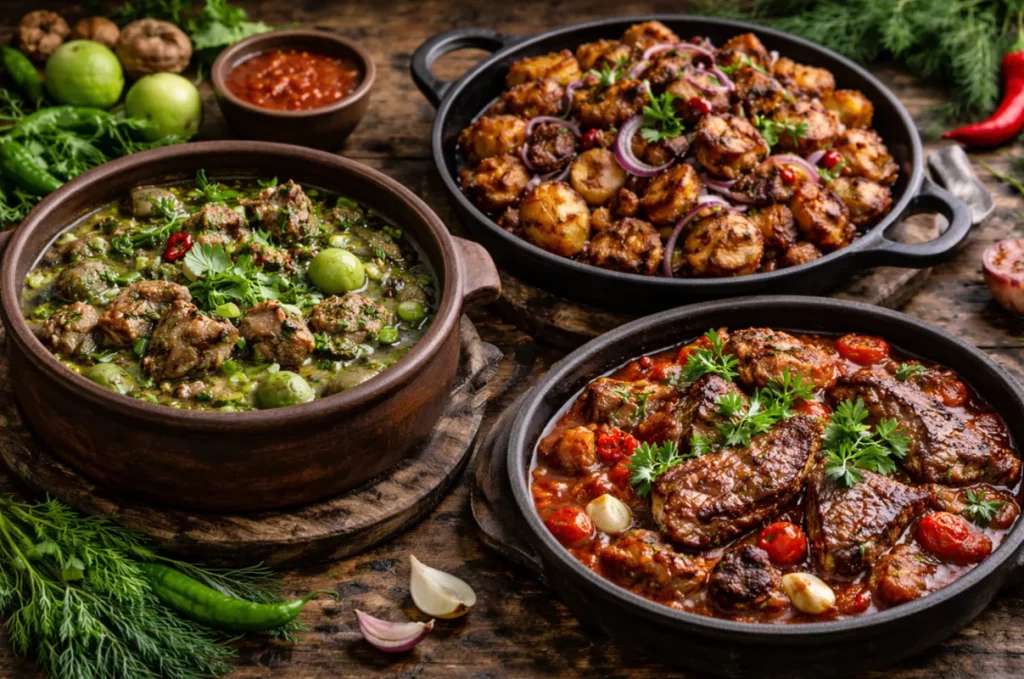
Chakapuli, Ojahuri, Salkhino

In mountainous regions – Svaneti, Racha, and Tusheti – lamb is considered the primary meat. Local flocks graze on alpine meadows, which makes the meat tender and aromatic. Here are our favorite dishes:

  • Chakapuli – a spring stew made from lamb or veal. According to the recipe, the meat is stewed in broth with white wine, tkemali sauce (plum sauce), and plenty of tarragon and cilantro. We cooked chakapuli with a family in Telavi: the hostess used young lamb ribs, added green plums, and a tangy herbal aroma instantly filled the house.
  • Ojahuri – roasted meat with potatoes and spices. The name of this dish means “family-style,” and it is traditionally served in a clay pan called ketsi. In Tbilisi, we ordered ojahuri made from pork, but in Guria and Svaneti lamb is offered more often. This is a universal dish for large groups: the meat is fried until golden brown, then stewed with onions, garlic, and khmeli-suneli.
  • Salkhino – a large baked piece of lamb cooked whole with vegetables. If you prefer festive outdoor dinners, order this dish during a picnic in the vineyards.

Pork
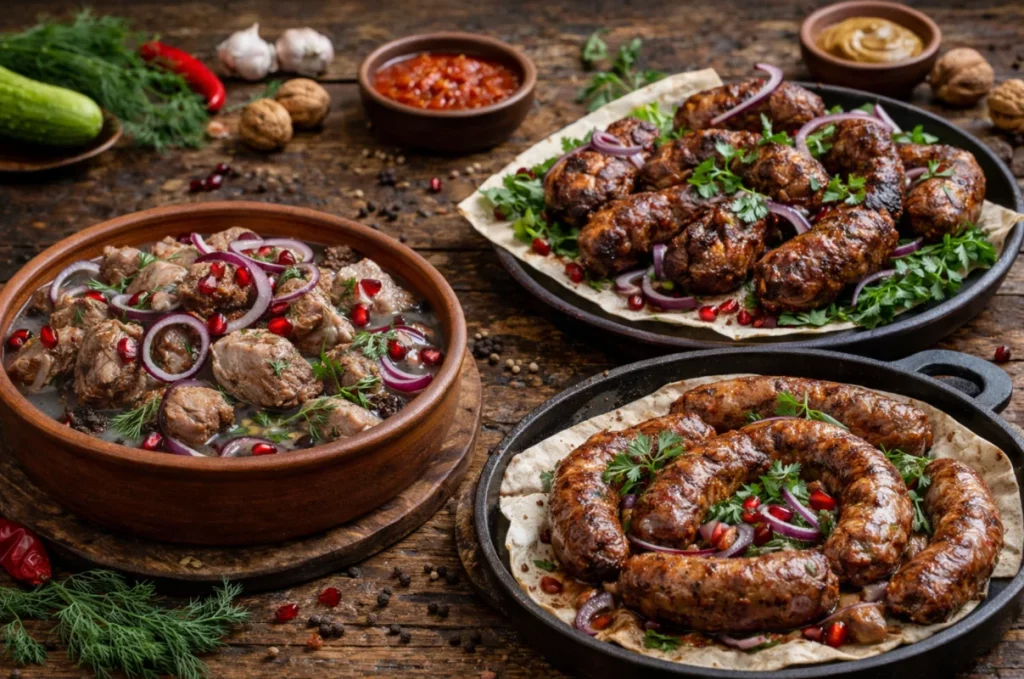
Muzhuji, Abkhazuri, Kupaty

Pork in Georgia is loved just as much as beef. In the western regions (Imereti, Guria, Samegrelo), pork is often combined with spicy sauces and wine. Several characteristic examples:

  • Muzhuji – a cold appetizer made from boiled, partially marinated pork, often from trotters, tails, and meat set in wine vinegar. We were served muzhuji in a summer kitchen in Kutaisi: the pork was tender, and the vinegar’s acidity was perfectly refreshing on a hot day.
  • Abkhazuri – patties made from beef or lamb mince wrapped in caul fat and grilled. Local cooks sometimes add pork for juiciness; clients noted that such patties resemble homemade lula kebab.
  • Kupaty – Georgian sausages made from pork with garlic, coriander, paprika, and barberry. They are first boiled and then fried in a pan. In the villages of Svaneti, kupaty are served with matsoni (sour milk) and adjika.

Domestic Poultry
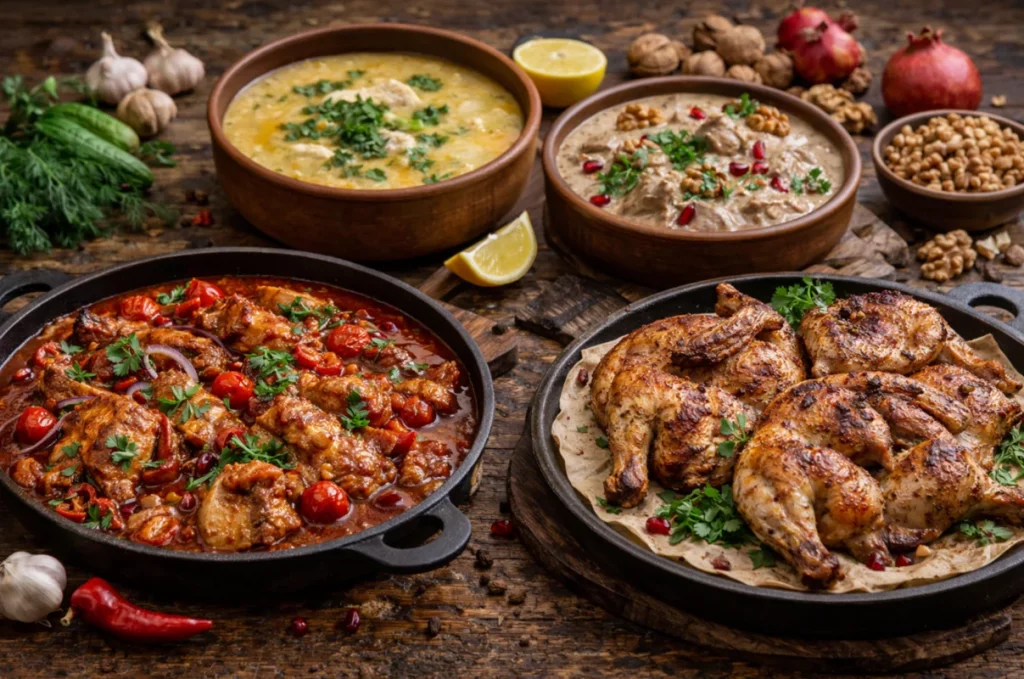
Chakhokhbili, Chikhirtma, Satsivi, Chicken Tabaka

The situation with poultry differs between western and eastern Georgia. In the west, most of the meat diet consists of domestic poultry: chickens and turkeys. Poultry dishes here are especially aromatic thanks to the abundance of spices and sauces:

  • Chakhokhbili – a meat stew traditionally made from chicken. Today, housewives also use lamb, pork, or other poultry. The dish is fried without oil, then stewed in tomato juice with cilantro, parsley, basil, and garlic. One of our clients from Germany said that chakhokhbili changed his perception of stewed chicken.
  • Chikhirtma – a thick soup made from chicken or lamb broth with corn flour, egg yolks, and lemon juice. In Samegrelo, we tried chikhirtma with spicy adjika added.
  • Satsivi – a cold walnut sauce with spices poured over chicken or turkey. This is a mandatory dish on the Christmas table. When we conducted a Christmas tour in Tbilisi, the hostess of the apart-hotel prepared satsivi from home-raised chicken, and our guests helped grind the walnuts.
  • Chicken Tabaka – young chickens fried in a wide pan under a press. The meat turns out with a crispy crust and juicy center. Usually, chicken tabaka is fried without spices and served with crushed garlic and herbs.

Other Types of Meat and Offal

Georgian cuisine is not limited to familiar types of meat. Among the unusual ingredients:

  • Offal and organ meats. Kuchmachi is a hot dish made from liver, heart, lungs, and sometimes tongue, stewed with walnuts and spices. Our clients who enjoy culinary experiments often noted the bright, rich taste of kuchmachi.
  • Pheasant and other game. Originally, chakhokhbili was made from pheasant, which is reflected in the name of the dish. Although pheasant is rare today, in some family restaurants in Adjara we tried zhuzhiki – small birds similar to quails.
  • Fish and seafood. Since Georgia has access to the Black Sea, dishes made from sturgeon, mullet, and mussels are often found on the menu. However, fish is usually served separately and not mixed with meat.

How Meat Is Served and What Complements It

Bright sauces and herbs are always served with meat dishes. Barbecue is accompanied by tkemali – a sweet-and-sour plum sauce; chicken is served with satsebeli made from tomatoes and cilantro; and beef is complemented with aromatic adjika. Herbs – cilantro, tarragon, basil, parsley – are not just a garnish but a full-fledged ingredient. Meat is rarely eaten alone. It is always accompanied by mchadi (cornbread) or puri (wheat bread), beans, and eggplants. The table also features pickled vegetables (mzhaveuli) and churchkhela – nuts strung on a thread and coated in thickened grape juice. Wine is an essential companion to any meat feast, especially white varieties from Kakheti and red wines from the Racha region.

Why We Love Georgian Meat

Georgian cuisine is not just a list of recipes, but stories of people, family traditions, and the spirit of hospitality. When asked “what kind of meat is eaten in Georgia,” we answer: they eat what grows nearby, what can be cooked together and shared with everyone at the table. This is the main value of the Georgian feast – to share, to invite, to treat generously.

We hope our experience will help you immerse yourself in the gastronomic world of Georgia!
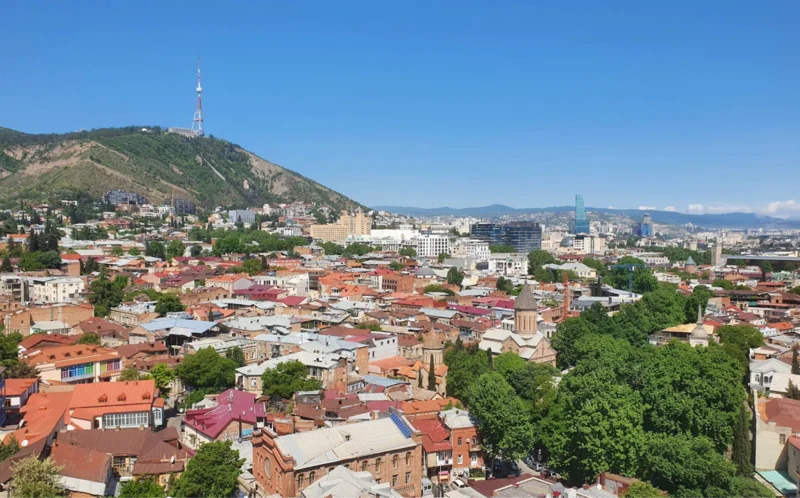
48 hours in Tbilisi: baths, bars, viewpoints, and convenient parking

Two days in Tbilisi mean walking the cobbled streets, enjoying the warm water of the sulfur baths, watching the evening light on the fortress, and chatting over wine in the cellars. The plan below keeps an urban pace without rush and provides a clear logic for parking and moving around.

Car for the itinerary

In the center, a compact car/sedan is most convenient: maneuverable and easy to park. The logic is: morning and daytime — walking routes in the Old Town; car — for easy transfers to the hotel/airport and trips to viewpoints on the outskirts. Contact us — we’ll help you rent a car quickly

Day 1. Old Town, baths, funicular, and sunsets

Morning: Rike → Cable Car → Narikala. Start with a stroll through Rike Park and take the cable car up to Narikala Fortress: from above, you can see the entire historic center and the ribbons of streets leading to Abanotubani. For the descent, walk along the viewpoints down to the sulfur baths.

Rike Park Cable Car (lower station)
https://www.google.com/maps/search/?api=1&query=Rike+Park+Cable+Car+Station 

Narikala Fortress (upper station)
https://www.google.com/maps/search/?api=1&query=Narikala+Fortress+Upper+Cable+Car+Station 

Abanotubani (Sulfur Baths district)
https://www.google.com/maps/search/?api=1&query=Abanotubani+Sulfur+Baths 

Chreli Abano (Blue Bath)
https://www.google.com/maps/search/?api=1&query=Chreli+Abano+Bath+Tbilisi 

Daytime: Abanotubani and baths. Choose a private room in one of the baths (Chreli Abano — “Blue Bath” with mosaics) and allow 1–1.5 hours for water and steam. Afterwards — a leisurely lunch by the river and a stroll through the courtyards and bridges.

Evening: Funicular to Mtatsminda. For sunset, take the funicular to the restaurant complex at the top. The terraces overlook the city, and the evening light is at its softest.

Tbilisi Funicular (lower station)
https://www.google.com/maps/search/?api=1&query=Tbilisi+Funicular+Lower+Station 

Funicular Restaurant Complex (Mtatsminda)
https://www.google.com/maps/search/?api=1&query=Funicular+Restaurant+Complex+Tbilisi 

Freedom Square Underground Parking
https://www.google.com/maps/search/?api=1&query=Freedom+Square+Underground+Parking+Tbilisi 

Parking and logistics: — Morning: leave the car in the underground parking at Rike/Europe Square and walk.
— Daytime: in the Old Town it’s easier to move around on foot.
— Evening: for the funicular lower station, arrive by taxi or your car (parking is limited), alternatively — leave the car in the underground parking at Freedom Square and walk.

Rike / Europe Square Underground Parking
https://www.google.com/maps/search/?api=1&query=Underground+Parking+Rike+Park+Tbilisi 

Day 2. Flea market, courtyards, bars, and views

Morning: Dry Bridge Market. Vintage items, books, graphics, enamel — in an hour or so you can collect souvenirs “with meaning.” Nearby — galleries and boutiques.

Dry Bridge Market
https://www.google.com/maps/search/?api=1&query=Dry+Bridge+Market+Tbilisi 

Daytime: Fabrika courtyard and cafés. Inside — graffiti, workshops, a courtyard with cafés and bars. A good pause between walks.

Fabrika Tbilisi
https://www.google.com/maps/search/?api=1&query=Fabrika+Tbilisi 

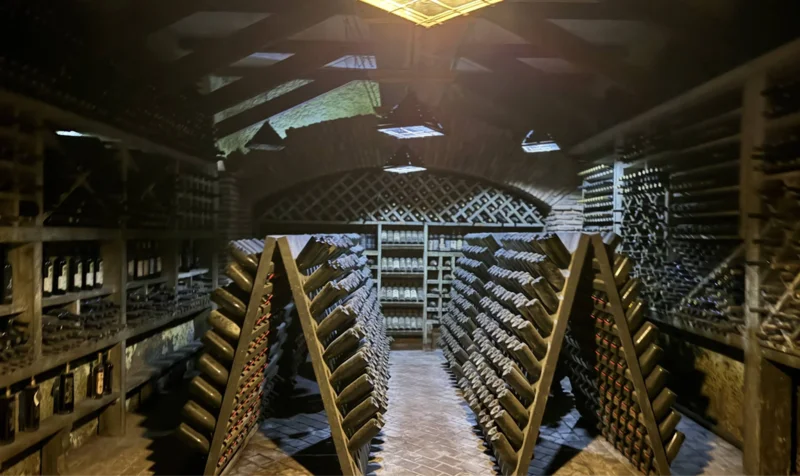
Evening: wine bars and underground cellars. For tasting natural wines, choose the cellar near Freedom Square (Vino Underground) or one of the 8000 Vintages bars in the center. End the day with dinner in the Sololaki/Vera area: quiet streets and long conversations.

Vino Underground
https://www.google.com/maps/search/?api=1&query=Vino+Underground+Tbilisi 

8000 Vintages (Tabukashvili 27) https://www.google.com/maps/search/?api=1&query=8000+Vintages+Tabukashvili+27+Tbilisi 

Optional viewpoint on the outskirts: if you have energy, make a short trip to the Chronicle of Georgia above Tbilisi Sea: monumental columns and panorama over the water.

Chronicle of Georgia
https://www.google.com/maps/search/?api=1&query=Chronicle+of+Georgia+Monument 

Parking and logistics: — Morning: it’s convenient to leave the car in the underground parking at Freedom Square and walk to Dry Bridge.
— Daytime: at Fabrika — street parking around the perimeter (check signs).
— Evening: for tastings — better on foot or by taxi; leave the car overnight in the hotel parking.

Tips

Quick reference map (points)

Rike Park (lower cable car station) · Narikala Fortress (upper station) · Abanotubani and Chreli Abano · Funicular lower station and restaurant complex on Mtatsminda · Freedom Square (underground parking) · Dry Bridge Market · Fabrika · Vino Underground · 8000 Vintages (Tabukashvili) · Chronicle of Georgia.

Final touch

Tbilisi reveals itself at a pace of “steps and conversations.” The car adds freedom for trips outside and convenience for hotel transfers. Provide your dates — we’ll select a compact/sedan for your rhythm and reserve an underground parking near your base.

Kakheti: 7 Cafés and Wine Houses with a View of the Alazani Valley

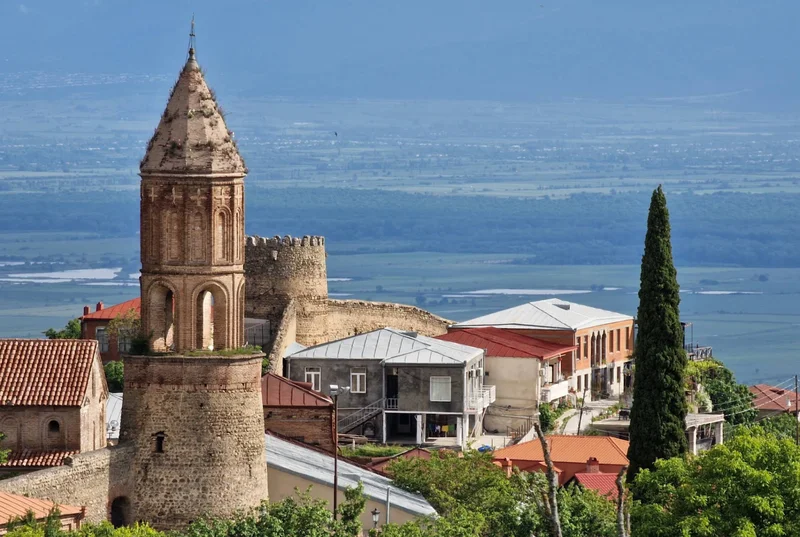
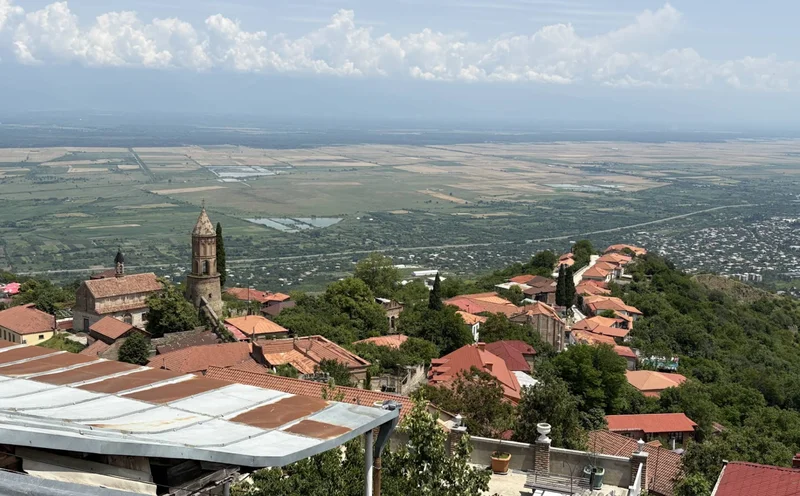
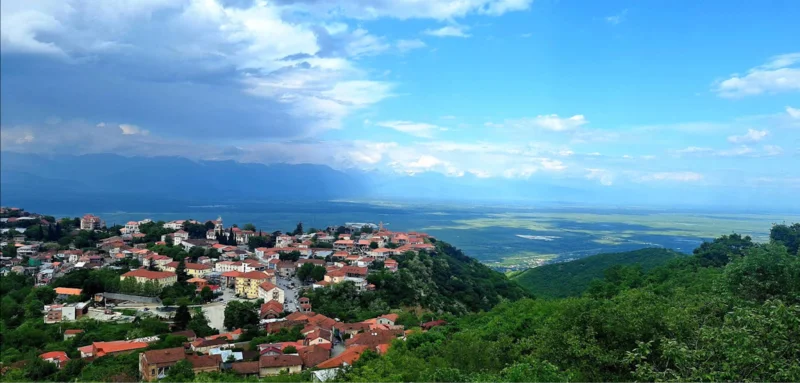
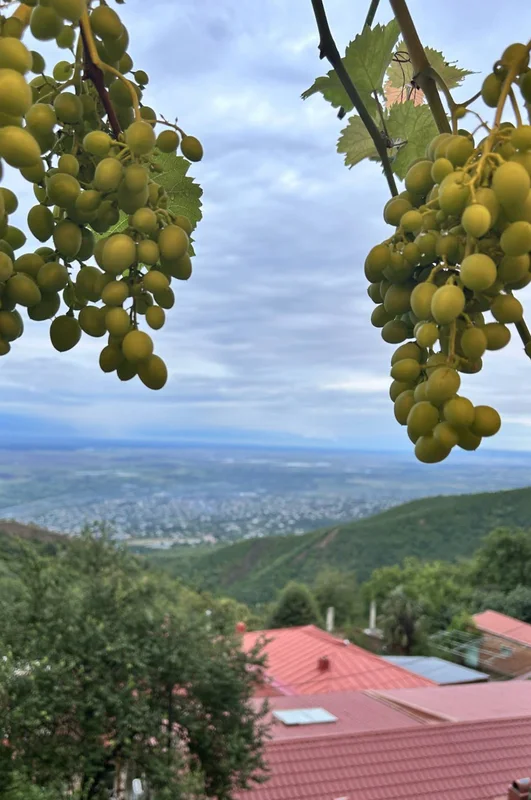
The key here is not to rush. The Alazani Valley reveals itself in layers: morning mists in Sighnaghi, a warm midday in the parks of Tsinandali, golden sunsets near Telavi. This route highlights seven spots where food and wine pair perfectly with the view—so much so that your hand naturally reaches for the camera. The approach is simple: “drive, stop at beautiful places,” without stress or long transfers.

How to plan your day

From Tbilisi, it makes sense to explore in two arcs. The first is Sighnaghi and the ridge above the valley: morning mists, long eastward vistas, walks along the fortress walls. The second is Tsinandali—Telavi—Kisiskhevi: parks, estate complexes, terraces where the evening light falls directly on the hills. In one day, you can comfortably visit 2–3 stops with enough time for lunch and a stroll; over two days, all seven locations can be enjoyed without hurry. Reserve terrace tables in advance, especially during harvest weeks.

Car for This Route

The roads are in good condition, and the driveways to the châteaux are short and straightforward. The LEXUS RX350 is comfortable on highways and city parking, while the MERCEDES-BENZ GL 350 CDI BLUETEC provides extra ground clearance for rural roads and gravel access to vineyards, especially during rainy months. A child seat and trunk space for a couple of wine boxes can easily be arranged when booking.

1) Okro’s Wine Restaurant, Sighnaghi

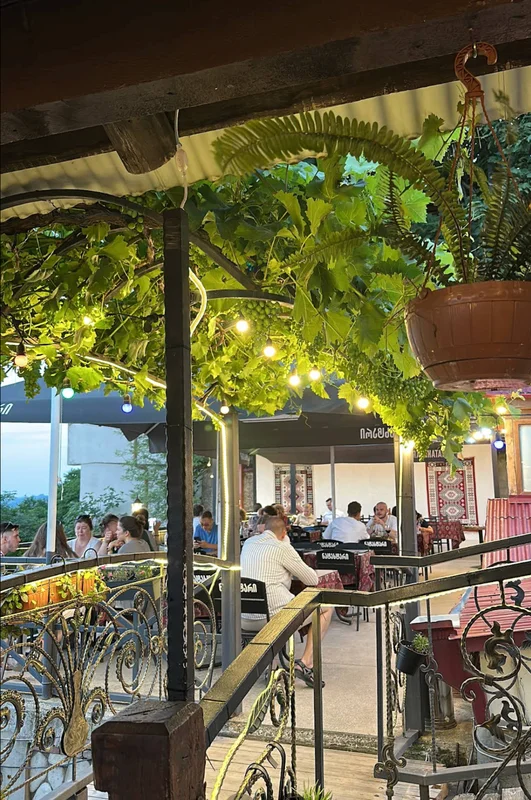
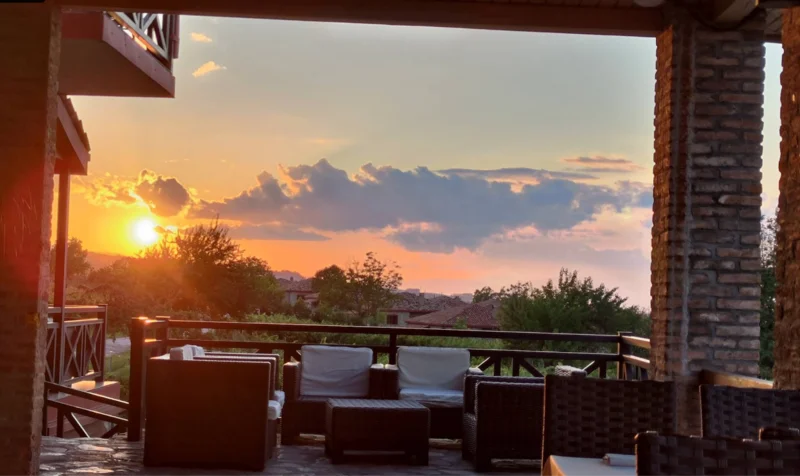
The terrace overlooking the entire valley is the best reason to visit at sunset. In your glass—natural wines; on your plate—simple dishes that enhance the view. Outdoor seating is intimate, and a reservation helps. Parking is convenient around the Old Town: leave your car by the fortress wall and walk a few minutes uphill—you’ll be there in no time.

Best time to visit: late afternoon for soft light and long shadows.

Okro’s Wine Restaurant, Sighnaghi
https://www.google.com/maps/search/?api=1&query=Okro%27s+Wine+Restaurant+Sighnaghi 

2) The Terrace Signagi, Sighnaghi

If you want a direct, panoramic view of the Alazani Valley—this is the place. A bright dining room opens onto a terrace, the menu features straightforward Georgian dishes, and the quiet lets you hear the mountain breeze. Perfect for lunch after a walk along the fortress walls. Parking is available along the streets near the terrace, with calm traffic.

Best time to visit: lunch or early dinner; during hot days, it’s nice to catch the breeze at this elevation.

The Terrace Signagi
https://www.google.com/maps/search/?api=1&query=The+Terrace+Signagi 

3) Terrace Kisi, Sighnaghi

A small terrace with a full-width horizon, focusing on homestyle dishes and wines. A great spot for a relaxed break between the fortress and the viewpoints. Parking is similar to the previous locations, in street pockets around the Old Town.

Best time to visit: late lunch, to rest before heading toward Telavi.

Terrace Kisi, Sighnaghi
https://www.google.com/maps/search/?api=1&query=Terrace+Kisi+Sighnaghi 

4) Tsinandali Estate (Prince Alexander), Tsinandali

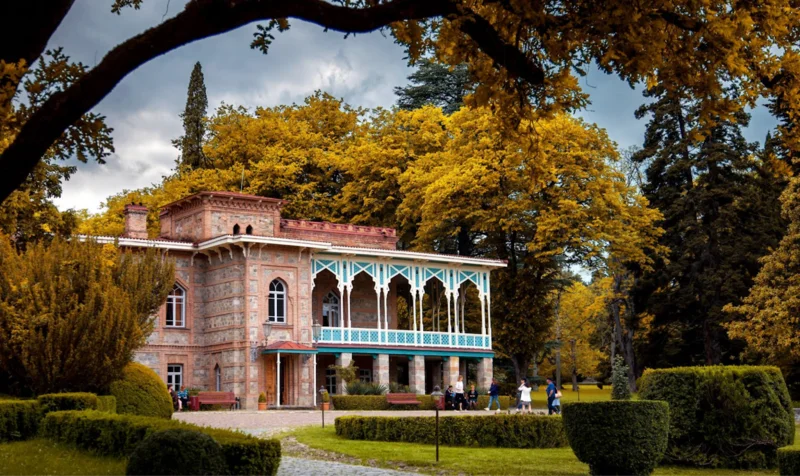
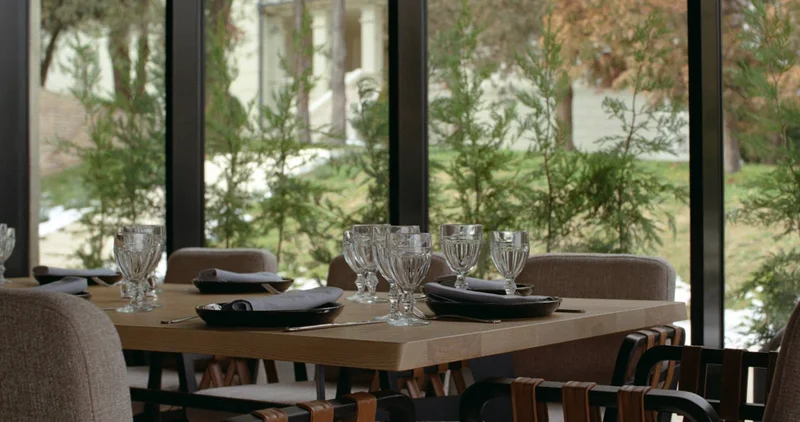
A historic estate with a park and a modern restaurant, where through the glass you can see trees, rooftops, and the distant lines of the valley. It’s a place where you want to linger: stroll along the alleys, explore the wine spaces, and have lunch by the window. There is ample parking on the grounds, and access is straightforward.

Best time to visit: midday; lunch is especially enjoyable after a walk in the park. Tsinandali Estate (Radisson Collection)
https://www.google.com/maps/search/?api=1&query=Tsinandali+Estate+Radisson+Collection+Hotel

5) Shumi Winery, Tsinandali

A large wine complex with a museum, gardens, and terraces. It’s convenient to combine a tasting, a short tour, and a late lunch here. The view opens up from several vantage points, and the calm pace of the place sets the tone for a “long” day. Parking is available on-site, with the space logically organized.

Best time to visit: during the day or early afternoon; pairs well with a visit to the Tsinandali Estate.

Shumi Winery, Tsinandali
https://www.google.com/maps/search/?api=1&query=Shumi+Winery+Tsinandali 

6) Schuchmann Wines Chateau, Kisikhevi (near Telavi)

The restaurant terrace faces the ridge and vineyards — perfect for an evening visit. They serve wine from their own selection, and the cuisine is straightforward and honest. Parking is available on-site, access roads are smooth, and navigating the area is simple.

Best time to visit: the golden hour before sunset; an excellent way to end the day.

Schuchmann Wines Chateau, Kisiskhevi
https://www.google.com/maps/search/?api=1&query=Schuchmann+Wines+Chateau+Kisiskhevi 

7) Vazisubani Estate, Vazisubani

A restaurant with glass walls offering panoramic views — it feels like you’re sitting inside the landscape. The morning light is especially soft, making breakfasts and early lunches particularly enjoyable. Parking is available at the entrance, with easy asphalt access.

Best time to visit: morning/early day; a perfect start for the second day of the route.

Vazisubani Estate, Kakheti
https://www.google.com/maps/search/?api=1&query=Vazisubani+Estate+Kakheti 

How to summarize the route

In the “short” version: a day in Sighnaghi (Okro’s → The Terrace → Terrace Kisi), then a drive to Tsinandali for the park and a late lunch, finishing with dinner in Telavi. In the “long” version: add an overnight stay at one of the wine estates and a morning stop in Vazisubani. The complete itinerary covers 180–220 km over two days, at a relaxed pace and with plenty of time for photographs.

Useful details

  1. The grape harvest season (Rtveli) falls between late August and November; during these weeks, venues are popular, so book in advance.
  2. On mountain roads, maintain a calm pace, especially after wine tastings: plan for a sober driver.
  3. If traveling with children, check the availability of child seats and the kitchen opening hours during the off-season.

For this route, travelers usually choose

LEXUS RX350 — Agility in city driving and ease on highways.
MERCEDES-BENZ GL 350 CDI BLUETEC — Extra ground clearance for rural access roads and gravel after rain.
We can deliver the car to your hotel or airport at the requested time. Provide your dates and group details — we’ll select the optimal vehicle and include child seats if needed.

Final touch

Kakheti is all about the “view in your glass.” With a well-planned route, the road naturally leads you to terrace tables, and the car becomes part of the experience: arriving at the right moment, stopping at the perfect spot, providing quiet between tastings and encounters. Book your car for the travel dates — everything else falls into place.

Special Offer Range Rover for Long-Term Rentals